
The Ashaiman Municipal Assembly has called for stronger public-private partnerships and increased investment in affordable household toilet facilities to tackle open defecation in the municipality.
The Municipal Chief Executive (MCE), Freeman Tsekpo, said despite significant investments in public toilet infrastructure, open defecation remained a major sanitation challenge requiring a shift towards household toilet provision.
He, therefore, called on private sector operators and investors to collaborate with the Assembly to develop affordable and sustainable household sanitation solutions.
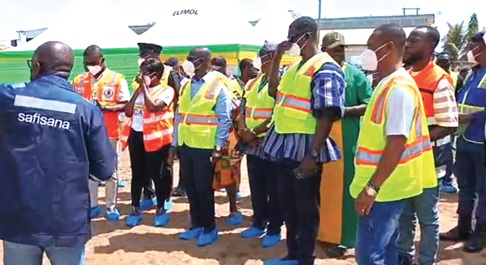
Mr Tsekpo made the call at a stakeholder engagement held at Safisana’s waste treatment facility in Ashaiman on Wednesday, November 11, 2026, as part of activities towards this year’s World Toilet Day commemoration.
The event, organised by the Ministry of Local Government, Chieftaincy and Religious Affairs in collaboration with the Ashaiman Municipal Assembly, was held on the theme: “From open defecation to open opportunity through the gender lens”.
World Toilet Day, observed annually on November 19, seeks to raise awareness of the global sanitation crisis and promote access to safe and sustainable toilet facilities.
Mr Tsekpo said eliminating open defecation required sustained collaboration and deliberate measures to ensure that every household, particularly vulnerable ones, could afford decent and hygienic toilet facilities.
He said although the Assembly had invested in the construction of public toilets, the continued practice of open defecation underscored the need to intensify efforts towards household-level sanitation.
The MCE also disclosed that the Assembly was pursuing more sustainable approaches to waste management through waste segregation and recycling as part of efforts to improve environmental sanitation.
Boreholes
Technical Advisor for Water, Sanitation and Hygiene (WASH), Michael Forson, who represented the Deputy Minister of Local Government, Chieftaincy and Religious Affairs, Rita Naa Odoley Sowah, inaugurated 10 boreholes constructed by the Ashaiman Municipal Assembly for selected schools in the municipality.
The intervention was expected to improve access to safe water in beneficiary schools, strengthen hygiene practices and provide a healthier learning environment for pupils and teachers.
Mr Forson highlighted the government's commitment to improving sanitation delivery through sustainable infrastructure, private sector participation and gender-responsive interventions.
As part of the engagement, participants toured Safisana’s waste treatment facility, which uses anaerobic digestion technology to convert human and organic waste into renewable energy and organic fertiliser.
The waste treatment process involves collecting faecal sludge from public toilets and organic waste from markets, abattoirs and food-processing industries for processing through anaerobic digestion.
Waste to energy
The Managing Director of Safisana, Aart van den Beukel, disclosed that Safisana had processed more than 70,000 tonnes of organic and faecal waste over the past eight years through its treatment facilities in Ashaiman and Kumasi.
The operations, he explained, served more than 65,000 people annually and had created over 200 green jobs.
He also disclosed that the company had produced more than 335,000 bags of organic fertiliser, which would support agricultural production and efforts to restore nutrient-depleted soils.
Writer’s email:
