
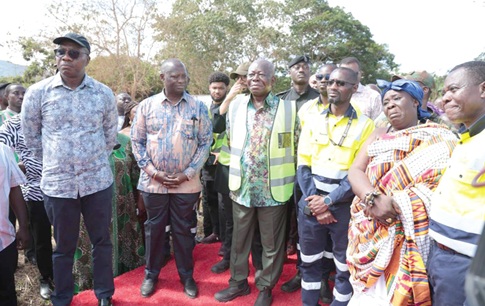
The Asantehene, Otumfuo Osei Tutu II, has launched the Jimi Land Reclamation and River Watercourse Rehabilitation Project at Tasliman in the Adansi Asokwa district to reclaim land degraded by excessive illegal mining last Wednesday.
He planted a tree to officially mark the commencement of the project.
The project seeks to reclaim 153 hectares of land across the Obuasi East Municipality and the Adansi Akrofuom and Adansi Asokwa districts, which have suffered extensive damage from illegal small-scale mining.
The project would focus on mining-degraded areas around Gyimisokakraba, Ayease and Akwesi Ankromakrom.
Activities of illegal miners at Tasliman have led to grave degradation of land in the area.
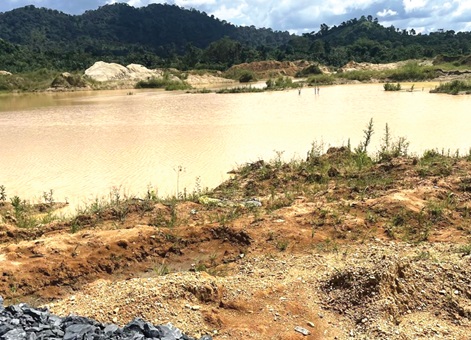
The illegal miners have diverted the course of the Jimi River with heaps of sand, causing heavy siltation and rising turbidity, and negatively impacting the Jimi Dam, which serves as the water intake plant for several communities in the area.
The Asantehene and his entourage, including the Minister of Lands and Natural Resources, Emmanuel Armah-Kofi Buah, bowed their heads when they saw how devastating illegal activities had discoloured the Jimi Dam, once a major source of drinking water for the people in the Adansi Traditional Authority in the Adansi Asokwa District in the Ashanti Region.
Other members of the delegation included the Minister of Local Government, Chieftaincy and Religious Affairs, Mahama Ayariga; the Managing Director of the AngloGold Obuasi Mines, Samuel Pobee; and the Adansihemaa, Nana Amoanimaa Dede II.
Apart from the rising turbidity level of the river, which has increased the cost of water treatment, the dam’s volume is decreasing, resulting in rationing of water to the communities.
The initiative, the flagship pilot project of the Ashanti Green Initiative, follows Otumfuo’s advocacy against illegal mining at the Mining in Motion forum held in Accra last year.
Key partners include the Manhyia Palace, AngloGold Ashanti, the Ministry of Lands and Natural Resources and the Environmental Protection Authority, which would support project coordination, technical operations, enforcement and environmental monitoring.
Kenaf to support land recovery
Reclamation activities would involve filling abandoned mining pits, reshaping damaged terrain, addressing soil contamination, controlling erosion and improving soil quality.
The reclaimed land would then be planted with kenaf, a commercial fibre crop selected because of concerns about residual heavy metals in the soil.
The project would include regular water testing and monitoring of soil, vegetation, biodiversity and community health to assess the impact of the restoration efforts.
The initiative is expected to be a model for rehabilitating other lands and water bodies damaged by illegal mining across Ghana.
The Director of Engineering at AngloGold Ashanti, Eric Broni, said the impact was already hitting water supply.
“Last year we spent about $584,000 to treat water despite treating less”, he said, adding that there was a possibility that this year, water abstraction will decrease.
Mr Armah-Kofi Buah disclosed that about 8,000 hectares of 188 forest reserves had been impacted by galamsey, with only 150 hectares reclaimed so far.
