
The Africa Centres for Disease Control and Prevention (Africa CDC) has warned that the ongoing Ebola outbreak could become the worst ever recorded unless African countries urgently mobilise resources, strengthen surveillance and intensify coordinated action to contain the disease.
It said the current outbreak had surpassed all previous Ebola outbreaks in terms of the speed of transmission.
Addressing the African Union (AU) Extraordinary Session of the Assembly of Heads of State and Government in Accra yesterday, the Director-General of the Africa CDC, Dr Jean Kaseya, stressed that the continent had already recorded more than 2,400 confirmed Ebola cases and over 1,000 deaths.
“If we don’t stop this outbreak today, it will be the worst one that the world will be documenting,” he cautioned.
Summit
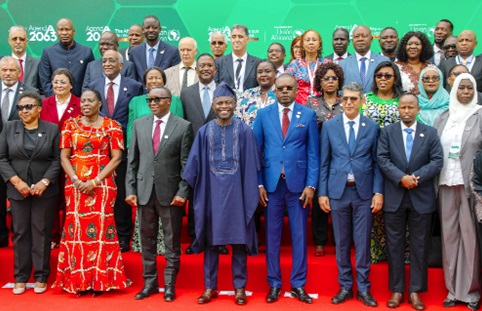
The two-day summit brought together Heads of State and Government, ministers responsible for health, finance and foreign affairs, officials of the African Union Commission, Regional Economic Communities, development partners, civil society organisations, youth representatives and private sector participants.
Discussions were focused on expanding universal health coverage and accelerating efforts to end AIDS, tuberculosis (TB) and other major public health challenges across Africa.
It was on the theme “Advancing Justice, Equity and Universal Health Coverage: Ending AIDS, TB, Improving Maternal Health, Addressing Endemic Non-Communicable and Neglected Tropical Diseases and Conditions in Africa.”
Participants attending the conference include Health Ministers, Finance Ministers, Employment Ministers, AU officials, development partners and civil society representatives, held deliberations on the AU Roadmap to 2030 and Beyond, which will guide efforts to build stronger and more sustainable health systems across the continent.
Funding gap
The Director-General said Africa now required US$1.4 billion to bring the outbreak under control, significantly higher than the US$518 million initially estimated during a meeting of African leaders last June 16.
He commended African countries for increasing their financial commitments, stating that a target of US$100 million in African contributions had already been exceeded, with US$110 million pledged.
He appealed for an immediate US$12 million to complete ongoing clinical trials for Ebola therapeutics and vaccines.
Health financing, challenges
Beyond the Ebola emergency, Dr Kaseya challenged African governments to strengthen domestic health financing by eliminating waste and improving accountability.
He said more than 50 per cent of health resources were lost through fraud, poor planning and the persistence of ghost workers on public payrolls.
He said such inefficiencies deprived health systems of much-needed resources, urging governments to invest in stronger digital systems to safeguard health data and improve disease surveillance.
Dr Kaseya said ongoing conflict, coupled with the presence of more than one million internally displaced persons in camps, had created conditions unlike any previous Ebola outbreak.
He also expressed concern over weak contact tracing, stating that with more than 2,000 confirmed cases, authorities should be tracing approximately 97,000 contacts, yet only 10,000 people had been identified and just 8,500 were currently being monitored.
As a result, he said more than 70 per cent of new infections were now occurring through community transmission, while over 60 per cent of deaths were also taking place within communities.
Health sovereignty
Addressing the meeting, the Minister of Health, Kwabena Mintah Akandoh, urged African countries to prioritise domestic financing, local manufacturing of health products and stronger primary healthcare systems to reduce dependence on external support.
He said Africa’s health future depended on its ability to mobilise its own resources and develop systems that could respond to the needs of its people without relying heavily on external assistance.
He said countries that controlled their health financing would be better positioned to protect their populations during global health crises.
Mr Akandoh also called for increased investment in local production of medicines, vaccines and other health technologies, arguing that recent global emergencies had exposed the risks of depending on foreign supply chains.
“The next emergency must never again find Africa waiting at the back of the queue,” he said.
He added that achieving universal health coverage required greater attention to community-level healthcare delivery rather than focusing mainly on specialised hospitals.
“If we truly believe primary health care is the foundation of universal health coverage, then we must equip it, finance it, and value the people who deliver it every single day,” Mr Akandoh said.
Beyond declarations
The African Union Commissioner for Health, Humanitarian Affairs and Social Development, Amma Adomaa Twum-Amoah, said the continent needed to move beyond commitments and focus on implementing existing health agreements.
She said although Africa had recorded progress in areas such as HIV treatment, malaria control and responses to public health emergencies, significant gaps remained, particularly in maternal health, disease prevention and health financing.
The Commissioner also highlighted the need to address Africa’s shortage of health workers by improving recruitment, training, remuneration and retention strategies.
“Training health workers without creating pathways to employ and retain them is a loss of public investment and human potential,” she said.
