
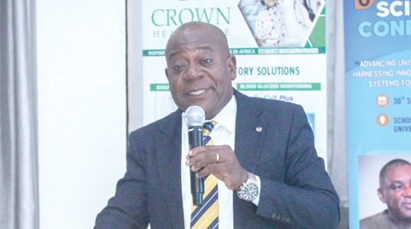
Speakers at the 6th Biennial Scientific Conference have called for stronger collaboration among government agencies, universities, health institutions, the private sector and communities to achieve Universal Health Coverage (UHC) in the country and across Africa.
They said this could not be achieved through one discipline, institution or intervention, but required a functioning ecosystem in which science informed policy, policy translated into implementation and implementation ultimately improved lives.
They also explained that it required sustainable funding, innovation, research, strong primary healthcare systems and policies that addressed the social and economic factors that affected people’s health.
They made the call at the opening of the three-day conference in Accra last Wednesday, on the theme: “Advancing universal health coverage in Africa: Harnessing innovation, equity and resilient health systems for sustainable health outcomes.”
The conference, organised by the College of Health Sciences (CHS), brought together academics, health professionals, policymakers, researchers, students and industry representatives to discuss ways to strengthen health systems and improve access to quality and affordable health care.
The conference featured presentations, panel discussions, exhibitions and plenary sessions on allied health innovations, inclusive healthcare, health financing, digital health and other emerging health issues.
Innovations
The Pro-Vice-Chancellor responsible for Research, Innovation and Development at the University of Ghana (UG), Professor Samuel Nii Ardey Codjoe, who spoke on behalf of the Vice-Chancellor, Professor Nana Aba Appiah Amfo, called for innovations that would lead to practical solutions.
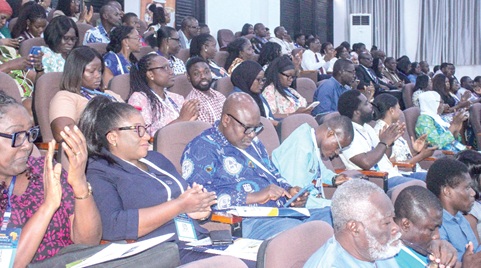
She said research should not end with publications but be put into practice to improve health care, while health systems must be strong enough to continue operating during crises.
The Provost of the CHS, Professor Alfred Edwin Yawson, said 87 abstracts were submitted for the conference, out of which 44 were selected for presentation during the event.
He urged participants to actively engage with the presenters, particularly students and early-career researchers and provide constructive feedback that would help improve their work.
He also encouraged researchers to use the conference to identify opportunities for collaboration to ensure that research findings moved beyond academic publications to influence policy and practice.
The Technical Advisor at the Ministry of Health, Dr Koku Awoonor-Williams, called for a shift from how much the country spent on health to examining what those investments achieved.
He said the government’s Free Primary Healthcare initiative represented an important opportunity to improve access, particularly in underserved communities, but cautioned that free healthcare should not mean access to facilities that lacked medicines, equipment or health professionals.
“If consultation is free but medicines are unavailable, we have not solved the problem,” Dr Awoonor-Williams said.
He called for stronger community-level services, better referral systems, targeted incentives for health workers in underserved areas, mobile outreach and appropriate digital solutions.
“A country that can produce or have reliable sources of essential medicines, diagnostics, vaccines and other critical commodities is better positioned to protect its people when global supply chains are disrupted,” Dr Awoonor-Williams added.
For his part, the Chief Executive Officer of Promasidor Ghana, Samir Sadaoui, said the company had partnered the National Cardiothoracic Centre for life-saving heart surgeries for patients who were unable to afford treatment.
Apart from more than 1,300 patients benefiting from the support, some medical equipment had also been donated to hospitals.
