
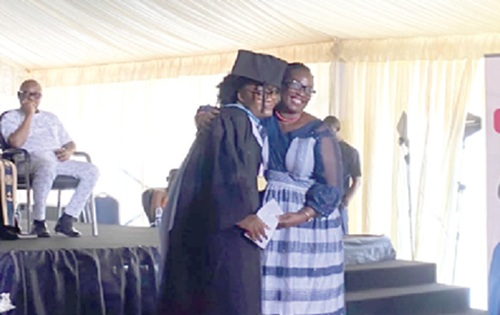
The University of Media, Arts and Communication (UniMAC) has graduated 1,414 students, recording a 57.6 per cent increase in its graduating population over the previous year.
The graduating class of 2026 represented a significant increase over the 897 students who graduated in 2025, with 1,059 females (74.9 per cent) and 355 males (25.1 per cent). The number of male graduates also increased by 37.7 per cent.
In all, 200 students obtained first-class honours; 699 had second-class upper; 372 second-class lower;115 third-class, and 28 completed their programmes without honours.
The Institute of Journalism produced 1,224 graduates, representing 86.57 per cent; the Institute of Languages,117 (8.27 per cent); and the Institute of Film and Television, 73 (5.16 per cent).
Jeffey Yehoda was adjudged the Best Student in Print Journalism in recognition of his outstanding academic performance, dedication and commitment to excellence in the field of journalism.
Graphic Communications Group Ltd presented an undisclosed cash amount to him as part of efforts to celebrate excellence and encourage students to uphold high professional standards.
International impact
The Vice-Chancellor of the university, Prof. Eric Opoku Mensah, who was speaking at the first session of the university’s fifth congregation, attributed the growth of the student population to the institution’s expanding capacity and increasing interest in media, creative arts, languages and communication programmes.
He commended two journalism students — Titus Owusu-Bakun and Precious Agu-Obisa Akon, for winning the 2026 Commonwealth Parliamentary Association National Debate Competition and representing Ghana at the international contest in Sydney, Australia.
Prof. Mensah also congratulated Jennifer Frimpong Redu, who won the Best Student Journalist of the Year Award at the 2026 Ghana Journalists Association Media Awards.
Other institutional achievements included the university’s first international conference on journalism, media and communication, the development of a student records management system, which was 90 per cent complete, and the introduction of a five-year strategic plan for the institution.
He said the university had recruited 46 employees and recorded 35 staff promotions during the year, while acknowledging challenges relating to infrastructure, technology, financing and the changing demands of the media industry.
Advice
The first Chancellor of UniMAC, Ernest Ofori Sarpong, who was present at the event, urged the graduates to embrace integrity, creativity and ethical responsibility as artificial intelligence continues to reshape the media and creative industries.
He said: “Technology cannot replace human imagination, ethical judgement and cultural understanding”, urging the university to lead conversations on responsible AI adoption, indigenous language preservation and the creative economy.
Mr Sarpong further challenged the graduates to remain curious, innovative and committed to excellence as they enter the world of work.
The valedictorian, Calvin Dzomeku, urged his mates to measure success by the problems they solved and the impact they made on humanity rather than the certificates they acquired.
He described life beyond the university as an examination without a timetable or syllabus, and encouraged his mates to exercise patience and resilience as they navigate the job market.
Mr Dzomeku also appealed to management to improve the university’s registration and results-processing systems and lecture hall facilities, while expressing gratitude to parents, lecturers, sponsors and the Lebanese Scholarship Scheme for supporting the graduating class.
