
THE Ministry of Finance has tabled six new bills in Parliament to amend existing laws and seal the loopholes in revenue generation.
The six bills are the Customs Bill, 2026, the Income Tax Amendment Bill 2026, the Value Added Tax Amendment Bill 2026, the Excise Amendment Bill 2026, the Public Procurement Amendment Bill and the Ghana Cocoa Board Amendment Bill, 2025.
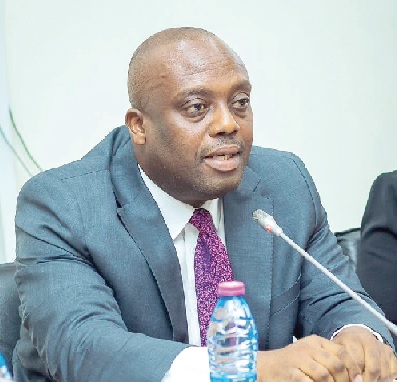
The Deputy Minister of Finance, Thomas Ampem Nyarko, moved the motion in the House ahead of the reading of the Mid-Year Budget Review Statement yesterday.
He, however, withdrew the Ghana Cocoa Board Amendment Bill, 2025 and re-laid it because of substantial changes that had been made in the bill since its introduction in March this year.
Rationale
Explaining the rationale behind the withdrawal of the Ghana Cocoa Board Amendment Bill, 2025, Mr Ampem Nyarko told the House that a lot of work had already been done on the bill, necessitating the need to “relay an entirely new bill for the consideration of the House”.
For the Customs Bill, he said it embodied an entirely new regulation given that the law had not been reviewed for about 11 years, during which there had been major changes in the customs regime.
“So, we are coming with an entirely new bill to enhance our Customs revenues,” Mr Ampem Nyarko said.
For Income Tax, he said there were a few amendments that “we are seeking to do much the same way as the Value Added and Excise Bill”.
He told Parliament that there had been a lot of leakages in the Excise duty regime, specifically in the area of spirits and wines, where there had been significant revenue leakages.
He explained that the revenue the country should have realised from wines and spirits imported into the country between 2023 and 2025 was estimated at GH₵5 billion, but only GH¢1 billion was received.
“So, we are coming with an amendment to tighten some provisions to secure the revenue inflow,” he said.
Again, he said for the customs suspense system, where transit cargo was not taxed, a lot of leakages had been observed, hence the amendment would compel the customs officers of the destination countries to be at Ghana’s port to collect revenues due them before the consignments would be released.
On the Public Procurement Amendment Bill, Mr Ampem Nyarko said there was the need to tighten the use of the restrictive tendering process which had given an incentive for single source method of procurement.
“And so we are coming with amendments to this bill to tighten and make competitive tendering the norm.
“As a consequence of this, we are going to shorten the period within which procurement process can be completed because it takes a long time to complete competitive tendering procurement, and that is one of the excuses for a lot of ministries, departments and agencies (MDAs) resorting to single source,” Mr Ampem Nyarko said.
That would ensure value for money, the deputy finance minister added.
