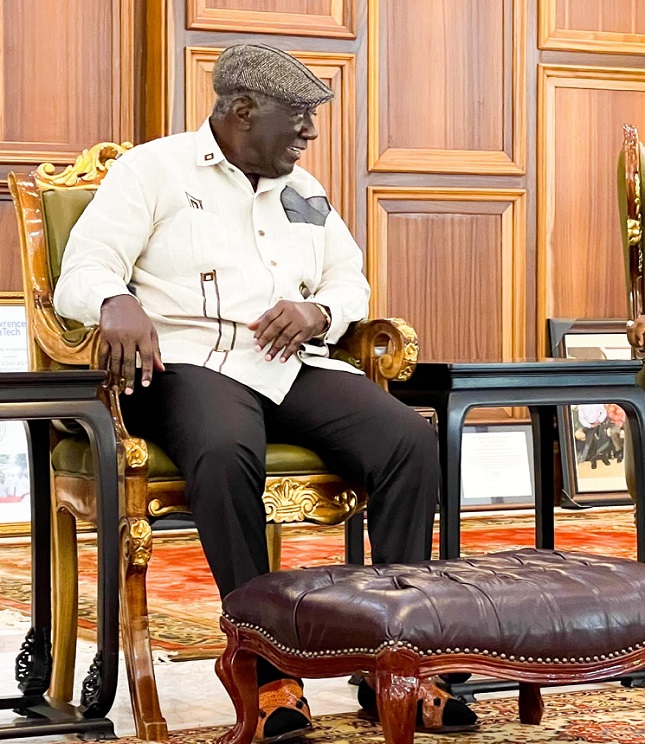
Former President John Agyekum Kufuor has backed a proposal to extend Ghana’s presidential term from four to five years, arguing that the current electoral cycle gives governments too little time to implement their development programmes.
His position differs from that of the opposition New Patriotic Party, of which he is a member. The party has rejected the proposed extension and called for the retention of the existing four-year presidential term.
Speaking in an interview on JoyNews’ PM Express on Wednesday, October 28, 2026, Mr Kufuor explained that an additional year would give governments more time to formulate policies, implement programmes and demonstrate results before seeking another mandate from the electorate. "I believe in the two terms but four years for a developing young country like ours," he said, drawing on his experience as President from 2001 to 2009 to explain his position.
The debate forms part of the ongoing constitutional review process. The Constitution Review Committee has recommended extending the presidential term to five years, alongside a corresponding extension of Parliament’s term. The government accepted the recommendation in July 2026, arguing that the existing four-year cycle did not provide enough time for policy formulation, implementation and evaluation. The proposal has yet to become law.
The NPP announced on September 17, 2026, that it opposed the extension and supported retaining the four-year presidential term. The party argued that regular elections allowed citizens to assess the performance of elected governments and decide whether to renew or withdraw their mandate.
It also maintained that challenges associated with policy implementation, transitions between administrations and the formation of governments should be addressed through greater efficiency rather than longer presidential terms.
The learning curve
Mr Kufuor said the time available to governments was often reduced by the learning period for newly appointed ministers, the time needed to develop policies and the pressure of preparing for another election. He explained that ministers needed time to understand the operations of their ministries and learn to work with the civil service, which held much of the institutional knowledge required to implement government policies.
According to him, the first year of an administration could be spent appointing ministers, familiarising them with their responsibilities and developing policy proposals.
"First year, he doesn’t know much is left from his right in the ministry," he said, describing the difficulties inexperienced ministers could face when they assumed office.
He said policy proposals also required time to be developed and considered by Cabinet and Parliament before implementation could begin. Mr Kufuor observed that the third year of an administration was often when voters began assessing whether the government was delivering on its promises, while the fourth year was increasingly dominated by election campaigning. "Fourth year is there and it’s election year. Election year anywhere on earth is mad year," he said.
Two-term limit stays
He argued that a five-year term would give governments more time to implement their programmes before entering the election year. Under his position, the two-term limit would remain in place, and he explained that the proposal was not intended to prolong any individual president’s stay in office but to give successive administrations more time to govern.
Mr Kufuor also cautioned against allowing presidents to remain in power for too long, arguing that prolonged control of political authority could encourage abuses. "Power tends to be like a nectar sweet," he said, stressing the need to retain constitutional limits on presidential tenure.
The NPP, on the other hand, maintains that retaining the four-year term would preserve regular electoral accountability. The party has also argued that moving presidential elections from December to November, as proposed under the constitutional review, would give incoming administrations more time to prepare for an orderly transition without extending the presidential mandate.