
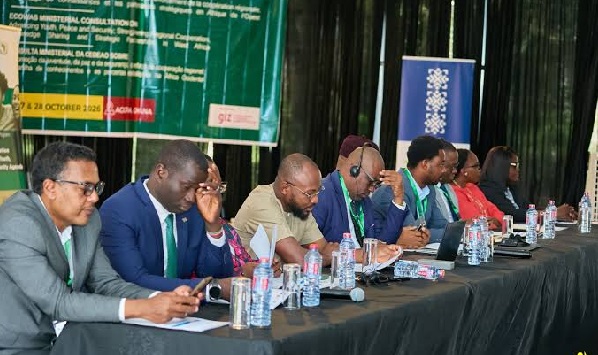
The Economic Community of West African States (ECOWAS) has reaffirmed its commitment to working with member states, regional institutions, development partners, civil society organisations and young people to strengthen peace and security across West Africa.
The ECOWAS Resident Representative to Ghana, H.E. Amb. Mohamed Lawan Gana, said meaningful collaboration among the various stakeholders was essential to advancing the Youth, Peace and Security (YPS) agenda and building sustainable peace in the region.
“ECOWAS remains fully committed to working with member states, regional institutions, development partners, civil society, and young people to advance this agenda and strengthen the foundations for sustainable peace across the region,” he said.
He was speaking at the ECOWAS Ministerial Consultation on Youth, Peace and Security in Accra, held under the theme, “Advancing Youth, Peace and Security in West Africa: Strengthening Regional Cooperation, Knowledge Sharing and Strategic Partnerships.”
The consultation, held from October 27 to 28, 2026, brought together government representatives, regional institutions, development partners and youth organisations across West Africa to strengthen cooperation on youth-related peace and security challenges.
Notable among the dignitaries were Governance and Peacebuilding Adviser, UNDP Regional Office for West and Central Africa, Mrs Nadine Rugwe, Director, UNFPA Regional Office for West and Central Africa, Dr Sennen Hounton, UNDP Representative, Mrs Enobong Momo and Executive Director of the West Africa Network for Peacebuilding Ghana (WANEP-Ghana), Mrs Levinia Addae-Mensah.
Ambassador Gana said the region continued to face threats from violent extremism, political instability, socioeconomic exclusion and other drivers of insecurity, making the active involvement of young people critical to conflict prevention and peacebuilding.
He stressed the need to move beyond recognising young people’s contributions to creating opportunities for them to influence decisions, shape policies and deliver tangible results.
“The next decade of youth, peace and security in West Africa must be defined not by the strength of our declarations but by the results we deliver,” he said.
He noted that young people should not be treated merely as beneficiaries of peace and security interventions but as partners, decision-makers and agents of change.
Participation of women
The ECOWAS representative also called for greater attention to the participation of young women, whose contributions to mediation, community dialogue and peacebuilding were often constrained by limited access to leadership, financing and representation.
He said meaningful participation required more than inviting young people to meetings, but also providing access to decision-making, adequate resources and safe spaces for leadership. He further emphasised the need to align the Youth, Peace and Security agenda with the Women, Peace and Security agenda.
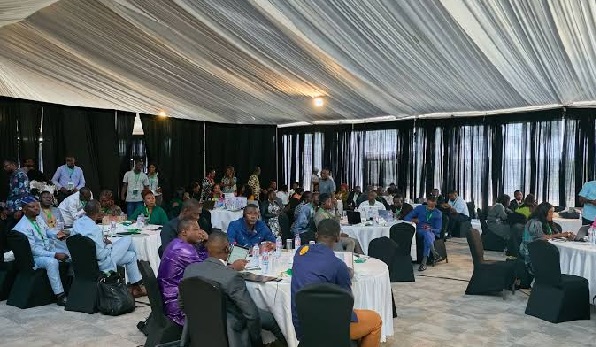
Ambassador Gana identified stronger national ownership, institutional coordination, sustainable financing and effective monitoring as key priorities for translating regional and continental commitments into practical outcomes.
He said national action plans could not be implemented through goodwill alone, urging governments and development partners to align funding with agreed priorities and ensure that youth-led organisations, particularly those led by young women, had meaningful access to resources and implementation opportunities.
He cited progress made by Nigeria, The Gambia, Guinea, Liberia and Senegal through national action plans, youth consultations and coordination mechanisms, saying their experiences offered valuable lessons for other countries in the region.
He called on member states to establish effective mechanisms for tracking implementation, measuring outcomes, identifying gaps and adjusting interventions, while preserving national ownership.
ECOWAS, he said, would work with the African Union, the West African Network for Peacebuilding (WANEP), development partners, civil society and youth networks to promote regional learning and develop appropriate indicators for assessing progress.
Ambassador Gana urged participants to leave the consultation with clear priorities, actionable recommendations and concrete commitments that could be advanced within the next six to 12 months.
Addressing young leaders, he encouraged them to speak candidly, challenge assumptions and propose practical solutions grounded in their communities.
“Your participation is not symbolic. It is indispensable,” he said, adding that institutions had a responsibility to listen and establish structures through which young people’s contributions could shape decisions and deliver lasting change.
He said stronger regional cooperation and resource mobilisation would be critical to advancing the agenda as ECOWAS pursued its vision of moving from an “ECOWAS of states” to an “ECOWAS of people and prosperity for all.”
Measurable impact
For her part, Executive Director of the West Africa Network for Peacebuilding Ghana (WANEP-Ghana), Mrs Levinia Addae-Mensah called for a shift in West Africa’s Youth, Peace and Security agenda from policy commitments and training programmes to measurable outcomes driven by the meaningful involvement of young people in decision-making.
She said governments and development partners must assess not only the activities and support provided to young people but also the changes achieved as a result of their participation in peacebuilding and security processes.
“We must indeed measure what we’re doing with young people, but let it go beyond just what we do for them and look more towards what changes have happened because young people have been meaningfully involved,” she said.
She commended the progress made since the adoption of United Nations Security Council Resolution 2250 in 2015, including the development of national action plans, coordination mechanisms and regional frameworks recognising young people as partners in peace and security. WANEP, she said, had supported the development of national action plans in about nine countries across the region.
However, she identified four areas requiring renewed attention: moving from commitments to measurable impact; advancing youth participation into genuine influence over decisions; investing in opportunities alongside training and capacity building; and strengthening trust and partnerships between generations.
She stressed that young people should not merely be invited to meetings but given opportunities to shape agendas, influence decisions and share responsibility for outcomes.
Across West Africa, she noted, young people were already leading peace initiatives, mobilising communities, promoting civic participation and developing innovative responses to complex challenges. She also urged stakeholders to recognise the resilience and ingenuity of young people working in informal economic activities, whose contributions often go unrecognised.
Mrs Addae-Mensah said investment in youth development must go beyond training, mentoring and leadership skills to provide access to jobs, financing and decision-making spaces where young people could apply their knowledge and influence policies.
