

The Prime Minister of Lebanon, Nawaf Salam on Sunday congratulated the General Directorate of General Security and Lebanese Customs on their successful thwarting of an attempt to smuggle 47 kilogrammes of cocaine through Rafic Hariri International Airport into Lebanon from Accra.
Salam commended the coordination, cooperation, and information sharing between both apparatuses in Lebanon, which led to the successful operation.
The Prime Minister emphasised that Lebanon’s land, sea, and air crossings will not serve as conduits for drug trafficking, money laundering, or any other illicit activities.
He affirmed that the government remains committed to strengthening monitoring of these crossings, intensifying coordination among relevant bodies, and combating smuggling networks and organised crime.
The Narcotics Control Commission (NACOC) in Ghana has been explaining why it allowed the suspected cocaine trafficker to leave Ghana for Lebanon and announced that it was a "controlled delivery."
NACOC has also said that efforts were underway in pursuing suspected accomplices in Ghana following the arrest of the Syrian national in Lebanon with the cocaine shipped through the Accra International Airport.
- Related articles
- NACOC hunts Ghana accomplices over 40kg cocaine shipment seized in Lebanon that were shipped through Accra Airport
- 46.7kg cocaine trafficker through Accra used insulation techniques designed to evade detection by scanning equipment - Lebanese authorities
While the Lebanese side of the announcement has been silent on a joint cooperation with Ghana as suggested by NACOC and generated public discussion in Ghana, NACOC, through its acting Director of Public Affairs and International Relations, Francis Opoku Amoah, has maintained that it monitored the Syrian national suspected of trafficking the cocaine from Ghana before allowing him to travel to Lebanon as part of an operation targeting a wider international drug network.
Speaking in a radio interview with Accra based Joy FM on Monday (November 2, 2026), Francis Opoku Amoah explained that the decision was informed by an investigative technique known as "controlled delivery", which allows law enforcement agencies to track suspected drug consignments across borders to identify and arrest other members of trafficking networks.
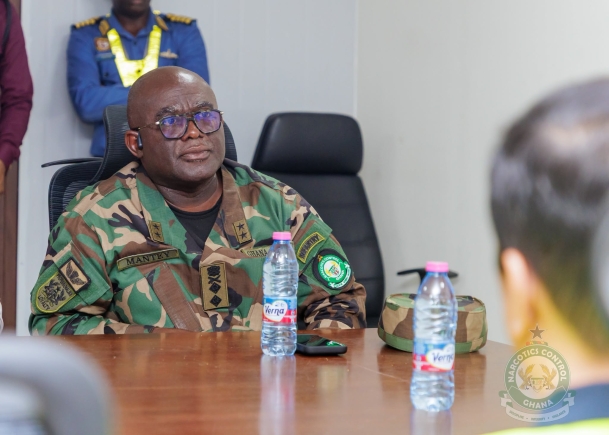
Mr Amoah said NACOC had monitored the suspect throughout his stay in Ghana and had information about his movements, including his arrival in the country, hotel accommodation and departure.
He acknowledged concerns surrounding the fact that the suspect travelled through the Accra International Airport but explained that the operation was part of efforts to pursue not only individual suspects but also their associates in international drug trafficking networks.
“It is a transnational organised crime, and one country does not have all the requisite logistics to be able to fight and fight it well,” he said
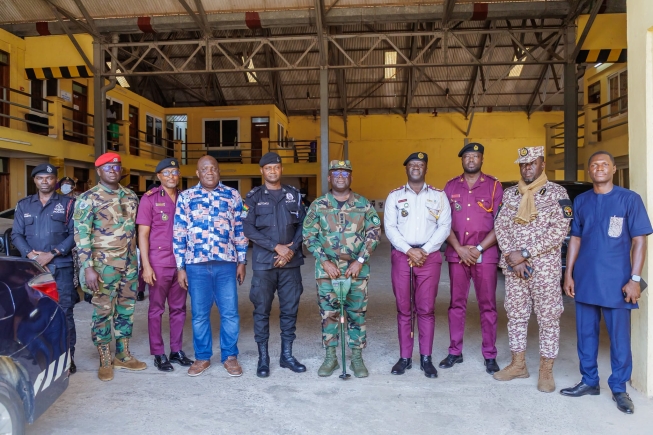
Explaining the controlled delivery approach, Mr Amoah said in the Joy FM interview that the strategy involves allowing a suspected trafficker and the consignment to reach another jurisdiction so that authorities can apprehend the individual and other members of the network.
“One thing that we do as far as our work is concerned is what we call the controlled delivery. Controlled delivery is where you know about the person, what the person is carrying, but you want the person to go to the other side because when the person gets to the other side, the person, not him alone but the network associated with him, will be arrested,” he explained.
Bright Simons' argument
In contributing to the public discussion, Bright Simons, a Ghanaian technologist, social innovator, entrepreneur, political commentator and a Research Vice-President at IMANI Africa on his part wrote the following on X [Twitter]
I was about to heave a big sigh of relief after reading a statement by Ghana's narcotics authorities (NACOC) about a joint operation with their counterparts in Lebanon (see attached) that has led to Lebanon's biggest airport luggage drug (cocaine) bust.
Then I looked again, closely, and started to scratch my head.
1. NACOC's Sunday afternoon statement says the arrest in Beirut followed a "controlled delivery operation" involving drug law enforcement authorities in Ghana and Lebanon, meant to identify and apprehend persons involved at both ends of the drug supply chain.
2. Yet, the Lebanese reports are very clear that this seizure was handled by Lebanon's General Security and Customs. Not the narcotics branch.
3. In Lebanon, the anti-narcotics branch is a unit of the Internal Security Force (ISF). Every time they participate in a joint operation, they are prominently mentioned and they issue their own statement afterwards.
4. Here are recent examples:-
Saudi Arabia: intelligence exchanged between Saudi Arabia’s drug-control directorate and Lebanon’s Central Office for Drug Control; the 125 kg Tripoli seizure; and the June 2026 Jiyeh Captagon case.
Qatar: the Brazilian swallower arrested at Beirut airport in August 2025.
Kuwait: a February 2026 case.
The UAE: an August 2026 incident.
5. Not once in the various statements and interviews given by Beirut Customs in the current case was cooperation with the Ghanaian authorities mentioned. That is odd.
6. Lebanese Customs in Beirut says the operation was carried out in coordination with the Lebanese General Security, following security monitoring and intelligence gathering.
7. The Lebanese Prime Minister Nawaf Salam praised the coordination and information exchange between the two Lebanese agencies. Not a single mention of Ghana, unlike all the other joint-operation cases.
8. The biggest red-flag for me was "THE BRIBE."
9. Lebanese customs sources told LBCI the passenger is suspected of paying a bribe at Accra airport to get his two suitcases through.
10. A) If NACOC had already decided to let the bags pass, it would have been under Ghanaian SECURITY SUPERVISION as per Act 1019 and would have been authorised for clearance by the Director General of NACOC.
B) GACL Security would have had to alerted ahead of baggage screening. How then could someone have asked for a bribe?
C) Lebanon has matching rules. Lebanon’s Law 673/1998 under articles 214, 219, and 220, require the Counter-Narcotics branch of the ISF to be directly involved in controlled delivery scenarios.
11. Also, why would Lebanese investigators describe the Accra leg as facilitated by corruption if their Ghanaian partners had alerted them in advance that it was being supervised and allowed through?
12. Lebanese reports certainly confirm that there was foreknowledge that the Syrian drug mule was suspicious and that Lebanese Customs spoke to Ghanaian Customs and Aviation Security. Is this evidence of controlled delivery?
13. Unfortunately not. There is no mention of NACOC, the only Ghanaian security organisation authorised to allow controlled delivery.
14. Furthermore, prior awareness of the drug mule seems to have been linked to the fact that the man had already entered Lebanon from Syria through the Masnaa land crossing and was under surveillance by Lebanese security before travelling from Beirut to Accra and returning a few days later. The man had been flagged even before getting to Ghana.
15. When you watch the video of the search, and the briefings thereafter, it is clear that the Lebanese authorities were surprised by the packaging and hidden compartments. They adjust Xray settings and remark about the surprise of finding airtags etc. If NACOC had supervised transit, Lebanese Customs would have received a detailed advance briefing according to protocol.
16. It is looking like Lebanese Customs called their Ghanaian counterparts AFTER the apprehension.
17. Which would also explain why NACOC doesn't already have in custody the key accomplices, including the senior customs officers and aviation security officials apparently bribed to let through the narcotics.
18. Given the setup, such officers would have to be high up, and would have been picked up immediately the consignment made it through as he or she would have been flagged given the supervision element of controlled delivery.
19. Furthermore, a joint operation from the outset would have meant that the drug mule's contacts (including visa guarantors etc.) in Ghana would have already been under surveillance and picked up as soon as he landed in Beirut. Or even earlier, especially since the plan didn't include waiting for him to handover the package to anybody.
20. I am also uneasy about NACOC's statement because this is the second time in less than a year that a large cocaine shipment has moved from Ghana to Lebanon.
21. Lebanese customs said that on 26 November 2025 it became *suspicious* of a shipment arriving from Ghana to Lebanon via air freight, weighing about 600 kilograms, declared as coconut oil in plastic bottles packed in 40 cartons. The seizure was announced on 22 December 2025.
22. What is curious here? Well: A. The media in Ghana appeared to have missed it. B. So NACOC said nothing. Absolutely nothing. There was definitely no controlled delivery in that matter judging by the fact that inspection proceeded on suspicion.
23. It makes one wonder if NACOC would have talked about controlled delivery in the present case had the media not gone to town as soon as the Lebanese media reported the bust on Sunday morning.
24. It also raises questions about the new enhanced measures for pre-screening at the airport.
25. It would be great if a joint ISF - NACOC press release sets minds at ease by addressing these worrying gaps in information.
See the various attachments.
I was about to heave a big sigh of relief after reading a statement by Ghana's narcotics authorities (NACOC) about a joint operation with their counterparts in Lebanon (see attached) that has led to Lebanon's biggest airport luggage drug (cocaine) bust. Then I looked again, closely, and started to scratch my head. 1. NACOC's Sunday afternoon statement says the arrest in Beirut followed a "controlled delivery operation" involving drug law enforcement authorities in Ghana and Lebanon, meant to identify and apprehend persons involved at both ends of the drug supply chain. 2. Yet, the Lebanese reports are very clear that this seizure was handled by Lebanon's General Security and Customs. Not the narcotics branch. 3. In Lebanon, the anti-narcotics branch is a unit of the Internal Security Force (ISF). Every time they participate in a joint operation, they are prominently mentioned and they issue their own statement afterwards. 4. Here are recent examples:- Saudi Arabia: intelligence exchanged between Saudi Arabia’s drug-control directorate and Lebanon’s Central Office for Drug Control; the 125 kg Tripoli seizure; and the June 2026 Jiyeh Captagon case. Qatar: the Brazilian swallower arrested at Beirut airport in August 2025. Kuwait: a February 2026 case. The UAE: an August 2026 incident. 5. Not once in the various statements and interviews given by Beirut Customs in the current case was cooperation with the Ghanaian authorities mentioned. That is odd. 6. Lebanese Customs in Beirut says the operation was carried out in coordination with the Lebanese General Security, following security monitoring and intelligence gathering. 7. The Lebanese Prime Minister Nawaf Salam praised the coordination and information exchange between the two Lebanese agencies. Not a single mention of Ghana, unlike all the other joint-operation cases. 8. The biggest red-flag for me was "THE BRIBE." 9. Lebanese customs sources told LBCI the passenger is suspected of paying a bribe at Accra airport to get his two suitcases through. 10. A) If NACOC had already decided to let the bags pass, it would have been under Ghanaian SECURITY SUPERVISION as per Act 1019 and would have been authorised for clearance by the Director General of NACOC. B) GACL Security would have had to alerted ahead of baggage screening. How then could someone have asked for a bribe? C) Lebanon has matching rules. Lebanon’s Law 673/1998 under articles 214, 219, and 220, require the Counter-Narcotics branch of the ISF to be directly involved in controlled delivery scenarios. 11. Also, why would Lebanese investigators describe the Accra leg as facilitated by corruption if their Ghanaian partners had alerted them in advance that it was being supervised and allowed through? 12. Lebanese reports certainly confirm that there was foreknowledge that the Syrian drug mule was suspicious and that Lebanese Customs spoke to Ghanaian Customs and Aviation Security. Is this evidence of controlled delivery? 13. Unfortunately not. There is no mention of NACOC, the only Ghanaian security organisation authorised to allow controlled delivery. 14. Furthermore, prior awareness of the drug mule seems to have been linked to the fact that the man had already entered Lebanon from Syria through the Masnaa land crossing and was under surveillance by Lebanese security before travelling from Beirut to Accra and returning a few days later. The man had been flagged even before getting to Ghana. 15. When you watch the video of the search, and the briefings thereafter, it is clear that the Lebanese authorities were surprised by the packaging and hidden compartments. They adjust Xray settings and remark about the surprise of finding airtags etc. If NACOC had supervised transit, Lebanese Customs would have received a detailed advance briefing according to protocol. 16. It is looking like Lebanese Customs called their Ghanaian counterparts AFTER the apprehension. 17. Which would also explain why NACOC doesn't already have in custody the key accomplices, including the senior customs officers and aviation security officials apparently bribed to let through the narcotics. 18. Given the setup, such officers would have to be high up, and would have been picked up immediately the consignment made it through as he or she would have been flagged given the supervision element of controlled delivery. 19. Furthermore, a joint operation from the outset would have meant that the drug mule's contacts (including visa guarantors etc.) in Ghana would have already been under surveillance and picked up as soon as he landed in Beirut. Or even earlier, especially since the plan didn't include waiting for him to handover the package to anybody. 20. I am also uneasy about NACOC's statement because this is the second time in less than a year that a large cocaine shipment has moved from Ghana to Lebanon. 21. Lebanese customs said that on 26 November 2025 it became *suspicious* of a shipment arriving from Ghana to Lebanon via air freight, weighing about 600 kilograms, declared as coconut oil in plastic bottles packed in 40 cartons. The seizure was announced on 22 December 2025. 22. What is curious here? Well: A. The media in Ghana appeared to have missed it. B. So NACOC said nothing. Absolutely nothing. There was definitely no controlled delivery in that matter judging by the fact that inspection proceeded on suspicion. 23. It makes one wonder if NACOC would have talked about controlled delivery in the present case had the media not gone to town as soon as the Lebanese media reported the bust on Sunday morning. 24. It also raises questions about the new enhanced measures for pre-screening at the airport. 25. It would be great if a joint ISF - NACOC press release sets minds at ease by addressing these worrying gaps in information. See the various attachments.
— Bright Simons (@BBSimons) November 2, 2026
Writer's email:
