
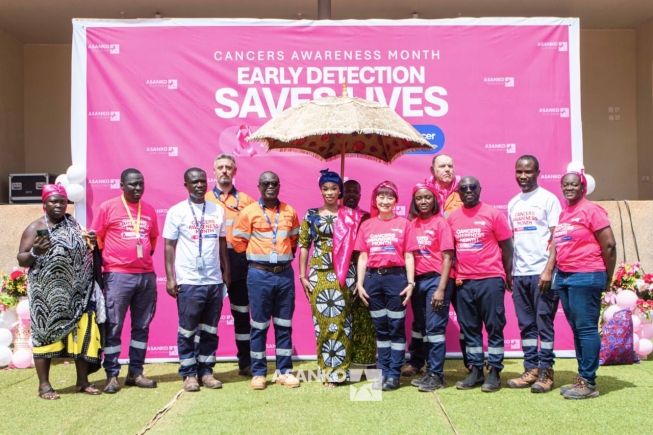
Hundreds of residents of Asanko Gold Ghana Ltd’s host communities have benefitted from a free health screening exercise during a cancer awareness month programme organised to improve the health of the people.
Themed "Early Detection Saves Lives," the programme encouraged residents to seek timely medical advice and continue paying attention to their health beyond the month of October. The beneficiary communities were Koninase, Manso Nkran, Dedease and Kwankyeabo.
Free medication was administered to those who needed it, while participants requiring further assessment or treatment received referrals to major health facilities. Services rendered included breast and prostate cancer screening, blood pressure monitoring, blood sugar checks, urine testing, body mass index assessments and full blood count tests.
A breast health education session covered warning signs, risk factors, screening and when to seek medical advice. It also addressed misconceptions that can delay care and provided guidance on supporting people affected by breast cancer. The beneficiary residents received advice on their screening results, everyday health practices and when to seek further medical attention, while those referred for additional assessment were encouraged to complete the next stage of care.
Asanko’s medical team, led by Dr Kwasi Safo, Unit Manager, Health Services, educated staff on breast and prostate cancer, while men in the eligible age group were encouraged to visit the institution’s clinic for prostate cancer screening.
The General Manager of Asanko Gold Ghana Ltd, Justice Fenteng, explained that breast cancer remained the main focus of the company’s October awareness activities, with prostate cancer included to encourage men to take an active interest in their health. He urged residents to make use of professional advice, understand their screening results and follow through on recommended care. "The screening should be followed by action where further medical attention is needed," he said.
He acknowledged that fear, uncertainty, transport difficulties, cost and competing work or family responsibilities prevented people from seeking help promptly. "I encourage families and neighbours to offer practical support, including helping relatives attend follow-up appointments," he said.
In a remark, Dr Safo noted that the company had arranged mammogram appointments for all female staff above 40 years, reinforcing the company’s emphasis on early detection of breast cancer.
The Paramount Queen Mother of Manso Nkwanta, Nana Nyarko Aboraa Sika III, who chaired the event, urged residents to make breast cancer awareness and appropriate health checks a year-round priority. She cautioned against waiting until the next October each year to revisit the subject, stressing that the conversations and attention to personal health should continue after the awareness month.
Reflecting on past community experiences, she said some deaths had been regarded as mysterious when the illnesses involved had not been identified, and expressed concern about people waiting until they noticed a problem in their bodies before seeking medical attention. Dwelling on the principle that prevention is better than cure, she welcomed the programme’s emphasis on early detection and timely care, and thanked the mining company for the initiative, which she said would go a long way to improve the health needs of the people.
