
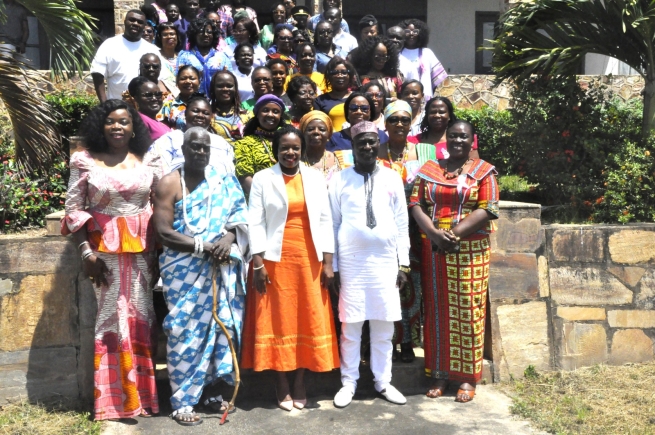
Fifty-eight selected representatives of various sectors have attended a day’s workshop on the Affirmative Action Act (Gender Equity) in Ho.
The participants were drawn from the ministries and departments, civil society organisations, women’s and youth groups, Volta Regional Coordinating Council, and the security agencies.
The workshop was organised jointly by the Kofi Annan International Peace Keeping Training Centre (KAIPTC) and the Department of Gender to create awareness, promote dialogue and collective action on the implementation of the legislation.
The participants were taken through provisions on quotas, accountability mechanisms, enforcement and stakeholder responsibilities concerning the gender equity act.
The Volta Regional Minister, James Gunu, in a speech read on his behalf the opening ceremony, said the passage of the act marked an important step in Ghana’s continuing efforts to promote equality, inclusion and effective participation in national development.
The act provided a framework for addressing gender disparities and progressively increasing the representation of women in decision-making and development process, he explained.
Mr Gunu said gender equity must not be regarded as women’s issue, but rather as a national improvement subject.
“Women’s constitute a significant proportion of our population and make enormous contributions to our families, communities, institutions, yet in many areas of decision-making, leadership and access to opportunities, women to continue to face barriers that limit their full participation,” Mr Gunu said.
The regional minister pointed out behind every woman was knowledge, experience, ideas, and the potential to contribute to the development of her community and the country.
He said it was, therefore, imperative to integrate gender considerations into the planning, budgeting, recruitment, appointments, leadership development and community development programmes.
“That must be reflected in communities, assemblies, institutions, and development plans at both regional and national levels,” Mr Gunu maintained.
He urged the media to vigorously educate the public and challenge stereotypes that discouraged women and girls from participating fully in public life.
Collective commitment
A Senior Legal Officer of the Kofi Annan International Peace Keeping Training Centre (KAIPTC), Nana Efua Hackman said the Affirmative Action Act was not merely legal framework.
“It is a declaration of the country’s collective commitment to ensuring women and men had equal opportunities to contribute to and benefit from social, economic, political, and development progress of our country,” she explained.
Shedding light on the act, Nana Hackman said it was not only intended to be aspirational but also designed to be actionable, measurable, and enforceable.
“Through compliance monitoring, written undertakings, alternative dispute resolution mechanisms, and periodic audits, institutions will be guided and supported to meet their obligations under the law,” she added.
Underrepresentation
The Volta Regional Director of Gender, Thywill Eyra Kpe said women were in the majority population but remained significantly underrepresented in many decision-making structure in the country.
For instance, she said, out of the 458 elected assembly members in the 18 municipal and district assemblies in the region, only 31 were women, and some assemblies had no female members at all.
Mrs Kpe said those figures were very challenging and required a change of the narrative.
