The International Monetary Fund (IMF) has urged the government to use the 2027 Budget to translate the fiscal space created over the past two years into increased investment, infrastructure development and job creation.
The Fund called for rigorous project appraisal, competitive procurement and strict expenditure controls to ensure value for money as Ghana rolls out its US$10 billion New Economy agenda to transform macroeconomic stability into shared prosperity.
The IMF made the recommendations following a Staff-Level Agreement (SLA) with Ghana on the first review of the country’s three-year, non-financing Policy Coordination Instrument (PCI) on Thursday, describing the country’s macroeconomic stability as increasingly entrenched.
“The 2027 budget is built on strong foundations. Consistent with the PCI, it targets a primary surplus of 0.5 per cent of GDP (Gross Domestic Product) on a commitment basis, supported by revenue measures already approved by Parliament in July,” said Mr Ruben Atoyan, IMF Mission Chief.
“The fiscal space created will be used for investment, focused on the priorities under the New Economy, including creating job and investment opportunities and closing the infrastructure gap,” he added.
The Fund projected an increase in non-oil revenue in 2027, supported by customs and excise reforms and improvements in revenue administration, including the introduction of electronic fiscal devices, reducing reliance on commodity earnings.
Figures from the Bank of Ghana (BoG) showed that total revenue and grants reached GH¢144.571 billion, representing 9.1 per cent of GDP, at the end of the first half of 2026. Non-oil revenue accounted for GH¢138.28 billion, representing 95.65 per cent of total revenue.
The IMF urged the authorities to strengthen procurement processes and expenditure controls to curb waste, ensure value for money and safeguard debt sustainability and long-term fiscal stability.
It, however, cautioned that Ghana remained vulnerable to external shocks, including volatility in gold, cocoa and oil prices, geopolitical tensions and tighter global financial conditions.
Domestic risks included debt rollover requirements, fiscal pressures from the energy, cocoa and gold sectors, as well as weaknesses in the financial sector.
“Prudent monetary policy, greater exchange rate flexibility, stronger reserve buffers, and buildup of a sinking fund to pay for maturing debt remain key to safeguarding stability,” Mr Atoyan said.
On governance, he called for the adoption of the Conduct of Public Officers Bill, publication of the second National Ethics and Anti-Corruption Action Plan, and stronger oversight of state-owned enterprises (SOEs).
He said these measures would strengthen public trust, encourage private investment and reinforce Ghana’s commitment to economic reforms and stability.
Meanwhile, Deputy Finance Minister Thomas Nyarko Ampem said the government would leverage its US$10 billion New Economy agenda to transform Ghana into a productive and competitive economy driven by value addition, enterprise development and expanded economic opportunities.
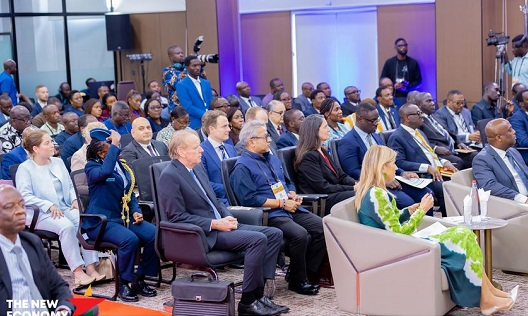
He was speaking at the inauguration of the National Financial Inclusion and Development Strategy (NFIDS 2027–2031), held on the sidelines of an engagement with Queen Máxima, the United Nations Secretary-General’s Special Advocate for Financial Health (UNSGSA), in Accra on Thursday.
“Over the past two years, we have worked to restore macroeconomic stability and confidence… Now, we are ready to take-off towards shared prosperity,” Mr Ampem said.
He said financial health was central to the government’s economic transformation agenda, stressing the need to equip citizens with financial services to support investment, business expansion, savings and entrepreneurship.
“We want financial services to help farmers invest, businesses expand, families save and young people turn their ideas into viable enterprises,” he said.
Finance Minister Dr Cassiel Ato Baah Forson is expected to present the 2027 Budget Statement and Economic Policy to Parliament on November 12.
The IMF's recommendations come amid calls by some economic watchers for the government to ease fiscal consolidation and prioritise policies and programmes that directly improve living conditions, particularly through decent job creation and better incomes.