
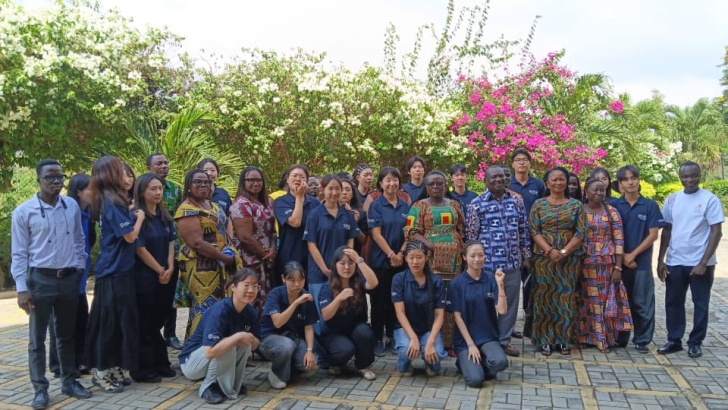
More than 1,000 basic schools in the Central Region are to benefit from free information and communication technology (ICT) textbooks developed by Korean volunteers to strengthen digital literacy and improve teaching and learning in Ghana.
The textbooks, titled ICT for Basic Schools, were produced by 18 volunteers supported by the government of Korea through the Korea International Cooperation Agency (KOICA) and the Korean University Council for Social Service (KUCSS) volunteer programme.
At a ceremony in Cape Coast on Friday (Nov 27, 2026), the field manager of KUCSS, Miyoung Kim, said more than 400 hard copies of the books have been distributed to 67 schools in the Cape Coast, while soft copies have been made available for download on a website for free. [Online Textbook: https://sites.google.com/view/step-by-step-ict-textbook-gh ]
She said the volunteers, who worked in two batches have served in four basic schools in Cape Coast, providing ICT training for teachers and cultural exchange activities for pupils.
Ms Kim said the first batch, which served from April to August, established an ICT room at Wesley Girls’ Basic School, while the second batch, which worked from August to December, developed the textbooks to address the absence of structured teaching materials for ICT lessons.
She said the volunteers spent about three months developing the books, adding that the program has benefited more than 1,000 teachers and students through training activities.
The Central Regional Director of Education at Ghana Education Service, Dr. Juliette Dufie Otami, commended the volunteers for strengthening teachers’ digital competencies and providing instructional materials to support ICT education at the basic school level.
She said the textbooks offered step-by-step guidance that could help teachers and pupils use computers even without an instructor present.
Dr. Juliette Dufie Otami described the publication as a lasting contribution to education, saying it would support the development of digital literacy among young learners and encourage teachers to integrate technology into classroom instruction.
The Cape Coast Metropolitan Director of Education, Thomas Kwofie, said the programme has improved the ICT competence of teachers in the beneficiary schools, enabling them to incorporate digital tools into their lessons.
He expressed the hope that the partnership would continue, particularly through the proposed deployment of long-term volunteers to support schools.
The Headmistress of Kakumdo M/A Basic School, one of the four selected basic schools in the metropolis, Nora Nyarko, noted that the training has equipped teachers with practical skills in Microsoft Word, Excel and PowerPoint, which they are now applying in lesson preparation and classroom activities.
She said the volunteers have also donated computers, textbooks and protective covers for the equipment, while pupils benefited from cultural exchange and more collaborative learning experiences.
The Headmistress of Efutu M/A Basic School, another selected school, Evelyn Efua Panyin, added that teachers have become more confident in preparing presentations, organising lesson content and managing school records.
The programme brought together Korean volunteers in two batches to support ICT education and cultural exchange in selected basic schools in Cape Coast.
