
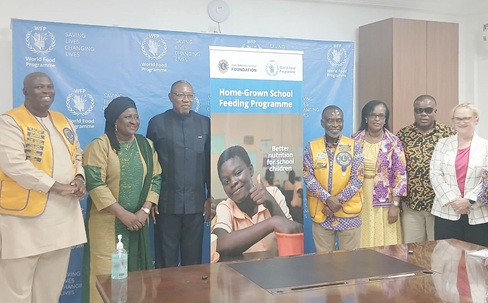
The United Nations World Food Programme (WFP), in partnership with the Lions Clubs International Foundation (LCIF), has launched a pilot Home-Grown School Feeding (HGSF) project to provide nutritious meals to 33,598 kindergarten and primary school pupils in the Northern and Ashanti regions.
The initiative, which will be implemented in about 100 selected schools in the Karaga and the Sekyere Central districts, seeks to improve child nutrition, strengthen local food systems and create reliable markets for smallholder farmers.
The one-year pilot programme was launched in Accra last Friday (June 5) as part of efforts to support the country’s development agenda and contribute to the achievement of Sustainable Development Goal Two (SDG 2), which focuses on ending hunger, achieving food security and improving nutrition.
Improving nutrition
At the launch of the initiative, the WFP Country Director and Representative in Ghana, Aurore Rusiga, said the programme represented more than a school feeding intervention.
“This event is not just about launching a project. It is about connecting what we grow to how we nourish our children,” she said.
Ms Rusiga explained that the initiative would simultaneously improve children’s access to nutritious meals and strengthen local agricultural value chains.
She added that every meal served through the programme would have a wider impact beyond feeding children.
Describing the initiative as a tool for development, she said school feeding should be viewed as a catalyst for local development and a policy tool for driving and strengthening human capital, socio-economic progress and sustainable food systems.
The WFP Country Director said the project would be implemented in collaboration with the ministries of Gender, Children and Social Protection, Education and Food and Agriculture, as well as the Ghana School Feeding Programme Secretariat, to ensure strong national ownership and coordination.
The District Governor of Lions Club District 418, Prince Obeng Dwamena, said the programme was built on the conviction that no child should go hungry.
“Hunger remains one of the greatest barriers to education, health and human development. A hungry child cannot concentrate in class, cannot learn effectively and cannot reach their full potential,” he said.
Education outcomes
Mr Dwamena said that the project aligned with the Lions Clubs International Foundation’s global mission of addressing hunger and improving food security.
According to him, sourcing food locally would not only improve children’s nutrition but also generate economic opportunities for farming communities.
The Deputy Minister of Education, Dr Clement Apaak, described the initiative as a strategic investment in education and human capital development.
“Education remains one of the most powerful tools for national development.
However, the ability of a child to learn effectively is closely linked to his or her health and nutritional well-being,” he said.
“A hungry child cannot fully concentrate in the classroom, participate actively in learning, or achieve his or her full potential,” he added.
Dr Apaak said the project highlighted the strong connection between education, agriculture, nutrition and community development.
