
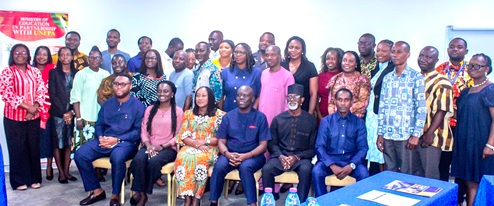
Stakeholders in education and health have begun developing a unified framework under the Healthy Educated and Responsible Adolescents Living and Development (HERALD) Initiative to address fragmented policies, improve coordination and strengthen support services for adolescents in Ghana.
The initiative seeks to harmonise existing policies and guidelines across the education and health sectors to ensure that adolescents receive consistent quality education, health information, essential services and the life skills needed to become healthy, educated and responsible adults.
At a stakeholder meeting in Accra, the Lead Facilitator for the HERALD Initiative, Michael Adorayi Amenah, said the framework would establish common standards, monitoring indicators and clear institutional responsibilities to improve coordination and accountability.
He said the framework was intended to bridge gaps between existing interventions and ensure that institutions worked towards a common goal.
Four pillars
Mr Amenah identified application, services, support and adaptation as the four critical pillars of the proposed framework.
He said the initiative would move beyond theoretical learning to help adolescents apply knowledge in their daily lives, while strengthening access to services and referral systems linking schools, health facilities, parents and social welfare institutions together.
“Knowledge alone is not enough.
Adolescents must be able to apply what they learn in their everyday lives and have access to the services and support they need,” he said.
The framework would also be adapted to the age, developmental stage, disability, school status and local circumstances of adolescents, with particular attention to those aged 10 to 14.
Delivery would be through schools, including technical and vocational institutions, health facilities and community platforms.
The Programme Manager for Adolescent Health and Development at the Ghana Health Service (GHS), Sharifa Mohammed, said differences between the mandates and policies of the
GHS and the Ghana Education Service (GES) sometimes constrained the provision of adolescent sexual and reproductive health services in schools.
She also cited cultural sensitivities, stigma surrounding adolescent sexuality and reliance on project-based funding as challenges that could undermine the sustainability of interventions.
Ms Mohammed said stronger collaboration was needed to ensure that institutional differences did not prevent adolescents from accessing essential information and services.
She called for formal referral pathways for health and child protection concerns, as well as a joint curriculum review by the GHS and GES.
Development hubs
A representative of the Ministry of Education Isaac Atta-Baah said the framework should establish consensus on the information, competencies, services and support systems adolescents needed to thrive and contribute meaningfully to society.
Mr Atta-Baah, who is also the Principal Programme Officer of Early Childhood Education said schools had a responsibility beyond academic instruction, stressing the importance of developing leadership, citizenship and life skills among young people.
“Education must go beyond academic achievement. We must also equip young people with the skills, values and competencies they need to make responsible decisions and contribute positively to society,” he said.
Existing interventions
Discussions also highlighted existing adolescent support programmes, including the Safety Net Intervention, which supports pregnant girls to return to school, school-based adolescent health clubs and digital platforms that provide young people with information and safe spaces to discuss developmental concerns.
Participants stressed the need to strengthen referral systems and ensure continuity of care between school-based support, health professionals and families.
Representatives of the United Nations Population Fund (UNFPA), the World Health Organisation (WHO), the National Commission for Civic Education (NCCE) and the National Population Council (NPC), among other stakeholders, contributed to the discussions.
