
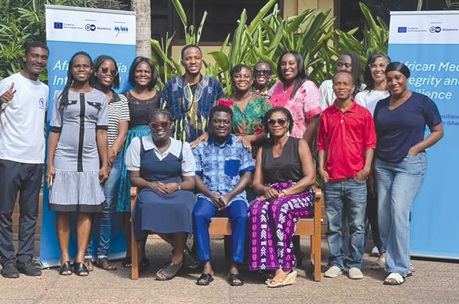
DW Akademie has organised a five-day gender-sensitive reporting workshop for Ghanaian journalists to strengthen their capacity to report gender issues accurately, fairly and responsibly.
The workshop brought together journalists, media practitioners, gender experts, civil society representatives and other stakeholders to examine best practices for promoting gender equality and inclusion through responsible journalism.
The training was organised to equip media practitioners with practical knowledge and skills to apply gender-sensitive approaches in their news reporting.
It also focused on how journalists could avoid stereotypes, amplify the voices of marginalised groups and ensure that stories reflected balanced perspectives and the experiences of different members of society.
Media’s role
The Project Manager for the African Media Integrity and Resilience (AMIR) Programme at DW Akademie, Cecil Ato Kwamena Dadzie, said the media had an important role to play in shaping public perceptions and influencing social change.
He said gender-sensitive reporting went beyond covering issues affecting women and men, adding that it required journalists to consciously examine how stories were framed and whose voices were included.
Workshop
“Through this workshop, we aim to strengthen journalists’ capacity to report gender issues accurately, fairly and responsibly, while promoting inclusive storytelling that reflects the experiences and voices of all members of society,” he said.
Mr Dadzie said equipping journalists with practical tools and knowledge would contribute to a more inclusive media landscape and support broader efforts towards gender equality and social justice.
He expressed gratitude to the European Union (EU) for funding the AMIR Programme, which he said enabled initiatives aimed at advancing inclusive and responsible journalism across Africa.
Sheila Mysorekar, a facilitator of the training, said gender-sensitive reporting was important not only in Ghana but across the world.
She said the continued absence of equality between men and women made gender-sensitive journalism necessary, adding that the media could contribute to efforts to promote greater equality.
