
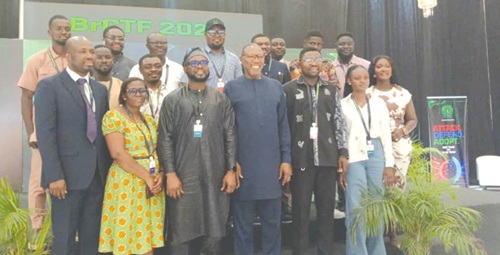
Ghana must urgently develop and own its digital infrastructure, systems and expertise to protect the country’s data as well as achieve genuine digital independence, Deputy Minister of Education, Dr Clement Abas Apaak, has said.
He said the continuous dependence on foreign digital infrastructure left the country vulnerable and undermined efforts to build a resilient digital economy capable of serving the country’s interests.
Dr Apaak made the call in Accra when he addressed the 2026 Break the Code: Capture the Flag (BrCTF), where he challenged young cybersecurity professionals to help Ghana develop the capacity to secure its digital space.
Students
The three-day event, which ran from October 22 to 24, brought together students, professionals and technology enthusiasts for cybersecurity competitions, technical workshops and discussions on digital jobs.
Dr Apaak said the country’s ambition should go beyond producing young people who could use technology, and stressed the need to develop professionals capable of creating, securing and managing its own digital systems.
“We must own our own systems and own our own information,” Dr Apaak said, warning that Ghana was “not as safe as we pretend” when critical information and digital activities relied heavily on infrastructure located outside the country.
To that end, the Deputy Minister said the education system needed to move beyond certificates and examinations and focus increasingly on practical competencies that could make young people employable in Ghana and the global digital economy.
He said the emerging digital economy required skills in cybersecurity, software engineering, data analytics, artificial intelligence, cloud computing, digital financial services, fraud prevention and other areas that had expanded rapidly in recent years.
He said the bridge between education and employment must be built through practical competence, and argued that a cybersecurity student should be able to investigate an incident, a developer should be able to build solutions, and a data analyst should be able to turn information into useful insight.
Challenge
Dr Apaak also challenged employers to play a greater role in developing digital talent by providing internships, mentorship, technical challenges and opportunities for young people to demonstrate their abilities before completing their education.
The Deputy Director-General of GES, Professor Smile Gavua Dzisi, said the move would expose young people to coding, artificial intelligence, robotics, computational thinking and digital safety early enough to enable Ghana to build a strong pipeline of cyber professionals capable of competing in the global digital economy.
She said training numbers alone were no longer sufficient; rather, there was a need to measure how many participants could demonstrate practical skills, obtain certifications, secure internships and jobs, or establish businesses and create sustainable livelihoods.
Competition
The Programme Lead of BrCTF, Felix Boateng, said the competition was designed to provide a practical platform for developing a community of ethical hackers and digital defenders capable of helping Ghana withstand evolving cyber threats.
