
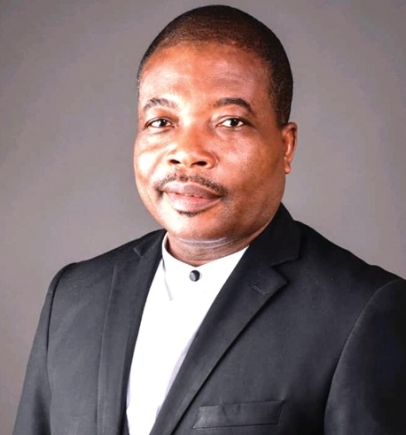
The President of the National Association of Graduate Teachers (NAGRAT), Jacob Anaba, has called for an education system in which all senior high schools (SHSs) operate at the same standard to ensure that every student has an equal opportunity to improve academically.
He said the grading system used for the Basic Education Certificate Examination (BECE) should not be interpreted as determining whether a candidate had failed or passed, but rather as a means of ranking students based on their performance.
According to him, a student who obtained a lower grade had not necessarily failed, but had performed below another candidate in terms of the marks obtained.
He said the system should, therefore, ensure that every student was placed in a school where they would have the opportunity to improve their technical and intellectual competence.
Mr Anaba was sharing his thoughts on the decision by the Ministry of Education to give BECE graduates with Grade 9 in English Language and Mathematics the opportunity to continue their education at the second cycle level.
In all, 53,877 graduates fell within that category.
Previously, those with Grade 9 were not placed in SHSs because they did not meet the criteria under the Computerised School Selection and Placement System (CSSPS).
The NAGRAT President said the challenge was that the country had created different categories of schools, with some regarded as the top or developed schools, thereby creating the perception that only academically strong students should attend them.
“We have decided to put the schools in grades.
We have A, B, C and D. The developed, topmost schools, we want students who have passed very well, who are strong in terms of their grades, to attend those schools,” he said.
Mr Anaba said students considered academically weak were subsequently sent to other schools, a situation he described as a failure on the part of the education system.
Choice
A total of 313,283 candidates selected Category ‘A’ schools as their first choice, compared with 176,614 for Category ‘B’ schools, 123,577 for Category ‘C’ schools, and 995 for participating private SHSs/SHTSs.
More than half of the candidates’ first-choice demand was concentrated in the most highly subscribed Category ‘A’ schools.
The vacancy data indicate that the system had 859,828 declared vacancies, including 76,417 vacancies in Category A schools, 250,366 in Category ‘B’ schools, and 468,652 in Category ‘C’ schools.
While 313,283 candidates expressed a first preference for Category ‘A’ schools, the declared vacancies in those schools stood at 76,417.
This year, 623,072 candidates sat for the 2026 BECE, compared with 603,328 candidates last year.
Also, candidates numbering 604,567 qualified for placement into second cycle schools.
Of this number, 527,932 candidates have been successfully placed.
