
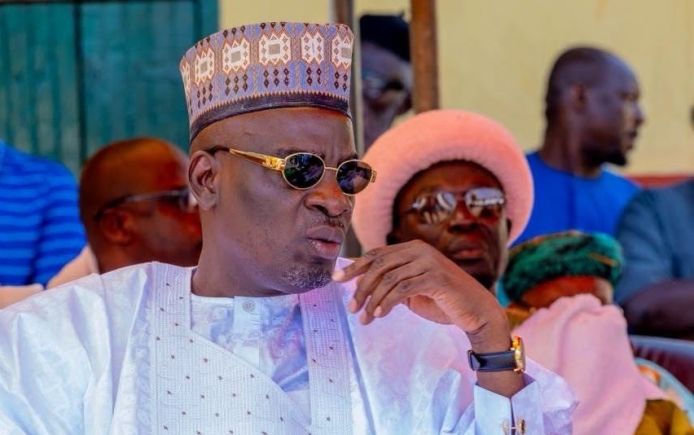
The Minister of Education, Haruna Iddrisu, has called on the Ghana Association of University Administrators (GAUA) and the Technical Universities Senior Administrators Association of Ghana (TUSAAG) to call off their strike for normal academic work to proceed at all public universities across the country.
He said it was his expectation that public universities would reopen by the weekend and not later, so that academic work could begin on Monday.
The minister said that was to ensure that the academic calendar was not disrupted beyond the time already lost due to the strike by GAUA and TUSAAG.
Mr Iddrisu made the urgent call yesterday after the government had met with GAUA and TUSAAG.
Present at the meeting were the Chief Executive Officer (CEO) of the Fair Wages and Salaries Commission (FWSC), Dr George Smith-Graham, and officials of the Ministry of Finance and the Ghana Tertiary Education Commission (GTEC).
GAUA was led by its president, Rev. Kwaku Karikari, and other leading members of the association, alongside representatives of TUSAAG.
Postpone
The University of Ghana and the Kwame Nkrumah University of Science and Technology postponed their reopening dates from yesterday and tomorrow respectively due to the strike by GAUA, while activities on technical university campuses are also experiencing hiccups due to the strike by their lecturers in demand for varying levels of conditions of service.
Mr Iddrisu said, “It is for GAUA and its leadership and TUSAAG and its leadership to go and consult further with their constituents and call off the industrial actions while the negotiations proceed.
"Understandably, some of the matters can be resolved and will be resolved immediately, including the Ministry of Education expediting action through GTEC to request all public universities to extend retirement rollover to all senior members as has been the practice.
That we can do and that we assure you that we would do," he said.
Briefing journalists after the meeting yesterday afternoon, Mr Iddrisu said the major issues included but not limited to market premium and its restoration to parity and issues which were accordingly referred to the FWSC.
"I believe that between tomorrow and a week, the FWSC will do what is appropriate within its mandate for you to call off the strike to get normal academic work restored across all public universities.
I am happy to note that the Minister of Finance has issued a warrant for the payment of the one-off research allowance.
"So, it is now a matter between the Controller and Accountant General’s Office, the Ministry of Education, GTEC and the payroll system to get it done," he said.
Mr Iddrisu said the Minister of Finance had signed a 40 per cent negotiated adjustment to market premium and non-basic allowance.
"I have the letter from the Minister of Finance on that matter. So, we consider that motion to be resolved," he emphasised.
Mr Iddrsisu, therefore, reminded the leadership of GAUA and TUSAAG that the calendar to start the academic year in September meant a lot for President Mahama’s Reset Agenda.
“We have never been able to realign reopening of schools from all levels of education to the universities than now," he said.
He said the government wanted to do everything to preserve the calendar for all schools in the country to reopen in September, and function effectively while their grievances were looked into.
Mr Iddrisu assured GAUA that their legitimate concerns would receive government’s priority attention.
"I encourage you to go back and engage with your constituents, but this is the desire of the government, and probably the decision of the government," he said.
The Education Minister said he would ask GTEC to request all public universities to proceed to reopen, in anticipation of the return of GAUA, “subject to the government meeting you on some of those legitimate issues you've laid before it".
The minister of education expressed his expectation for all universities to reopen not later than October 18, this year, while negotiations continue.
Disruptions
Meanwhile, activities at the country’s 10 public technical universities and some public universities are experiencing disruptions, especially for freshers, due to the strike over unpaid research allowance and disparities in remuneration.
The industrial action has affected preparations for the reopening of universities, leaving students unable to complete registration and bringing key administrative and academic processes to a standstill.
The disruption has also affected student bed allocation, thesis defence programmes and essential services, while the absence of administrative staff has affected the processing of payments for fuel used by university vehicles.
Unpaid research allowance
In an interview, the President of TUSAAG, Stanley Akamiragopam, said the association first declared a strike on December 2, 2025, over the government’s failure to pay a one-time research allowance.
He said the Minister of Education requested three months to resolve the matter at a meeting on December 20, 2025, leading to the suspension of the strike on December 22.
The deadline expired on March 30, 2026, without payment, he added.
He further said the minister subsequently requested another two weeks, but the allowance remained unpaid.
Mr Akamiragopam said the universities submitted data on qualified staff, which was verified by GTEC and FWSC before being forwarded to the Ministry of Finance.
Despite complying with the directives, the association said its members received no payment by the promised July deadline, prompting fresh industrial action.
Disagreement over pay
Mr Akamiragopam said the union also disagreed with the government’s decision to change the effective date of an interim arrangement negotiated with the FWSC from April 1 to July 1, 2026.
He said the association had expected the arrangement to help bridge the remuneration gap between university administrators and professional staff and university teachers.
However, he said the 40 per cent increment for administrators was calculated on the inter-market premium and non-basic allowance, while that for university teachers covered four items, including online teaching support and payments from internally generated funds.
Mr Akamiragopam argued that applying the percentage to a larger salary base for university teachers would widen rather than bridge the disparity.
He said the association’s position was supported by historical developments dating to 1978 and 1982, FWSC negotiations in 2012 and a presidential directive on market premium in 2013.
Mr Akamiragopam said that after the minister intervened, the FWSC requested a week to consult on the matter but subsequently sent the unions a four-page letter explaining why it would not continue the process. The association then resumed its strike.
“We are minded to pursue this to the letter,” he said.
Asked what the unions would present at the meeting with the minister, he said they had been invited and would listen to his proposals.
“No, he has called us. We are not tabling anything. We are going to listen,” he said.
For his part, the President of GAUA at the University of Ghana, Augustine Amissere, said the impact of the strike was evident on campus, where the reopening date had been postponed and students could not register.
He said the absence of administrative staff had also disrupted the processing of fuel payments for university vehicles, with fuel stations no longer supplying fuel because vouchers could not be processed.
Student bed allocation and programmes for thesis defence had also been affected.
“Basically, academic work has come to a standstill, nothing is happening,” he said.
Mr Amissere said the unions had already submitted written communiqués outlining their concerns and hoped the minister had consulted the relevant stakeholders to find solutions.
“We are hoping that we can get the right solution today,” he said.
