

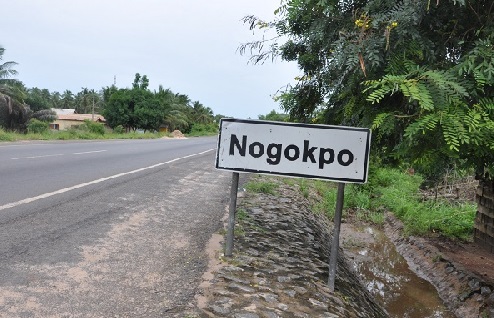
Recently, I found myself in a couple of rather interesting conversations with people who wanted my opinion on some Ghanaian town names that had become subjects of public discussion, including in Parliament.
I was reminded of an article I wrote some years ago titled, “Places and Their Special Names.”
Now, if you are expecting me to mention and translate some of those rather suggestive names associated with communities in the Akyem area, parts of the Western Region and the Volta Region, kindly excuse me. You may undertake that little exercise yourself.
Better still, share your findings with me. It could be an entertaining geography lesson!
But let us travel beyond Ghana for a moment. Have you heard of Gropecunt, Penistone, Sexmoan and Fucking? Please, do not clutch your pearls just yet.
The interesting thing about geography is that a name can acquire a completely different meaning as it travels across languages, generations and cultures. What is perfectly ordinary to one community may provoke laughter, embarrassment or even outrage elsewhere.
Yet, through no fault of their own, some towns have found themselves saddled with names that are difficult to explain to visitors.
The embarrassment can be real, but so is the publicity. After all, how many ordinary villages can boast of having their names remembered long after a visitor has forgotten the journey?
I remember one particular journey from Paga to Accra with an immigration officer. Somewhere along the way, at about 2 a.m., our vehicle broke down in the middle of nowhere. Then we spotted a signpost.
The name of the community was Asempa, meaning good news. Imagine that! Asempa suddenly became the most comforting place name in Ghana.
Take Boring in Oregon, United States. The town derives its name from William H. Boring, a settler who established himself in the area in the 1870s.
Nothing particularly boring about that history. But the town has turned the apparent contradiction into a delightful branding opportunity. Its motto? "The most exciting place to live."
Over in Hertfordshire, England, you will find the village of Ugley and the hamlet of Nasty, situated only a few miles apart. One wonders what happens when residents of these two communities introduce themselves to strangers.
Then there is Condom in France. In French, the name carries none of the particular associations that English speakers might immediately make.
Meanwhile, Hell in Norway is not a destination for the wicked, as some might imagine. Its name is linked to an Old Norse word referring to an overhang or cliff cave.
So, if you ever find yourself in Hell, Norway, do not expect flames and brimstone. You might actually enjoy the scenery!
But some communities have had to work harder to protect their names from unwanted attention.
In Dorset, England, lies Shitterton. Yes, you read that correctly. The village has become something of a curiosity among visitors because of its unfortunate English-language association.
The problem became particularly serious when tourists began stealing the village's signposts as souvenirs.
The residents eventually decided that enough was enough. Rather than continue replacing the stolen wooden and metal signs, they installed a massive block of Purbeck stone weighing about 1.5 tonnes, with the village name carved into it.
At a reported cost of £680 for the transportation and installation, this was clearly a case of taking the name seriously, even if visitors could not!
History also explains why some names have become embarrassing with the passage of time. In medieval England, Gropecunt Lane was a name associated with streets where prostitution took place.
As social attitudes and acceptable language changed, many such names were modified. Grope Lane and, eventually, Grove Lane became more acceptable alternatives in some places.
In the Philippines, the town of Sasmuan in Pampanga was formerly known as Sexmoan. The name arose from an attempt by Spanish colonial authorities to transcribe the local name.
However, the English-language interpretation became a source of discomfort. In 1991, the community officially adopted Sasmuan, restoring the local name.
And then there is perhaps the most internationally celebrated example: Fucking, a village in Austria.
The name had existed for centuries and was perfectly ordinary in its German-language context. Unfortunately, English-speaking visitors had other ideas.
Tourists regularly stole the village's road signs, turning what should have been routine local infrastructure into expensive souvenirs. Each replacement reportedly cost the community hundreds of euros.
When the issue of changing the name came up for a vote, the villagers initially chose to retain it. The response attributed to the local mayor, Siegfried Höppl, was particularly memorable: "Everyone here knows what it means in English, but for us Fucking is Fucking – and it's going to stay Fucking."
Eventually, however, the village changed its name to Fugging in 2021, bringing an end to a long-running international attraction.
There is a lesson here for Ghana's tourism industry. We sometimes underestimate the promotional value of the unusual. A curious town name can become a conversation starter, a reason to stop, a photograph to share and even an attraction in its own right.
And who knows? The next time your vehicle breaks down in the middle of nowhere, you may discover that the name of the nearest town is precisely the good news you need.
Going Places!
