

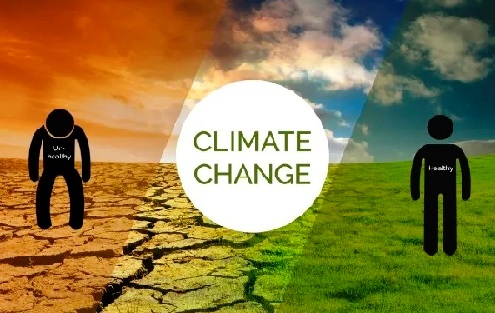
A study team that included Prof. Johan Rockström at the Potsdam Institute for Climate Impact Research in Germany, Prof. Hans Joachim Schellnhuber at the International Institute for Applied Systems Analysis in Austria and Dr Christopher Wolf, a scientist at Terrestrial Ecosystems Research Associates in the US, is of the view that continued global heating could set an irreversible course by triggering climate tipping points.
The study stressed that the world was closer than previously thought to a “point of no return” after which “runaway global heating cannot be stopped”.
It is not that the world is not aware of this threat. Over the years, continued global heating, which poses significant climate risks, has dominated global policy discussions.
In fact, within the world of finance, financial institutions have incorporated environmental, social and governance risks into the pricing of assets as an attempt to address issues within these broad areas.
And there is a consensus on what needs to be done to address climate risk, as environmental activists, which include climate watchers, civil society groups, experts, academics and other interested observers, all agree that climate risks threaten not just the survival of the current generation but also generations yet unborn.
This is the part that is really befuddling! Despite the greater awareness of climate risks due to sustained public education, the recent study notes that there still exists a dangerous knowledge gap.
According to the study, there are climate tipping points, which, when triggered, could lead to a cascade of further tipping points and feedback loops.
This, the report emphasised, could lock the world into a new and hellish “hothouse Earth”, with the climate far worse than the 2-3 °C temperature rise “the world is on track to reach”. Worryingly, scientists say climate conditions are approaching the worst scenario over the past 11,000 years!
Commenting on the study, the UK-based The Guardian stressed that “At just 1.3 °C of global heating in recent years, extreme weather is already taking lives and destroying livelihoods across the globe. At 3-4 °C, ‘the economy and society will cease to function as we know it’, scientists said last week, but a hothouse Earth would be even more fiery.”
“Crossing even some of the thresholds could commit the planet to a hothouse trajectory,” Dr Christopher Wolf said. “Policymakers and the public remain largely unaware of the risks posed by what would effectively be a point-of-no-return transition.
“It’s likely that global temperatures are [already] as warm as, or warmer than, at any point in the last 125,000 years and that climate change is advancing faster than many scientists predicted.”
My interest in the study was primarily due to my interest in climate-related issues, and my December 9, 2023, edition of this column, which had the headline, “Climate Tipping Points”. In that edition, I explained why global climate chaos needed to be addressed.
At the time, my focus was on the Climate Conferences of the Parties, which were taking place in the United Arab Emirates (UAE).
The UN Climate Change Conference (the official name for Climate Conferences of the Parties) was holding its 28th conference (COP28).
This conference has been held every year since 1995. The annual Climate Conference of the Parties bring together those who signed the United Nations Framework Convention on Climate Change (UNFCCC) - an international environmental treaty addressing climate change - 30 years ago.
At COP28, the president, Sultan Al Jaber ( chief executive of the UAE’s state oil company, Adnoc), said: “I respect the science in everything I do. I have repeatedly said that it is science that has guided the principles or strategy as Cop28 president. We have always built everything, every step of the way, on the science, on the facts.”
Well, the reality is that science and data are driving everything in climate. Available data suggest that despite all the efforts aimed at moderating climate risks, the projected rate of warming has not improved considerably.
Like the study released last week, a report released in November 2023 by the Global Carbon Project indicated that global carbon emissions from fossil fuels reached record levels again in 2023. This means more coal, oil and gas were used in 2023 than in 2022.
To mitigate climate risks, emissions must plummet to stop extreme weather from growing more violent, and that means keeping warming below 1.5 °C. Analysts say achieving the set target would require the world to reach net-zero CO2 emissions before 2040. On current evidence, the target appears a tall order.
Another report, published on December 5, 2023, during COP28 by Climate Action Tracker (CAT), also stressed the lack of real progress in addressing climate risks, itself a risk. “Two years after Glasgow [COP26], our report is virtually the same,” Claire Stockwell, an analyst at Climate Analytics and lead author of the CAT report, said.
“You would think the extreme events around the world would be sparking action, but governments appear oblivious, somehow thinking treading water will deal with the flood of impacts.”
As I wrote in the July 22, 2023, edition of this column, this baking planet Earth really proves how real climate risk is. Obviously, words alone cannot save the Earth; only conscious efforts aimed at containing the climate risk can.
According to the Global Tipping Points report, the Earth is on the verge of five catastrophic climate tipping points, with the report stressing that humanity faces “devastating domino effects”, including mass displacement and financial ruin as the planet warms.
The report stresses that many of the gravest threats to humanity are drawing closer, as carbon pollution heats the planet to ever more dangerous levels.
