

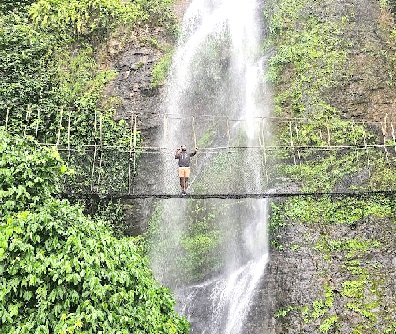
For a country seeking to deepen its tourism appeal, Ghana’s environment is not merely a backdrop.
Tourism thrives on authenticity, beauty and experience. Increasingly, global travellers are moving away from purely urban or luxury tourism and seeking meaningful encounters with nature.
From rainforest hikes and birdwatching to eco-lodges and community-based tourism, the demand for environmentally conscious travel is surging.
Ghana, with its rich biodiversity and varied landscapes, is perfectly positioned to tap into this growing market - if only we treat our environment as the strategic asset it truly is.
The first step is protection. One cannot market what one has destroyed. Across the country, there are worrying signs: illegal mining polluting rivers, deforestation eating away at reserves, plastic waste choking beaches, and unregulated construction damaging fragile ecosystems.
These are not just environmental concerns - they are tourism setbacks. A polluted river cannot attract eco-tourists. A degraded forest cannot sustain wildlife experiences. A littered beach loses its charm.
We must, therefore, strengthen environmental governance. Laws already exist, but enforcement must be firm, consistent and visible.
Agencies responsible for environmental protection should be better resourced and empowered to act without fear or favour.
Traditional authorities and local communities must also be engaged as custodians of the land. After all, sustainable tourism begins with local ownership and pride.
Beyond protection lies smart development. Ghana does not need to replicate the mass tourism models of other countries. Instead, we can pursue a more sustainable, high-value approach.
Eco-tourism should be at the heart of this strategy. Places such as Kakum, Mole, Wli and the Volta highlands already offer glimpses of what is possible.
But these sites require thoughtful investment - improved access roads, trained guides, visitor centres, and environmentally sensitive accommodation.
Crucially, development must not come at the expense of nature. The temptation to overbuild, over-commercialise, or “modernise” natural attractions must be resisted.
The true value of these sites lies in their authenticity. A canopy walkway in a thriving forest is far more appealing than a concrete structure surrounded by degraded land.
Community involvement is another critical pillar. Tourism that benefits only a few will not be sustainable. Local communities must see tangible gains - jobs, income, infrastructure - from protecting their environment.
When people realise that a standing forest brings more value than a cleared one, conservation becomes a shared mission. Community-based tourism initiatives, where locals serve as guides, hosts, and storytellers, can transform entire regions.
Education also plays a vital role. Ghanaians themselves must develop a stronger culture of environmental stewardship. Tourism begins at home.
If we treat our beaches, parks and public spaces with care, we not only improve our own quality of life but also create a welcoming atmosphere for visitors. Simple actions such as reducing litter, respecting wildlife and conserving water collectively make a big difference.
Marketing Ghana’s environmental assets requires a fresh narrative. We often focus heavily on heritage tourism - our castles, festivals and history - which are indeed powerful attractions. But nature must take its rightful place alongside culture.
Imagine promoting Ghana as a destination where one can walk through ancient rainforests in the morning, watch elephants in the savannah by afternoon, and relax on pristine beaches by evening. That is a compelling story.
Digital platforms offer powerful tools for this. High-quality visuals, storytelling and virtual experiences can showcase Ghana’s natural beauty to the world. Partnerships with international eco-tourism operators and influencers can also help position the country as a green destination.
However, marketing must always align with reality. There is nothing more damaging than attracting tourists to an experience that does not meet expectations.
Climate change adds another layer of urgency. Rising sea levels threaten coastal attractions, while changing weather patterns affect ecosystems. Ghana’s tourism strategy must, therefore, incorporate climate resilience.
Protecting mangroves, restoring degraded lands, and promoting sustainable practices are not just environmental actions - they are investments in the future of tourism.
There is also an opportunity for innovation. Green tourism can stimulate new business ventures - eco-lodges, organic farms, conservation tours, renewable energy solutions for tourist facilities.
Young entrepreneurs can be encouraged to develop ideas that blend sustainability with hospitality. With the right support, this can become a vibrant sector within the tourism industry.
Ultimately, the question is one of mindset. Do we see our environment as expendable or invaluable? The answer will determine not only the future of tourism but also the legacy we leave behind.
Countries that have successfully built strong tourism industries - from Costa Rica to Rwanda - have done so by placing environmental protection at the core of their strategy.
We have the raw materials: lush forests, diverse wildlife, scenic landscapes and warm, welcoming communities. What is needed is a deliberate, coordinated effort to protect, enhance and promote these assets.
If we get it right, Ghana’s “green gold” will not only attract visitors but also sustain livelihoods, preserve culture and ensure that generations to come can inherit a country as beautiful as we can imagine.
