

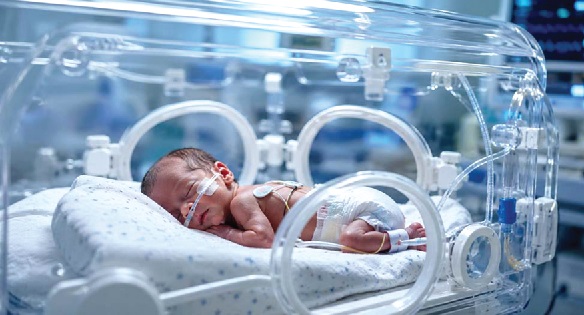
November 17 was commemorated across the globe as World Prematurity Day. This day is set aside each year to highlight the more than 15 million babies born prematurely.
However, in harmonising the World Health Days calendar, the World Health Organisation (WHO) recommends celebrating on November 15.
The theme for this year, which is: Small babies, big potential. Invest in follow-up care to protect their future”, seeks to convey a strong message to all.
The first part of the slogan, "Small babies, big potential", sends hope that every baby born too soon deserves the opportunity to survive, thrive and reach their full potential.
The second part, "Invest in follow-up care to protect their future", is a call to action. It highlights the need for governments, healthcare providers, policymakers, advocates, and communities to strengthen follow-up care services and ensure that no baby is left without support after discharge from the NICU.
Unfortunately, the celebration of this day was marked by media reports that Korle Bu Teaching Hospital had nothing to care for premature babies.
It is worth emphasising that the NICU and PICU in Korle Bu, where these premature babies are seen, are equipped with ventilators, CPAP machines, incubators and phototherapy machines to take care of these premature babies.
Premature birth is a birth that is at least three weeks before the expected delivery date of a baby. It is also known as preterm birth. Prematurity is the leading cause of death among newborn babies. Premature birth poses a serious health risk to the baby.
Some babies will require special care and spend weeks or months hospitalised in a neonatal intensive care unit (NICU) or a special care baby unit (SCBU).
The more premature a baby is, the more severe the health challenges may be. Even babies born just a few weeks early can have more health problems compared to full-term babies. For example, a baby born at 32 weeks is more likely to develop jaundice, struggle with breathing and stay longer in the hospital.
The extremely premature babies who require ventilatory support may develop more severe complications such as intellectual disabilities, vision and hearing problems and cerebral palsy.
Sometimes, it becomes important to deliver a baby early because of concerns about the health of the mother or the baby. However, in most cases, preterm labour begins unexpectedly.
The warning signs of premature labour are: contractions (tightening of the abdomen) every 10 minutes or more often, accompanied by a change in vaginal discharge (leaking fluid or bleeding), pelvic pressure—the feeling that the baby is pushing down, low, dull backache, cramps that feel like menstrual pains and abdominal cramps with or without diarrhoea.
The exact cause of premature birth is unsolved. In fact, the cause of 50 per cent of preterm births is never determined. There are some known risk factors for premature birth, but even if a woman does everything "right" during pregnancy, she still can have a premature baby.
Several factors have been identified that increase the risk of preterm birth. These include:
Extremes of age, i.e. more than 35 or less than 18 years of age.
• Race is a factor- more preterm babies in blacks than whites.
• Pregnancy interval makes a difference, as women with six months or less between pregnancies have a two-fold increase in preterm birth.
• Studies on types of work and physical activity have been inconclusive, but it is suggested that stressful conditions, hard labour, and long working hours are probably linked to preterm birth.
• Women who have undergone previous surgically induced abortions called dilatation and curettage (D&C) have been shown to have a higher risk of preterm birth.
• Women with a low body mass index and those with poor nutrition are at increased risk for preterm birth.
• Women with a previous preterm birth are at higher risk for a recurrence at a rate of 15 to 50 per cent depending on the number of previous events and their timing.
• Multiple pregnancies (twins, triplets, etc.) are a significant factor in preterm birth.
• Mother’s medical conditions such as high blood pressure, pre-eclampsia, diabetes, and heart disease increase the risk of preterm birth.
• Some women have a weak or short cervix from a surgical procedure or by their nature, and that is the strongest predictor of premature delivery.
• Women with abnormalities of the womb, the capacity of the womb to hold the growing pregnancy may be limited and preterm labour ensues.
• Other problems in pregnancy that may precipitate premature labour are vaginal bleeding, abnormal amounts of water around the foetus (poly- or oligohydramnios), and use of illicit drugs such as alcohol, cigarettes, and cocaine.
When premature labour threatens, obstetricians try as much as possible to prevent premature birth. They use certain kinds of medications called tocolytics to try to stop the premature labour. Sometimes, they give certain injections to the mother to try to mature the foetal
lungs when premature labour becomes inevitable.
As expected, a premature infant's organs are not fully developed. The infant needs special care in a nursery until the organ systems have developed enough to sustain life without medical support.
This may take weeks to months. The baby is usually admitted to a high-risk SCBU or NICU. The infant is placed under a warmer or in a clear, heated box called an incubator, which controls the air temperature and regulates loss of water from the baby.
Monitoring machines track the baby's breathing, heart rate, and level of oxygen in the blood.
Infants are usually unable to coordinate sucking and swallowing before 34 weeks gestation. Therefore, the baby may have a small, soft feeding tube placed through the nose or mouth into the stomach.
In very premature or sick infants, nutrition may be given through a vein until the baby is stable enough to receive all nutrition in the stomach. This is called total parenteral nutrition and is not widely available in Ghana.
What is practised widely here is the use of sugar-containing drips to provide energy to these babies.
If the infant has breathing problems, a tube may be placed into the windpipe (trachea) and put on a machine called a ventilator to help the baby breathe.
Some babies whose breathing problems are less severe receive continuous positive airway pressure (CPAP) with small tubes in the nose rather than the trachea. At last count, the NICU and PICU had over 15 of these machines, with most of them unused at any point in time. Or they may receive only extra oxygen.
Prematurity used to be a major cause of infant deaths. Improved medical and nursing techniques have increased the survival of premature infants. The more advanced the pregnancy, the greater the chance of survival.
Of babies born at 28 weeks, at least 90 per cent survive in well-resourced centres. The survival rate overall is lower in resource-limited settings because of the unavailability of equipment, gadgets or medications to support the children.
Also, there are serious human resource challenges such as very limited neonatal nurses and doctors at our NICUs, and that’s why I re-echo the need for us to be prepared to receive premature babies irrespective of where or when they arrive.
The writer is a member of the Paediatric Society of Ghana and the Director of Medical Affairs, Korle Bu Teaching Hospital
