

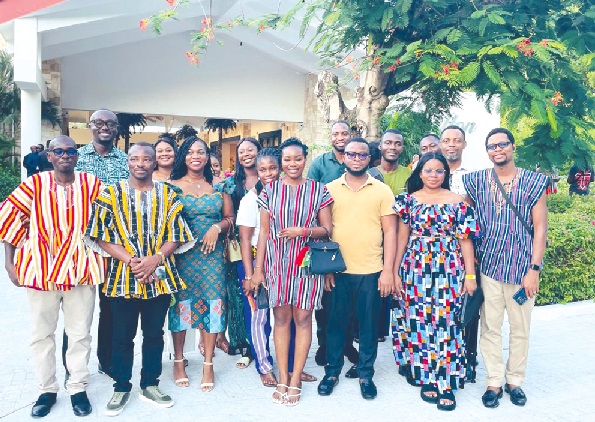
When a nurse, Gloria Ansaba Hagan, arrived in Antigua and Barbuda on January 26 this year, she expected to find only a handful of Ghanaians in the Caribbean twin-island nation, which has an estimated population of 100,000.
She was pleasantly surprised.
“Ghanaians are living here. We came to meet some Ghanaians who have been here for like 40 years,” she said.
Ms Hagan is among the Ghanaian nurses, midwives, anaesthetists and laboratory technicians who travelled to the Caribbean under the Ghana Medical Brigade, a three-year government-to-government labour mobility agreement aimed at strengthening Antigua and Barbuda’s healthcare system.
Ten months into the assignment, she says the experience has been rewarding, with no regrets about leaving Ghana to work in the Caribbean.
Before her departure, Ms Hagan had worked in Ghana for 13 years, including three years at the Tarkwa Government Hospital and 10 years at the Effia Nkwanta Regional Hospital. She currently works at the Jennings Clinic in Antigua and Barbuda.
For many of the health professionals, improved conditions of service were among the major attractions of the programme.
Ms Hagan said the provisions promised under the agreement, including accommodation, transportation and utility coverage, had been honoured, although salary payments were delayed during the first two months due to administrative paperwork.
“Comparatively, financially, it's better here. I don't think anybody who came here has regretted coming. I have not regretted coming. I would choose this programme any other day,” she said.
A different working experience
On the professional front, Ms Hagan said nursing practice in the two countries was generally similar, but the working conditions and availability of logistics in Antigua and Barbuda made a significant difference.
She explained that health professionals were compensated for additional hours worked, unlike in Ghana, where extending working hours did not always attract extra payment.
“In Ghana, you can go to work at 8 a.m. and close at 4 p.m., instead of closing at 2 p.m., and nobody pays you for those two hours. But here, if you have to extend your hours, you will be paid,” she said.
One of the most striking differences, however, was the country's healthcare financing system.
According to her, Antigua and Barbuda's medical benefits scheme provides extensive coverage for patients, including medication, laboratory investigations and scans.
She contrasted this with Ghana's National Health Insurance Scheme (NHIS), which she said did not always cover the full cost of treatment.
The arrangement, she noted, made healthcare more accessible and helped patients receive treatment without delays caused by financial difficulties.
“Over here, patients won't be on admission without medication because they have no money. It makes care very easy, and patients progress very fast,” she added.
Lessons for both countries
Another member of the team, an anaesthetist, Emmanuel Bwin, described the labour mobility agreement as a worthwhile initiative that should be expanded to create more employment opportunities for trained Ghanaian health professionals.
He said the programme offered valuable professional exposure, despite the demands of working in a different healthcare environment.
Mr Bwin also identified lessons both countries could learn from each other's healthcare systems.
While Ghana could draw inspiration from Antigua and Barbuda's comprehensive medical benefits scheme, he said the Caribbean nation could benefit from Ghana's decentralised healthcare delivery structure.
He works at the Sir Lester Bird Medical Centre, the country's main hospital, which he said continued to experience considerable pressure despite the arrival of the Ghanaian health professionals.
He suggested that more healthcare facilities be established and equipped with doctors to reduce the burden on the main hospital.
“I think they should build more facilities and decentralise care. If every clinic gets a daily doctor, it will ease the pressure at the hospital. Just a few clinics have daily doctors; others have doctors on specific days,” he said.
The Human Resource Manager and Coordinator for the Ghana Medical Brigade in Antigua and Barbuda, Jacqueline Owusuaa Osei, expressed satisfaction with the reception and treatment of the Ghanaian professionals.
Ms Osei, who also coordinates Ghana's Labour Exchange Programme in Grenada, commended the Ministry of Health, Wellness, Environment and Civil Service Affairs of Antigua and Barbuda for its support and attention to the team's welfare since their arrival.
“Everybody has been comfortable. The government of Antigua and Barbuda has done so much for us. Currently, everyone is working, everybody is being paid fairly, and everybody's accommodation needs are being settled,” she told The Mirror.
On whether the professionals would consider staying beyond their three-year contracts, she said the team was open to the possibility of retention if the host country considered their services valuable.
“If this country thinks our work has been worth it, we should be retained. If not, we'll go back and use the experience acquired here to help the health sector and tourism in Ghana,” she said.
Ms Osei encouraged more Ghanaians to explore opportunities in the Caribbean, describing the region as welcoming and culturally enriching.
While many Ghanaians traditionally look towards destinations such as the United States, the United Kingdom, Denmark and Canada for employment and travel, she believes the Caribbean also offers attractive opportunities.
“I would urge every single person from Ghana to visit the Caribbean. It would be a nice experience to leave Ghana and experience other cultures. The Caribbean is beautiful,” she said.
She expressed appreciation to President John Dramani Mahama and the former Minister of Labour, Jobs and Employment, Dr Rashid Pelpuo, for facilitating the initiative and creating opportunities for Ghanaian professionals to work and serve in the Caribbean.
