

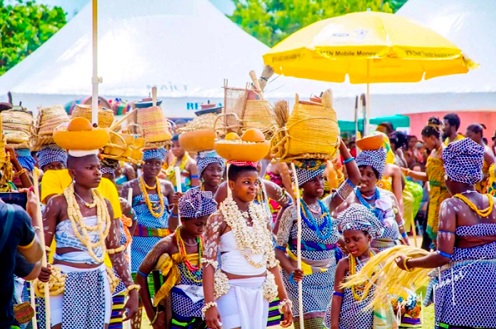
A visitor once arrived in a Ghanaian town during a festival season and asked a simple question: “Please, where does the procession begin?”
The first person pointed towards the chief’s palace. The second said the durbar grounds. A third, with the confidence of someone who seemed to know everyone on the organising committee, insisted the procession would begin at the lorry station.
By the time our visitor had consulted a fourth person, he had received four different answers and was beginning to wonder whether finding the procession was itself part of the festival programme.
It is a familiar Ghanaian scene, and those who have attended our festivals will recognise the humour in it.
The drums may be ready, the chiefs may be seated, the colourful outfits may be out, and the aroma of food may be travelling across the grounds.
Yet, if the people responsible for coordinating the event are not singing from the same hymn book, the visitor may end up experiencing confusion instead of culture.
Of course, our festivals have their own rhythms, and a little last-minute improvisation is sometimes part of the fun.
But there is a difference between the delightful spontaneity of a Ghanaian celebration and the avoidable confusion that results when communication and coordination fail.
That difference brings us to a subject that doesn't always get the attention it deserves in our discussions about tourism: administration.
We are often quick to celebrate the beauty of our destinations, the warmth of our hospitality and the richness of our cultural heritage.
And rightly so. But behind every memorable tourism experience lies a less visible network of people, institutions, decisions and relationships working together to make it happen.
Tourism is an unusually interconnected enterprise. The hotelier depends on the tour operator; the tour operator depends on the tour guide; the tour guide depends on reliable destination information; the destination depends on infrastructure and effective local management; and the entire experience is influenced by the policies, standards and promotional activities of public institutions.
A weakness in one part of this chain can have consequences far beyond the office or organisation where it originates.
This is why sound tourism administration deserves greater attention in our national conversation about the industry.
We are understandably excited by visitor arrivals, hotel developments, international exposure and the prospect of tourism becoming a stronger contributor to Ghana's economy. But the less glamorous business of institutional coordination must receive equal attention.
Consider the concept of esprit de corps, that sense of shared purpose and collective responsibility that enables people within an organisation to work as a team.
It does not demand that everybody think alike or agree on every matter. In fact, healthy institutions need robust debate. Different perspectives can expose weaknesses, improve proposals and prevent costly mistakes.
In a well-functioning institution, differences are addressed through established procedures, communication remains professional, and decisions are followed by action.
Authority is respected, but accountability is not abandoned. Delegation is understood, information flows, and nobody is left guessing about who has the mandate to do what.
Such an environment does not emerge by magic. It requires deliberate leadership, clearly documented procedures and a culture in which the institution’s objectives take precedence over personal preferences.
At the highest echelon, these roles are distinct, but they are connected by a common obligation: to serve the larger interests of the sector.
The same principle applies beyond public institutions. Tourism associations, hotel groups, tour guide organisations and destination management committees can hardly expect their members to cooperate effectively if their own internal arrangements are characterised by uncertainty or poor communication.
The habits cultivated at the top often travel downwards, influencing the working culture of the wider organisation.
Ghana's tourism industry has too much potential to leave effective administration to chance. A destination's reputation is built not only by what it advertises but also by what it consistently delivers.
Tourism institutions should therefore pay closer attention to a few simple disciplines: regular management consultations, clear lines of authority, prompt decisions, documented commitments and measurable performance targets.
These may sound like ordinary administrative practices, but their cumulative effect can be extraordinary. They reduce confusion, strengthen confidence and enable good policies to move from paper to practice.
There is also wisdom in remembering that public institutions belong to the public. Leadership positions are responsibilities held in trust.
In tourism, those outcomes are tangible: better visitor experiences, stronger businesses, protected heritage, empowered communities and sustainable employment.
As we continue taking Ghana to the world and bringing the world to Ghana, let us remember that destination development begins long before the first tourist arrives. It begins with the people who plan, coordinate and manage the experience.
So, let us return to our visitor at the festival, the one who received four different answers to a simple question about where the procession would begin.
Imagine the delight on his face if, on asking the first person, he had been given the correct location, the time of the procession and perhaps even a friendly invitation to join the celebration.
The drums would still beat, the dancers would still perform, and the rich colours of Ghanaian culture would still dazzle him.
But now, something less visible would make the experience even better: good coordination.
