

On October 24, this writer asked the question, “Did we see the signs?” following allegations of sexual abuse against the headmaster of Obuasi Senior High Technical School.
The national conversation has since moved beyond the school to the broader question of how to make all schools safer.
The record of the past 18 months offers an uncomfortable answer: warning signs have been visible in schools across several regions.
The challenge is whether Ghana will build a consistent system to identify threats and act before they escalate.
A Safety Centre review of media and official reports identified at least 12 serious violent incidents in senior high schools (SHS) across seven regions between June 2025 and September 2026.
Seven students died, at least 53 arrests were reported, and seven schools were closed.
The incidents included fatal shootings in conflict-affected areas, a student stabbing in Accra, attacks on teachers and violence linked to inter-school sporting events and reprisals.
Three patterns stand out. First, predictable flashpoints, including sports competitions and strict examination invigilation, have triggered violence.
Second, community conflicts have split into schools, accounting for six of the seven deaths. Third, responses have largely involved arrests, sanctions and school closures, with limited public information on preventive measures and reporting arrangements.
The Obuasi SHS incident adds another dimension. On August 4, 2026, a mob attacked the headmaster, resulting in the arrest of six students and three teachers.
Two teachers were charged with abetment, and the school was closed. Allegations of misconduct against the headmaster remain under investigation.
He has denied them, while the Ghana Education Service (GES) says he remains on interdiction and the Education Minister has referred the matter to the Criminal Investigations Department.
The process must be allowed to proceed fairly. However, the case raises an important question: when students or staff report concerns, does anyone with the authority to act listen?
The Education Minister's October 26 announcement of plans to review school regulations, monitor teachers and heads, and engage parents and students to identify safeguarding gaps is welcome.
His earlier support for a zero-tolerance policy on criminal conduct in schools is also important. Civil society groups have called for standard safeguarding procedures, background checks for teachers and clearly publicised reporting contacts.
However, sanctions alone cannot guarantee safety. Ghana must build on the GES Safe Schools Programme launched in 2018, drawing lessons from the School Security Standard released by ASIS International in August 2025.
The standard emphasises physical security, behavioural threat assessment and management, and emergency planning based on each school's risks.
Although developed for American schools, it offers principles Ghana can adapt to its own circumstances, particularly the security challenges facing boarding schools.
Five measures are essential: First, every SHS should establish a school safety team comprising designated tutors, guidance counsellors, house staff and security personnel, with a named police liaison officer.
Students may participate in prevention planning under adult supervision, but concerns involving individuals must be handled confidentially by responsible adults.
Complaints against school management should go to district or regional authorities or an independent body.
Second, schools must establish trusted and independent reporting channels. Every student should know at least one trusted adult, while reporting options should include non-digital methods and a telephone contact outside school management.
These channels must be accessible, and people who report concerns in good faith must be protected against retaliation.
Third, clear procedures should specify when and how concerns are referred to the police, the Department of Social Welfare or regional education authorities.
The Children's Act, 1998 (Act 560), provides for reporting information about child abuse to the Department of Social Welfare.
Appropriate referral arrangements, including the Domestic Violence and Victim Support Unit where relevant, should be incorporated into school procedures alongside staff vetting.
Fourth, schools must plan for foreseeable threats. Sports competitions and examination periods require security arrangements involving the Police and community leaders.
School dormitories need adequate lighting, controlled access and supervised movement. In conflict-affected areas, authorities should agree in advance on emergency measures, including when temporary closure becomes necessary.
Fifth, preventive education should equip students with emotional intelligence, peer mediation, conflict resolution, safety awareness and basic legal knowledge.
Student leaders can support these efforts without being turned into informants or being asked to assess their peers as potential offenders.
MISORNU's experience offers a starting point.
Between October 2025 and September 2026, it trained more than 1,000 National Cadet Corps in Sogakope in the Volta Region and Yamfo in the Ahafo Region in safety awareness, leadership, emotional intelligence and conflict resolution.
Participants identified threats, fear, exclusion, unresolved grievances and overlooked warning signs as possible triggers of violence.
A proposed School Safety and Preventive Leadership Pilot could build on these lessons, with an initial assessment and clear evaluation before wider implementation.
School safety is a shared responsibility. The Ministry of Education and GES must set standards, the police must support prevention and referrals, and parents, old students' associations, civil society and communities must reinforce safe behaviour.
The media must sustain public attention while protecting children's identities.
The signs are clear. Ghana must move from reacting to incidents to preparing for them. The Ministry and GES should issue a minimum school safety standard building on the existing Safe Schools Programme and require every SHS to designate a safety lead.
Every school should be able to answer three questions: If a student raises a concern today, who will listen, what happens next, and how quickly will action be taken?
Answering these questions consistently could make the difference between an early intervention and another tragedy.
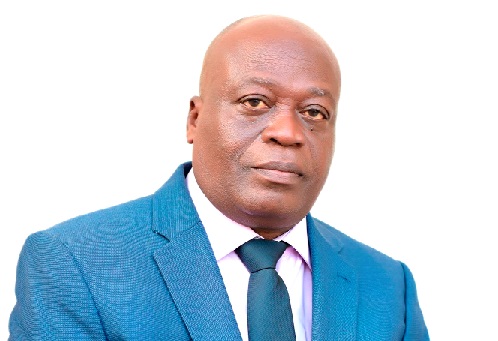
The writer is the Executive Director of the MISORNU Safety Centre, a public service NGO dedicated to safety and security awareness, education and training. He is a former Director-General of Police Public Affairs.
