

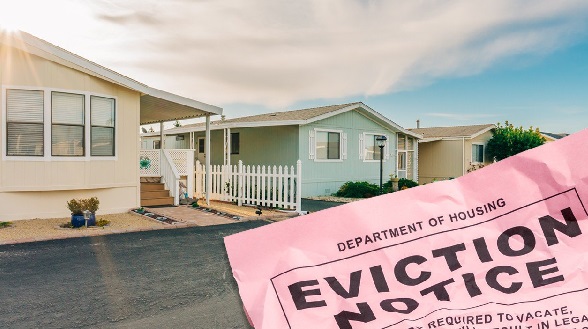
Dear Mirror Lawyer, I had a little misunderstanding with my landlord, and he threatened to eject me from his house. I have already paid him two years' rent in advance.
Can he still eject me from his house?
Ricky Barnes, Asylum Down.
Dear Ricky, disagreements are an inevitable part of human existence. When one rears its head, your job is to manage it and apply every conflict management skill you know.
Remember, the Bible says, "As far as it depends on you, be at peace with all men." Your landlord is human, and depending on how you manage the misunderstanding with him, you may resolve it peacefully or escalate it to uncontrollable levels.
Tenancy in Ghana is governed by law. A tenant has rights and obligations.
Your primary obligation as a tenant is to pay rent. You are also required to use the rented property for the purpose for which it was let to you and not to sublet it without the landlord’s consent.
The law also requires that a tenant give a landlord reasonable access to the property for inspections and repairs, and failure to meet these obligations could result in eviction.
In the landlord's case, the obligation is to give the tenant quiet enjoyment of the property.
Thus, the tenant paying his rent as agreed and observing the other covenants in the agreement shall have peaceful enjoyment of the premises without any interruption by the landlord or anyone claiming under or in trust for him.
Both tenants and landlords must adhere to the tenancy agreement's terms, including the rent payment, and should resolve any disputes peacefully and legally.
The Rent Act of 1965 (220) provides a framework for resolving disputes between landlords and tenants fairly and justly.
According to the law, a competent court may not order a tenant to recover possession of the premises unless at least one of the conditions below is satisfied.
These conditions include non-payment of rent, subletting without the landlord’s consent, using the property for illegal or immoral purposes, and causing damage to the property.
Another ground is the landlord's intention to pull down the premises and construct a new one or remodel them. Under this circumstance, an order of ejection may be secured against the tenant.
This provision allows the landlord to recover possession of the property to carry out significant works, which cannot be done while the tenant is still in occupation.
Also, where the tenant was living in the rental property as part of his employment with the landlord, and his employment has now ceased, the court may grant an order for possession.
Finally, if the landlord previously lived in the property himself but left it while he was away from Ghana or the local area and now wishes to reoccupy it, the court will grant the landlord an order of possession.
Ricky, according to the law, once you have paid your advance rent demanded by the landlord for the entire duration of the tenancy, you have discharged a major obligation to the landlord.
Thus, in the absence of any breach of your other obligations under the tenancy, such as subletting without the landlord’s consent, using the property for illegal or immoral purposes, and causing damage to the property, the landlord cannot eject you from the premises.
Misunderstanding between a landlord and tenant is not grounds for ejectment unless the misunderstanding has to do with a breach of any of the obligations of the tenant listed above.
Since landlords and tenants will need each other repeatedly, I advise you to meet with your landlord and resolve differences so that you can live on his property if you so desire.
