

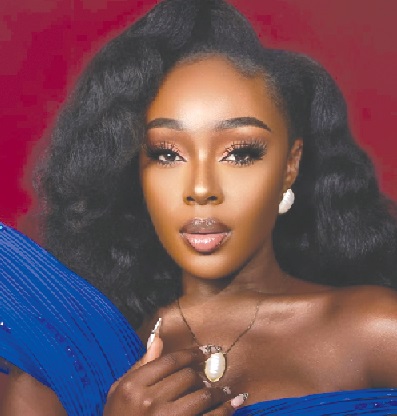
For decades, African women have graced international pageant stages with beauty, intelligence, elegance and cultural richness.
Yet the continent keeps returning to an uncomfortable question: must African women consistently outperform their counterparts just to be seen as equally deserving?
From Miss Universe to Miss Grand International and Miss Earth, African representatives have delivered standout performances, only for their final placements to leave pageant followers questioning how excellence is measured.
Africa does not lack beauty, intellect or women capable of becoming global ambassadors. What it has lacked is ownership of the institutions that define, evaluate and celebrate its excellence.
Miss Afrikana International, a platform led by Ghanaian-born Miss Grand International 2020, Abena Akuaba Appiah, is an attempt to change that.
When excellence is not enough
The 2025 Miss Universe pageant reignited the conversation. Côte d’Ivoire’s Olivia Yacé arrived as one of the strongest contenders, with commanding presence, eloquence and unapologetic pride in her African identity.
She finished as fourth runner-up, a placement many considered out of step with her performance.
What followed was more troubling than the result. Miss Universe Organisation President Raúl Rocha publicly explained that a winner from Côte d’Ivoire would face practical barriers because so many countries require visas for Ivorian citizens.
Then, in TLC’s documentary Crown of Deceit, former judge Omar Harfouch, who resigned days before the final, played audio he says is of Rocha, recorded the day before the finale, explaining why Olivia could not win.
Harfouch went further, describing the organisation as not a beauty contest but a cartel.
Since when did the privileges attached to a contestant’s passport become a measure of her ability to embody those qualities? An institution that calls itself universal cannot disadvantage women for the documents they hold.
Ghana tells a similar story. Faith Maria Porter delivered a consistent campaign at Miss Grand International All Stars, including a strong showing in the Bare Face Challenge with an impressive score of 9.74 and recorded a remarkable 9.88 in the swimsuit challenge, and finished as first runner-up. Cherise Ayisi drew strong public support at Miss Earth 2025 but did not place.
None of this independently proves deliberate discrimination against African contestants. But recurring doubts about how African excellence is recognised deserve institutional reflection, not dismissal.
Reclaiming African beauty
Beauty has never existed apart from history, culture and power. For centuries, dominant narratives have decided what the world sees as desirable, sophisticated and marketable.
African beauty is not one thing. It lives in many complexions, body types, features, hairstyles and cultural expressions.
An African woman’s natural hair is not less sophisticated. Her complexion needs no validation. Her accent does not diminish her eloquence, and her nationality should never be a liability.
International recognition should celebrate her identity, not be the condition for its legitimacy. Africa must move from participating in global beauty conversations to architecting them.
A new African era
Abena Akuaba Appiah knows the international circuit from the inside. In 2020, she became the first Black woman to win Miss Grand International.
Through Miss Afrikana International, she is building a platform to celebrate African beauty, heritage, intelligence, leadership and empowerment, uniting women of African descent across the continent and the diaspora.
That marks a shift from asking for a seat in existing institutions to building institutions where African identity is the foundation. African beauty is no longer only being invited to the table. An African woman is building it.
But a new table must earn its place. Miss Afrikana International will be judged on transparent judging, equal opportunity for every delegate, and empowerment that continues long after the crown is handed over.
It should not aspire to be Africa’s Miss Universe, but a respected institution with its own philosophy and influence.
Africa must invest in its own
We cannot lament the under-recognition of African excellence abroad while neglecting platforms built to honour it.
Governments, tourism authorities, corporate brands, broadcasters and fashion houses should treat African-owned pageantry as a cultural and economic asset, through sponsorship, hosting partnerships, media coverage and the showcasing of African design and tourism.
The success of Miss Afrikana International must outgrow one woman’s ambition and become a collective African aspiration.
Olivia Yacé was exceptional before Miss Universe.
Faith Maria Porter was formidable before Miss Grand International. Cherise Ayisi was impressive before Miss Earth. Their excellence did not begin with recognition, and it did not end with a placement.
A crown may acknowledge beauty, but it does not create it.
Perhaps the greatest victory for African pageantry will not be the day another African woman wins an established international crown, but the day an African-owned pageant becomes one of the most coveted crowns in the world.
Africa has spent enough time asking the world to recognise its queens. It is time Africa builds a throne the world learns to respect.
The writer is a Ghanaian journalist, pop culture commentator, pageantry enthusiast, creative entrepreneur and advocate for African excellence.
