
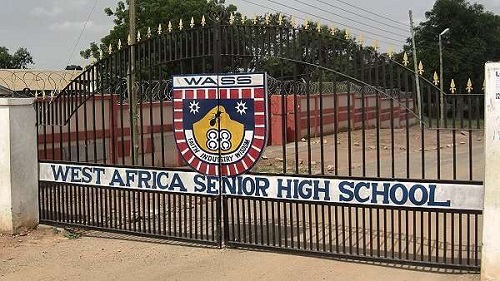
In 2018, West Africa Secondary School (WASS), represented by Sahene Arkoh and Abdul Hameed Tade, distinguished itself at the NSMQ, advancing to the finals against Adisadel College and St. Peter’s. Yet a journalist profiled WASS as an “underdog” school. To many WASSarians and WASSOSA members, the description betrayed a deeper historical amnesia.
As an alumnus who deliberately chose WASS as my first choice, I squirmed at the condescension. But it was hardly new. Who remembers that Ghana’s post-World War II nationalist struggles might scarcely have taken the shape they did without WASS? Who remembers its role in the 1950s as a meeting point for nationalists who helped birth and consolidate the postcolonial state?
The story begins within the colonial ferment. Following the Bond of 1844, Gold Coasters increasingly sought to assert themselves. Schools such as Mfantsipim became centres of scholarship and mobilisation, helping establish the cultural cosmopolitanism upon which Ghana would thrive.
Accra, meanwhile, had become the centre of nationalist politics. The bubonic plague helped compel the city’s decongestion. Tudu, founded around 1908 by Chief Braimah, a prominent transnational trader, grew into a cosmopolitan settlement attracting migrants from across the colony and British West Africa. During both World Wars, it also became a British recruitment centre for the West African Frontier Force.
It was in one of these abandoned camps that Emmanuel Addo and Rev. Joseph Charlton Tettey, both migrants from Peki, pooled their resources to establish the West African College of Commerce on 20 January 1946. Ghana desperately needed secondary schools to produce the human resources required for an emerging nation. WASS therefore emerged within a crucial historical moment, while its location in cosmopolitan Accra made it naturally receptive to Pan-Africanism.
The school moved to Lagos Town, where, in the 1950s, a fenceless institution became a meeting place for nationalists and Pan-Africanists, including Nii Kwabena Bonnie, Esther Nkulenu, the Peregrinos, Emmanuel Pappoe-Thompson, Mrs. Ako Adjei and Philip Gbeho. Teachers and students came from across Africa and beyond, reinforcing WASS as a genuinely West African institution.
By 1952, Kwame Nkrumah recognised WASS’s strategic significance to his Accelerated Development Plan and the broader Africanisation and African Personality agenda. From 1952 to 1954, however, the founders struggled against state action that threatened the school. They eventually capitulated, but not their determination.
From the late 1950s, teachers such as TQ Armar and Evans helped propel WASS forward. Armar, pioneer headmaster from 1957 to 1967, introduced Entebbe Mathematics to Ghana; under his leadership the school secured its crest and acquired land at Adenta in 1967, eventually relocating there in 1987.
Yet partisan politics and factionalism have impeded infrastructural development. At 80, WASS cannot even boast a completed boys’ dormitory.
Still, its alumni have distinguished themselves across journalism, engineering, medicine, nuclear science, academia, sports and the clergy. This raises the great WASS paradox: how has such a deprived school remained a silent rock upon which generations have built lives of consequence?
Part of the answer lies in its symbols. Faith, industry and wisdom express the need to negotiate wisely between science and faith. The founders embodied this philosophy: men of prayer and work who transformed their own need into service to others.
Our slogan, Gbotui Emashe, evokes the durability of the anthill and the enduring identity of the Ga, reminding us that WASS remains WASS despite its circumstances.
The challenge, therefore, is ours. If two men could convert their need into something the nation needed, WASSarians and WASSOSA, home and abroad, can do no less. None will satisfactorily build our school for us but ourselves.
Congratulations, WASS@80.
Charles Prempeh, PhD
WASSOSA 2001, Cantab, 2021
Research Fellow, CeCASt, KNUST
