
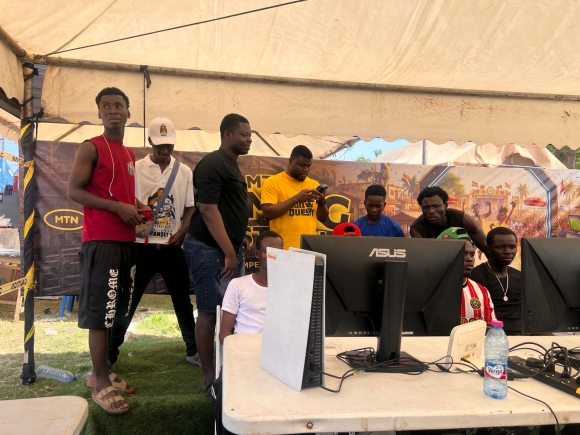
Many parents see a child holding a game controller and immediately think of wasted time. Some employers see an adult playing on a phone and conclude that the person is unserious. These reactions reflect how narrowly we understand video gaming and the economic activities it supports.
Behind the player are people who design games, write code, create characters, produce music, organise competitions and sell products to audiences. Each activity presents an opportunity for Ghana to develop skills, build businesses and earn income.
Research firm Newzoo estimates that the global video games market generated US$201.6 billion in 2025. Esports, the organised competitive playing of video games, is one part of that wider industry. Ghana must explore opportunities across the entire business.
DataReportal’s Digital 2026 Ghana report records 26.3 million internet users, representing 74.6 per cent of the population, and 41.8 million mobile connections, using late-2025 data. It also identifies 8.59 million social media user identities. These figures describe connectivity and potential reach; they are not counts of gamers.
For gaming audiences, figures presented at MTN’s DigiFest 2025, reported by MyJoyOnline, estimated that 8.8 million Ghanaians engaged with gaming platforms. This is an indicative audience estimate, not a verified count of mobile gamers, paying subscribers or esports enthusiasts.
The continental opportunity is clearer. Carry1st and Newzoo estimated that Africa had 349 million gamers in 2024, including 304 million mobile gamers. Mobile games generated approximately US$1.6 billion of the continent’s US$1.8 billion gaming revenue. Ghanaian developers should therefore consider affordable smartphones and modest data budgets when designing products.
At National ICT Week 2026, I highlighted reported expenditure of US$121 million on video game downloads and subscriptions in Ghana during 2025. This is a combined spending figure, not subscription revenue alone or the number of subscribers. The commercial question is how much of this spending Ghanaian businesses can capture.
Ghana already has organisations working to develop that opportunity. Esports Association Ghana has contributed through advocacy, engagement with industry partners and efforts to professionalise competitive gaming. Its leadership has called for affordable data, better payment access and registered teams capable of attracting sponsorship.
In July 2025, the association launched the Ghana Esports League, designed to develop, rank and reward players, with EA SPORTS FC25 and eFootball 25 announced as its initial titles. Such structures can connect talented players with coaches, content creators, sponsors and audiences. Their lasting value will depend on consistent delivery.
MTN Ghana’s partnership with Leti Arts provides another practical example. The partners developed the MTN Gaming Conference 2026, bringing developers, investors, educators and esports stakeholders together to explore the industry’s commercial future.
The collaboration also extends into talent development. Ashesi University announced a partnership with MTN Ghana, Leti Arts and MiTale to establish its Gaming and Applied Games Virtual Lab. The MTN–Leti Arts Game Development Fellowship is intended to support student concepts and prototypes, with mentorship, testing and incubation opportunities.
This matters because Ghana needs a pathway from learning to production and from production to market. A student who learns coding should have opportunities to build, test and commercialise a game. Applied games can also address needs in education and agriculture.
We must build on these foundations deliberately. Universities, technical institutions and private training centres should connect programming, animation, storytelling, sound production and digital marketing to practical projects. Training should also cover commentary, broadcasting, tournament administration and team management.
Our folklore, languages and traditional games provide material for original digital products. However, cultural relevance alone will not sell a game. Developers need reliable products, effective distribution, sustainable pricing and protection for their intellectual property.
Businesses must understand the audiences they want to reach. Banks can support payments, telecommunications companies can improve access, and consumer brands can sponsor competitions and content. Organisers must demonstrate audience quality, engagement and commercial results to retain those partners.
Becoming West Africa’s esports hub means giving regional teams, publishers and sponsors compelling reasons to choose Ghana repeatedly. We need a predictable tournament calendar, reliable electricity, suitable venues and affordable connectivity. Competitive gaming also requires low latency, meaning minimal delay between players’ actions and server responses.
English and French broadcasts, regional partnerships and efficient travel arrangements can widen participation. Visiting players and spectators can create demand for hotels, transport, food and tourism services. Facilities should accommodate training, production and competitions throughout the year.
Public institutions, associations, developers and investors should agree on measurable priorities. Establish credible national data on mobile players, gaming enthusiasts, subscriptions, employment and revenue. Different audience categories must be measured separately rather than combined into impressive but misleading totals.
Success should be judged by the businesses that grow and survive long after the tournament lights dim.
Young players need supervision and balanced schedules. Teams need fair contracts, and competitions must honour prize commitments. Girls and women must have meaningful opportunities to participate and lead.
Ghana should pursue a focused programme connecting skills, studios, competitions and investment. Measure the jobs created, products released and export income earned. We have discussed the value beneath our soil for decades. It is time to develop the value within our people’s creativity and turn our enthusiasm for gaming into sustainable enterprise.
Writer is the current Vice President of Ghana Esports Association and Founder of Esports Academy.
