
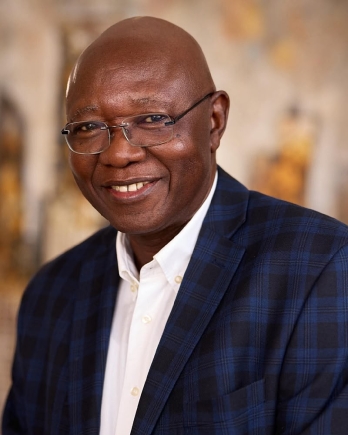
Dr Akwasi Opong-Fosu wants to be the NDC’s national chairman, and his pitch is that the party’s grassroots deserve a voice, a livelihood and a vote that counts. It’s a strong pitch. But it’s still only a pitch until he tells branch executives what they’ll get, when, and who pays for it.
That question will matter more as vetting begins on November 11 and 12, ahead of the December 19 congress. With the party in government and 2028 on the horizon, the chairmanship, from where I sit, is a test of whether the NDC will organise or just celebrate.
He launched in Akatsi, in the Volta Region, and called the region the “oxygen of the NDC.” It’s a smart opening. It ties his ambition to the party’s founding spirit, not to his own profile. But launches don’t win congresses, and slogans don’t build parties. The real test is whether he can diagnose what is wrong with the NDC’s structures and then tell us how he’d fix it.
He does offer a framework, voice, viability and votes.
Voice: a proper channel for branch and constituency concerns to reach national leadership; Viability: economic empowerment for grassroots members and financial sustainability for party structures; Votes: the payoff, a united base that can hold power in 2028 and beyond.
On paper, it works. In practice, it’s a tall order. Our parties are brilliant at announcing grassroots empowerment and equally brilliant at treating branch executives as voting machines when internal elections come around.
So the question isn’t whether the three pillars sound good. It’s whether they become rules, resources and routines that outlive the congress.
Then there are his “Three Rs”: Restoration, Renewal and Resetting. Restoration of probity, accountability and social justice is a refrain we’ve heard from NDC leaders since the 90s. Renewal is harder. Resetting is harder still.
Give him credit for one thing: he seems to know where the pain is. On his Oti Region tour, he promised better welfare and regular logistical support for party executives. Those executives carry the party in the districts and get the least in return. Ignore them and you end up with a national machine running on a broken local engine.
And that matters for the road to 2028. A governing party’s biggest temptation is to get so absorbed in government that it neglects the organisation that put it there. The NDC can’t afford that drift. The chairman it needs sees himself as a bridge between the grassroots and the national executive, not a gatekeeper of patronage.
Opong-Fosu’s CV helps him here. He’s a former Minister for Local Government and Rural Development and later Environment, Science, Technology and Innovation, a former Amenfi East MP, and currently Board Chairman of the Ghana Investment Promotion Authority.
That’s party experience mixed with institutional management. But the chairmanship isn’t a technocratic job. It’s political. It demands listening, negotiation, discipline and the courage to say no to powerful interests.
He says he wants a politics of dialogue, not confrontation: “Politics has moved beyond brawn; we are looking for brains.” Many tired party members will love that line. But it also sets the bar he’ll be measured against.
So here’s my challenge to him. Publish the plan. Tell branch executives exactly what they’ll get, when they’ll get it and how it will be funded.
Spell out how party financing, grassroots welfare and dispute resolution will work. And explain how you’ll bring the party back together after what looks like a bruising contest.
The NDC doesn’t need a chairman who simply cheers the base. It needs one who can organise it, fund it, listen to it and, when necessary, discipline it. Opong-Fosu’s bid gives the party a chance to debate those requirements openly. Win or lose, that debate is worth having.
