
Introduction
The foreign policy of any sovereign state operates as a dynamic and complex canvas where historical memory, geographical imperatives, and domestic political alignments continuously intersect. For the Republic of Ghana, this canvas contains a singular, indelible watermark: the philosophical, ideological, and institutional legacy of its inaugural premier and president, Osagyefo Dr. Kwame Nkrumah. Emerging into the international system in March 1957 as the first sub-Saharan colony to break the shackles of Western imperialism, Ghana was immediately thrust into a deeply bifurcated global order defined by the existential polarization of the Cold War.
In this treacherous landscape, Nkrumah did not merely seek survival; he envisioned a radical, transformative role for Ghana that elevated the young West African state into the vanguard of global anti-imperialism and African unification. His foreign policy framework, anchored in the tripartite pillars of uncompromising Pan-Africanism, assertive non-alignment, and active anti-colonialism transcended the conventional boundaries of small-state diplomacy (Boafo-Arthur, 1999).
It posited that Ghana's sovereignty was functionally incomplete unless it was intrinsically coupled with the total liberation and political unification of the entire African continent. To fully comprehend this dynamic, international relations scholars often look through the lenses of structural realism, constructivism, and neo-Marxist dependency theory. While realism would suggest that a state of Ghana's material size must inevitably act as a passive follower in global power politics, Nkrumah defied this constraint by leveraging ideological capital, creating what constructivists recognize as a powerful transnational identity that transformed Ghana into a systemic normative actor.
Decades after his dramatic overthrow in the Western-backed military coup of February 1966, an analytical paradox persists within Ghanaian historiography. While subsequent regimes, spanning an array of military juntas, short-lived democratic experiments, and the stable institutional layout of the Fourth Republic frequently sought to decouple Ghana's structural behavior from Nkrumah's radical internationalism, the foundational architecture of his worldview remains astonishingly resilient. The enduring nature of Nkrumah's influence does not lie in a dogmatic adherence to his mid-twentieth-century policies, but rather in the persistent ways his core doctrines continue to provide the ethical, linguistic, and strategic lexicon for modern Ghanaian diplomacy (Agyeman, 1993). Whether analyzing Ghana’s pivotal role in regional integration through the Economic Community of West African States (ECOWAS), its contribution to international peacekeeping operations, or its careful navigation of contemporary Sino-American rivalries, the ghost of Nkrumah remains present. This critical piece evaluates the enduring place of Nkrumah within Ghana's foreign policy architecture. It argues that while structural realisms and economic vulnerabilities have forced successive administrations to implement a more pragmatic, economized variation of diplomacy, the conceptual core of Ghanaian foreign policy remains structurally dependent on, and ideologically indebted to, the foundational paradigms established by Kwame Nkrumah.
Furthermore, this paper seeks to deconstruct the false dichotomy often drawn between the radical ideological orientation of Nkrumah’s First Republic and the market-driven pragmatism of contemporary Ghanaian administrations. It posits that what we observe in the modern era is not an abandonment of Nkrumaism, but rather its tactical institutionalization. The radical, revisionist language of the 1960s has been translated into the respectable, bureaucratic terminology of multilateralism, economic integration, and regional security. By examining the structural shifts across various regimes, from the immediate post-Nkrumah alignments to the contemporary democratic consensus this paper provides a comprehensive overview of how a small state's founding philosophy can survive systemic transformations, continuing to shape its national interest and global projection across generations.
Historical and Philosophical Foundations of Nkrumaist Internationalism
To properly appreciate the structural permanence of Nkrumah's legacy within Ghana's foreign relations, one must first distill the specific intellectual, material, and sociological components that birthed his internationalist paradigm. Nkrumah's foreign policy was never an ad-hoc, reactionary mechanism designed to respond to the daily shifts of global politics. Instead, it represented a deeply integrated philosophy that synthesized the radical black intellectual traditions of the diaspora, most notably the works of W.E.B. Du Bois, Marcus Garvey, and George Padmore, with a rigorous Marxist-Leninist critique of global monopoly capitalism and imperialist expansion (Nkrumah, 1965). Upon returning to the Gold Coast after extended periods of academic and political radicalization in the United States and Great Britain, Nkrumah arrived with the firm conviction that the nation-state model imposed by the 1884–1885 Berlin Conference was fundamentally unviable for the long-term survival of black people. For him, Westphalian sovereignty granted to individual African colonies was an elaborate facade designed to mask the transition from direct colonial rule to a more insidious, market-driven iteration of neo-colonialism. He understood that without unified political and economic structures, individual African countries would remain trapped as primary commodity exporters, perpetually vulnerable to deteriorating terms of trade and external political manipulation.
Consequently, from the midnight hour of Ghana's independence on March 6, 1957, Nkrumah explicitly de-provincialized Ghanaian identity. His famous declaration that 'our independence is meaningless unless it is linked up with the total liberation of the African continent' was not an exercise in empty rhetorical romanticism; it was an ontological statement of security and foreign policy doctrine (Gebe, 2008). This doctrine asserted that a solitary, economically fragile African state could never truly enjoy authentic self-determination while surrounded by heavily armed colonial enclaves and subject to the predatory economic calculations of Western multinational corporations. Therefore, the primary objective of Ghana's early foreign policy became the absolute liquidation of colonial power structures across Africa and the rapid construction of a centralized, continent-wide federal state, the United States of Africa. This policy required the mobilization of significant national resources, as Ghana positioned itself as a sanctuary for liberation thinkers and a financial underwriter for anti-colonial struggles across the continent.
To transform this grand theory into operational diplomatic reality, Nkrumah converted Accra into a vibrant, institutional nerve center for continental rebellion. The hosting of the First Conference of Independent African States in April 1958, followed swiftly by the historic All-African People’s Conference in December of the same year, fundamentally altered the trajectory of anti-colonial resistance across the globe. By bringing together both institutional leaders and radical freedom fighters from non-independent territories, including figures like Patrice Lumumba of the Congo, Robert Mugabe of Southern Rhodesia, and Amílcar Cabral of Guinea-Bissau, Ghana systematically bypassed traditional diplomatic protocols to foster a transnational, Pan-African solidarity network. Through the creation of the Bureau of African Affairs, Nkrumah’s administration provided vital financial subventions, military training, logistics, and passports to anti-apartheid and anti-colonial movements, effectively using Ghana's state machinery as a weapon for global liberation (Poku, 2002). This radical posture, while earning the profound hostility of Western capitals, established a historical precedent that would forever alter how the Ghanaian state viewed its ethical obligations on the global stage, creating an institutional memory that no subsequent leader could easily erase or ignore. The intellectual capital generated during this period established Accra as the symbolic capital of African liberty, a status that continues to pay diplomatic dividends in the twenty-first century.
It is also critical to recognize that Nkrumah's philosophical framework linked the domestic survival of the Ghanaian state with its external environment. His concept of 'Consciencism' and his critiques of imperialist structures were not merely academic exercises; they formed the baseline of national development planning. Foreign policy was seen as an extension of domestic liberation, and domestic industrialization was intended to provide the material engine to sustain an aggressive, interventionist foreign policy. This tight dialectical link between domestic political economy and external relations meant that any shock to one would inevitably reverberate through the other, a structural reality that became painfully evident during the economic crises of the mid-1960s.
The Pan-African Imperative: Institutional Transformations and Regional Integration
The central axis around which Nkrumah's foreign policy rotated was the immediate, uncompromised political unification of Africa. In his seminal text, Africa Must Unite, Nkrumah (1963) outlined an exhaustive blueprint for a continental government, complete with a unified military command, a single monetary zone, a common foreign policy, and a highly integrated industrial master plan. He warned with prophetic clarity that if Africa failed to unify politically before colonial powers balkanized the continent into artificial micro-states, these young nations would eventually disintegrate into tribalism, civil war, and structural economic dependency. However, this unyielding insistence on immediate political union encountered fierce, structural resistance from the more conservative factions of the emerging African ruling class, leading to the deep ideological rifts between the radical Casablanca Group led by Ghana, Guinea, and Mali, and the moderate Monrovia Group, which favored a gradualist, functionalist approach to cooperation based on state sovereignty. This ideological division severely limited the structural capacity of early pan-African institutions.
The eventual compromise reached in May 1963 during the formation of the Organisation of African Unity (OAU) in Addis Ababa represented a profound diplomatic defeat for Nkrumah's immediate unionist vision. The OAU charter enshrined the sanctity of inherited colonial borders and strict non-interference in the internal affairs of member states, effectively protecting state sovereignty at the expense of authentic political integration. Following Nkrumah’s ouster in 1966, the National Liberation Council (NLC) and the subsequent Progress Party government led by Dr. K.A. Busia actively sought to dismantle Nkrumah's continental commitments. Burdened by severe macroeconomic crises and eager to win the financial goodwill of the International Monetary Fund and Western creditors, these regimes declared a policy of 're-alignment' toward the West, slashed funding for liberation movements, closed down the Bureau of African Affairs, and adopted a highly localized, inward-looking foreign policy posture (Chazan, 1983). Busia even controversially advocated for a diplomatic 'dialogue' with the apartheid regime of South Africa, a radical departure from the unyielding confrontation championed by Nkrumah.
Yet, an empirical analysis of Ghana's foreign policy evolution reveals that the structural reality of the international system eventually forced these conservative, anti-Nkrumaist regimes to return to the functional paths of his Pan-African paradigm. By the early 1970s, under the military rule of Colonel I.K. Acheampong’s National Redemption Council (NRC), Ghana realized that isolation from continental affairs diminished its diplomatic capital and crippled its economic leverage. The NRC aggressively revived Ghana’s active participation in African affairs, leading directly to Ghana becoming a founding member of the Economic Community of West African States (ECOWAS) in 1975. This pivot demonstrated a fundamental systemic truth: even when Ghanaian leaders rejected Nkrumah’s specific political methods, they could not escape his core diagnosis; that the small West African nation-state could not achieve meaningful development or security outside a collaborative, Pan-African framework. Regional integration became the realistic proxy for continental unification.
In the contemporary landscape of the Fourth Republic, this dependency has manifested in Ghana’s absolute leadership in regional integration. Under successive administrations from both the National Democratic Congress (NDC) and the New Patriotic Party (NPP), Ghana has consistently positioned itself as the diplomatic anchor of West Africa. Whether leading complex ECOWAS mediation efforts to resolve constitutional crises in Liberia, Sierra Leone, and the Gambia, or committing significant contingents of the Ghana Armed Forces to regional stabilization initiatives, modern Accra operationalizes a functionalist adaptation of Nkrumah's collective security doctrine. Furthermore, the historic selection of Accra to host the Permanent Secretariat of the African Continental Free Trade Area (AfCFTA) in 2020 represents a profound, full-circle historical validation of Nkrumah's economic thesis (Aluko, 1977). While AfCFTA utilizes the contemporary language of market-led neoliberal integration rather than Nkrumah's socialist command economics, its fundamental goal, the creation of a borderless, integrated African market capable of resisting external economic shocks is a direct institutional descendant of the continental economic framework championed in Africa Must Unite. Modern Ghanaian leaders regularly invoke Nkrumah's legacy during AfCFTA summits, using his historical stature to legitimize Ghana's contemporary role as the commercial capital of the African continent.
The Doctrine of Non-Alignment and Positive Neutrality in a Polycentric World
Alongside his pan-African agenda, the second structural pillar of Nkrumah’s foreign policy was the doctrine of non-alignment and positive neutrality. As the Cold War intensified in the late 1950s, threat inflation and proxy conflicts threatened to turn the newly independent global South into a bloody geopolitical battleground for the United States and the Soviet Union. Nkrumah vigorously rejected the idea that African states had to choose an uncritical alignment with either Western capitalism or Eastern bloc state socialism. At the historic Belgrade Conference of 1961, Nkrumah joined titans of the global South like India's Jawaharlal Nehru, Egypt's Gamal Abdel Nasser, Indonesia's Sukarno, and Yugoslavia's Josip Broz Tito to formally launch the Non-Aligned Movement (NAM). For Nkrumah, non-alignment was explicitly not an exercise in passive isolationism, moral cowardice, or diplomatic quietism; it was an active, interventionist policy labeled 'positive neutrality' (Nkrumah, 1961). It meant that Ghana reserved the absolute right to evaluate international crises strictly on their independent merits, and to project its sovereign moral authority to judge the actions of global superpowers without fear of retribution. This active stance allowed a small nation to exercise disproportionate structural influence within the United Nations and other multilateral forums.
This conceptual framework was driven by a deep structural understanding of the global political economy. Nkrumah correctly identified that a small, developing nation that aligned exclusively with a single superpower would inevitably surrender its domestic policy autonomy and become an instrument of foreign interests. Throughout his tenure, he balanced massive infrastructural partnerships with both sides of the ideological divide, famously securing American financing from the Eisenhower and Kennedy administrations for the construction of the ambitious Volta River Project, while simultaneously building deep educational, technical, and military agreements with the Soviet Union, the German Democratic Republic, and the People’s Republic of China (Thompson, 1969). This delicate diplomatic balancing act demonstrated that non-alignment could be utilized as a strategic mechanism to maximize development aid while maintaining domestic sovereign independence.
Following his overthrow, the trajectory of Ghana's non-aligned stance experienced deep oscillations. The NLC and Busia administrations quickly swerved violently into the Western orbit, attempting to purge Ghana of its Eastern ties and technical experts. Conversely, the arrival of Flight Lieutenant Jerry John Rawlings and the Provisional National Defence Council (PNDC) in 1981 witnessed a fiery, rhetorical resurrection of anti-imperialist, neo-Nkrumaist non-alignment, characterized by warm diplomatic ties with revolutionary regimes in Cuba, Libya, and Nicaragua (Gyimah-Boadi, 2015). However, when confronted with catastrophic economic collapse in 1983, the Rawlings regime was forced to execute a profound pragmatic retreat, embracing structural adjustment programs designed by the World Bank and IMF, which once again structurally anchored Ghana's economy to Western capital markets. This historical shift proved that regardless of a regime's ideological preferences, international structural realities and financial dependencies place firm boundaries around a state's foreign policy choices.
Despite these structural vulnerabilities and shifts in regime ideology, the contemporary architecture of the Fourth Republic demonstrates that Nkrumah’s non-aligned framework has survived as the baseline strategy for Ghanaian diplomacy. In the post-Cold War era, this framework has transitioned into a highly sophisticated strategy of economic multi-alignment. Modern Ghana systematically refuses to become entangled in the zero-sum structural rivalries of the contemporary international system, such as the mounting geopolitical friction between the United States and China. Instead, Ghana actively cultivates profound, multi-dimensional partnerships with both poles of global power. For instance, while maintaining deep security cooperation, joint military exercises, and democratic alignment with the United States and European partners, Accra simultaneously maintains an intense economic, financial, and infrastructural relationship with Beijing. China has emerged as Ghana’s largest trading partner and a primary source of financing for critical infrastructure, including roads, bauxite processing agreements, and digital telecommunication frameworks (Tsikata et al., 2008). By balancing these competing global heavyweights against one another to maximize domestic developmental gains while jealously guarding its sovereign decision-making power, Ghana continues to practice a modern, highly pragmatic version of Nkrumah’s positive neutrality.
Structural Realism versus Ideological Continuity: The Economics of Pragmatism
A critical evaluation of Nkrumah’s place in Ghana's foreign policy requires a clear-eyed analysis of the persistent structural tensions between ideological aspiration and material capability. Scholars operating within the tradition of structural realism argue that the dramatic shifts observed in Ghana's foreign policy over the decades are driven not by the lingering philosophies of a long-deceased leader, but by the cold, unforgiving imperatives of economic survival and changing international resource distributions (Antwi-Boateng & Akwuupa, 2017). This perspective posits that Nkrumah’s original foreign policy was materially unsustainable, as his massive financial expenditures on continental liberation movements and ambitious industrialization projects severely drained Ghana’s foreign exchange reserves, contributing to the domestic economic instability that ultimately precipitated his political downfall. Realists argue that a state must first secure its domestic economic base before attempting to project expansive, transformative power on the global stage.
From this analytical viewpoint, the foreign policy of the Fourth Republic is defined primarily by economic diplomacy; a strategy that deliberately prioritizes the mobilization of foreign direct investment, bilateral aid, debt relief, and trade partnerships to feed domestic developmental agendas. Under the NPP administration of President John Kufuor (2001–2009), this economic realism manifested in the decision to enroll Ghana in the Highly Indebted Poor Countries (HIPC) initiative, a move that required a temporary subordination of radical sovereign pride to secure comprehensive debt cancellation from Western creditors. Similarly, the subsequent NDC and NPP administrations have repeatedly engaged in fiscal management cycles under the supervision of the IMF to stabilize the cedi and manage structural balance-of-payments deficits. This recurring economic dependency has undeniably tempered the radical, confrontational tone that characterized Ghanaian foreign policy during the First Republic, shifting the focus from structural global transformation to domestic economic stabilization.
However, to view this pragmatic shift as a total death or abandonment of Nkrumaism is a profound analytical error. A more accurate conceptual framework recognizes a complex process of ideological hybridization, where Nkrumah's macro-principles are continuously adapted to serve pragmatic economic realities (Asare & Inusah, 2019). Modern Ghanaian diplomats do not see a contradiction between attracting Western capital and advancing a Pan-African agenda. Instead, they use Ghana’s historic Nkrumaist capital as a unique brand asset to position the country as a secure, politically stable gateway to the African continent. For example, the highly successful 'Year of Return' initiative launched by the government of President Nana Akufo-Addo in 2019 explicitly weaponized Nkrumah's historical relationship with the global African diaspora. By inviting millions of African-Americans and Afro-Caribbeans to return to Ghana to invest, relocate, and build transnational networks, the state transformed a classic Nkrumaist Pan-African ideal into a multi-million-dollar engine for tourism and foreign direct investment. This demonstrates that even in an era dominated by market calculations, the symbolic and structural power of Nkrumah’s Pan-African framework remains a potent instrument for generating national power and global influence, blending heritage tourism with strategic statecraft.
Global Peacekeeping and Multilateralism: The Institutionalization of Ghanaian Diplomacy
The enduring legacy of Nkrumah is also deeply embedded in Ghana's exceptional commitment to global multilateralism and international peacekeeping operations. Nkrumah was a passionate institutionalist who believed that small states could maximize their structural leverage and protect their sovereign rights by actively shaping the norms and laws of global governance bodies like the United Nations (UN), the Non-Aligned Movement, and the Commonwealth. In 1960, when the newly independent Republic of the Congo collapsed into violent secessionist conflicts engineered by Belgian imperialists and corporate mining interests, Nkrumah responded instantly. He deployed massive contingents of the Ghana Armed Forces and police under UN command to protect the territorial integrity of Lumumba's state, marking Ghana’s foundational entry into international peacekeeping (Nkrumah, 1967). This deployment underscored his belief that African security was indivisible and required active institutional intervention.
This early deployment established a robust, institutionalized culture of military diplomacy that has survived every regime change in Ghanaian history. Today, Ghana ranks consistently as one of the top ten contributors of troop and police personnel to United Nations peacekeeping missions across the globe, with operations spanning Lebanon (UNIFIL), South Sudan (UNMISS), and Mali (MINUSMA). This persistent commitment to global peace and security cannot be explained simply as a financial strategy to secure UN financial reimbursements for the military. Rather, it represents a deep institutionalization of Nkrumah's historical belief that Ghana must serve as an active, moral custodian of international law and global human security (Whitaker, 2010). Through its exemplary performance in multilateral arenas, Ghana has cultivated an international reputation for neutrality, diplomatic maturity, and ethical leadership. This global prestige allows Accra to project influence far out of proportion to its material wealth or military size, direct evidence of the structural durability of the internationalist ethos cultivated during the dawn of the republic. It transforms Ghana from a mere consumer of security into an essential producer of global order.
Modern Oscillations: The Fourth Republic’s Geopolitical Equilibrium
The consolidation of democratic governance under Ghana's Fourth Republic since 1993 has created a unique foreign policy equilibrium that balances competing internal political traditions while maintaining an underlying Nkrumaist baseline. The two dominant political parties, the National Democratic Congress (NDC), which claims an intellectual lineage tied to Rawlings' revolutionary populism and state-led development, and the New Patriotic Party (NPP), which traces its roots to the conservative, pro-market, property-owning Danquah-Busia-Dombo tradition, have developed a remarkable functional consensus on international affairs. While the NPP historically criticized Nkrumah's radical methods and external spending, its actual conduct of foreign affairs when in power has consistently relied on the institutional architectures and global prestige that Nkrumah established. This demonstrates that the realities of governing a small, strategically positioned West African state impose a high degree of continuity on external statecraft, overriding domestic partisan divides.
This structural consensus is particularly evident in how modern Ghana manages its relations with non-traditional partners in the Global South. Expanding beyond the traditional boundaries of Western diplomacy, modern Ghana has built deep diplomatic, commercial, and technical ties with emerging economic powerhouses such as India, Brazil, Turkey, and South Africa. This diversification of foreign relations directly operationalizes Nkrumah’s core thesis that a post-colonial nation must avoid structural dependency on its former metropolitan masters by deliberately expanding its global network of partners. Whether through South-South cooperation frameworks or active participation in the African Union, modern Ghanaian statecraft continuously replicates the multi-centric global vision that Nkrumah championed in the 1960s, proving that his strategic insights remain highly relevant in an increasingly fragmented, multi-polar world order.
Conclusion
In final analysis, the historical footprint of Kwame Nkrumah within Ghana's foreign policy is not an archival relic of a bygone era; it remains the living, breathing DNA of Ghanaian international relations. While the passage of seven decades, the collapse of the Soviet Union, and the realities of severe domestic economic constraints have naturally forced a transition from the radical, revolutionary rhetoric of the 1960s to a more calculated, business-oriented economic diplomacy, the structural pillars of his vision have proved remarkably permanent. The contemporary focus of the Fourth Republic on deep regional integration through ECOWAS, the historic hosting of the AfCFTA Secretariat in Accra, the practice of a balanced multi-alignment in the face of escalating global superpower tensions, and the nation's exceptional commitment to multilateral peacekeeping all offer undeniable empirical proof that the strategic coordinates of Ghanaian foreign policy are still drawn from the intellectual maps designed by its first president.
Nkrumah’s enduring genius lay in his ability to articulate a foreign policy framework that was structurally synchronized with both Ghana’s historical identity and its long-term geopolitical imperatives. Consequently, as modern Ghana navigates the volatile, shifting currents of a multi-polar twenty-first-century global order, it does not do so in an intellectual vacuum. It draws its enduring stability, its ethical confidence, and its global prestige from an inexhaustible fountain of Pan-African internationalism. Osagyefo Dr. Kwame Nkrumah remains, without question, the eternal architect of Ghana's global destiny, and his place in the nation’s foreign policy architecture is secure, permanent, and fundamentally unshakeable. Subsequent generations of diplomats may alter the tactics, adjust the budgets, and refine the rhetoric, but the strategic horizon of Ghanaian diplomacy remains permanently defined by the visionary goals established at the birth of the nation.
References
Agyeman, O. (1993). Nkrumah's Ghana and East Africa: Pan-Africanism and African interstate relations. Associated University Presses.
Aluko, O. (1977). Ghana and Nigeria, 1957-70: A study in inter-African discordant relations. Barnes & Noble Books.
Antwi-Boateng, O., & Akwuupa, B. A. (2017). The foreign policy of Ghana under the Fourth Republic: A critical assessment of economic diplomacy. African Studies Quarterly, 17(2), 23-44.
Asare, B. E., & Inusah, S. (2019). From pan-Africanism to economic diplomacy: Analysing the paradigm shift in Ghana’s foreign policy. Journal of Contemporary African Studies, 37(4), 412-428.
Boafo-Arthur, K. (1999). Ghana’s politics of international economic relations under the PNDC in the 1980s. African Affairs, 98(390), 41-72.
Chazan, N. (1983). An anatomy of Ghanaian politics: Managing political recession, 1969-1982. Westview Press.
Gebe, B. Y. (2008). Ghana's foreign policy from Nkrumah to Kufuor: Personalities, institutions and historical realities. Golden Beach Publishers.
Gyimah-Boadi, E. (2015). Democratic reform in Africa: The quality of progress. Lynne Rienner Publishers.
Nkrumah, K. (1961). I speak of freedom: A statement of African ideology. Praeger.
Nkrumah, K. (1963). Africa must unite. Heinemann.
Nkrumah, K. (1965). Neo-colonialism: The last stage of imperialism. Thomas Nelson & Sons.
Nkrumah, K. (1967). Challenge of the Congo: A case study of foreign pressures in an independent state. International Publishers.
Padmore, G. (1956). Pan-Africanism or communism? The coming struggle for Africa. Dennis Dobson.
Poku, N. K. (2002). Regionalization and security in Southern Africa. Palgrave Macmillan.
Thompson, W. S. (1969). Ghana's foreign policy, 1957-1966: Diplomacy, ideology, and the new state. Princeton University Press.
Tsikata, D., Fenny, A. P., & Aryeetey, E. (2008). China-Africa relations: A case study of Ghana. African Economic Research Consortium.
Whitaker, B. E. (2010). Compliance among weak states: Africa and the counter-terrorism regime. Review of International Studies, 36(3), 639-662.
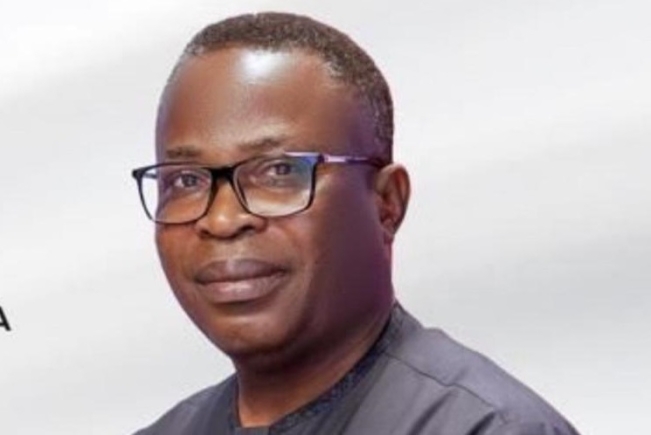
The author, Lord Mawuko-Yevugah is a Cambridge educated and globally recognized expert of international relations and comparative political economy. He is currently an Associate Professor at the Ghana Institute of Management and Public Administration (GIMPA) where he previously served as the founding Head of Department for Public Management and International Relations. He is the Founder and Lead Researcher of the Pan-Africanist Centre for African Diplomacy and Global Engagement (Afro-global). He is also the Founder and Convener of the International Relations and Diplomacy Network Ghana (IRDNGhana). He is the author of many ground-breaking intellectual works, including Independency: Political Independence and Economic Dependency in Ghana (2025); and Elements of Foreign Policy Analysis: Actors, Theories and Cases (2026). This piece is an excerpt from his forthcoming book, Afro-globalism: Ghana’s Foreign Policy in a Multipolar World; From Non-Alignment to Strategic Autonomy (2027).
