
F1’s return to Africa should be a triumph. But its host, Rwanda, stands accused of backing rebels whose smuggled coltan feeds both their war in Congo and Rwanda’s economy. Some firms in F1’s orbit may have that coltan in their supply chains. So far, they have said nothing.
An African nation last hosted a Formula 1 race in March 1993. On paper, Rwanda’s recent announcement that it successfully bid to host the first F1 race in Africa in 33 years is a triumph for African sports on a global stage. Whilst it is true that bringing a global sport to Africa is a triumph, the deal ignores some very real problems sitting just beneath the surface in Rwanda.
Foremost is the alleged support the Rwandan Government provides M23, a rebel group operating in the mineral-rich province of North Kivu, in eastern Democratic Republic of the Congo (DRC).
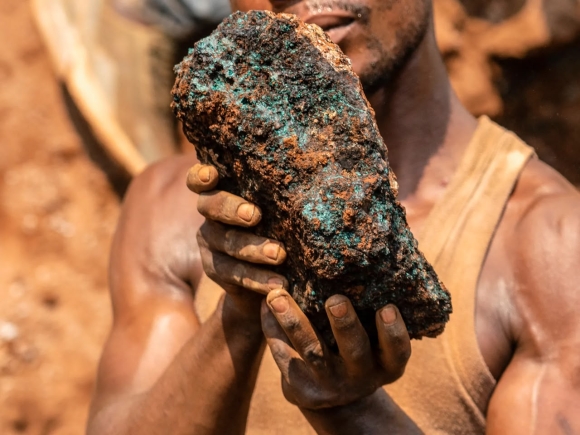
This support supposedly gives the Rwandan government an established and lucrative channel to smuggle DRC’s coltan from the mines of North Kivu into Rwanda, and onwards to the global market. This is according to a 2024 report from a UN panel of experts on the DRC, which stated that “fraudulent extraction, trade and export to Rwanda of Rubaya minerals benefitted both M23 and the Rwandan economy”.
So far, within F1, sponsors and teams have been silent on the matter. But the issue is well documented; the announcement about the Rwandan F1 came just one month after Amnesty International published a report accusing Rwanda of war crimes in Congo. An exhaustive report from June 2026 by Global Witness also drew attention to Rwanda’s alleged role in smuggling coltan and the global organisations in the F1 ecosystem that could be using smuggled coltan, such as Honda and Toyota.
So there is an irony that it is very possible that coltan smuggled by Rwanda out of the DRC, smelted in China, will find its way back to Rwanda inside the capacitor or semiconductor of an F1 car.
As international organisations, F1 Teams have a collective responsibility to continuously review the implications of their participation and the integrity of their supply chains, as all large organisations do. If need be, this includes exposing instances where illegal practices are identified.
F1 teams are visible to millions of fans across the globe every weekend during the season and thus have an important public platform. But the platforms the teams enjoy have so far not engaged with Rwanda’s involvement in coltan smuggling in the DRC. It is a tricky issue, especially given the achievement of bringing F1 back to Africa, but to ignore it outright is an obvious deflection.
The lack of engagement with Rwanda’s alleged involvement in smuggling and conflict in Eastern DRC by the teams and F1 as a body is becoming noticeable, given the heavy media coverage on the topic since the announcement. Much of this coverage celebratesF1’s return to the continent but questions the fitness of the hosts to stage a global event, in light of these allegations.
This has naturally led the media to raise the spectre of sportswashing. Sportswashing is the practice of using exposure from major sporting events to clean or polish a country's reputation or divert attention away from less palatable issues. This is not the first time Rwanda has been accused of sportswashing. Its sponsorship of Arsenal Football Club eventually led to enough furore from fans that the deal came to a premature end. Bayern Munich also followed suit, altering their partnership with Rwanda after public pushback.
Sponsors too have been silent on the issue of Rwanda hosting an F1 race. But the same ethical standards apply to them as to the F1 teams themselves. Headline sponsors, such as Amazon, DHL and Oracle, should be sector leaders in assessing opportunities and calling out a misalignment of values when it occurs.
The teams and sponsors have the money, the reach and the audience to ask hard questions of Rwanda. Football fans have already shown that public pressure can change a partnership with Kigali. F1’s biggest names should not need their fans to do it for them. Whether the teams and sponsors use their commercial clout and media heft to draw the spotlight onto this issue from within the sport is yet to be seen.
