
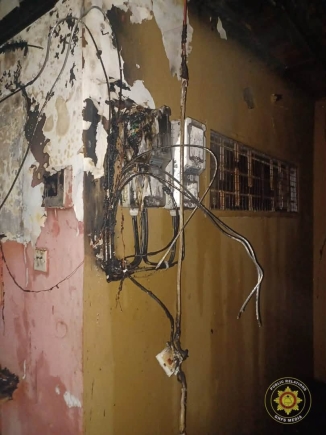
Day after day, new properties spring up in neighbourhoods across Accra and other parts of Ghana. Yet, one question rarely receives adequate attention: are the electrical installations in these buildings carried out in accordance with the required wiring standards?
Fire outbreaks in residential and commercial premises are also frequently reported, often destroying property worth substantial sums of money. Although these fires may not occur every day, they happen regularly enough to raise serious concerns about their causes and the effectiveness of existing preventive measures.
The Ghana National Fire Service identified faulty wiring, power surges, and the improper use or overloading of electrical appliances as some of the leading causes of fires in homes and workplaces, particularly during the first quarter of 2026.
Regulation of Electrical Wiring in Ghana
Electrical wiring is regulated in Ghana. The materials used for wiring and the electricians who undertake wiring projects are also subject to regulation. These safeguards are intended to enforce standards, ensure quality service and prevent avoidable disasters.
Despite these requirements, untrained individuals are frequently engaged to undertake electrical wiring on building projects. This practice continues notwithstanding numerous reports by the Ghana National Fire Service attributing many fire outbreaks, particularly in the capital, to electrical faults.
The Electrical Wiring Regulations, 2011 (L.I. 2008) provide as follows.
Quality of Materials Used for Electrical Wiring
Regulation 4 states that a person shall not use a material for electrical wiring unless the material is:
(a) capable of maintaining the integrity of electrical equipment or an installation under the environmental conditions stipulated by the manufacturer of the material; and
(b) approved by the Standards Authority.
Approval and Notification for Electrical Wiring
Under Regulation 6(1), a person who intends to make a temporary or permanent alteration to electrical wiring, or install additional fixed electrical equipment that requires an alteration to electrical wiring, must first obtain written approval from an electricity distribution utility.
This requirement does not apply to premises that have not been connected to the distribution network of an electricity distribution utility.
The person responsible for the alteration or installation must also:
notify the electricity distribution utility in writing of the commencement and completion of the alteration or installation intended for connection to the distribution network; and
allow an authorised employee of the electricity distribution utility to inspect and test the work during its execution and upon completion.
Qualification of Electricians
Regulation 7 prohibits a person from undertaking electrical wiring on any premises unless that person has been certified by:
a licensed electricity distribution utility; or
a recognised person appointed by the Energy Commission.
Although this is the position under the law, the reality on the ground appears to be different, even though the consequences of non-compliance can be alarming.
Mandatory Inspection and Testing of Premises
Did you know that premises in Ghana whose electrical installations have been in use for at least 10 years are required to undergo periodic wiring inspections?
Under L.I. 2008, “premises” includes land and any building, structure or installation situated on it. This may include a residence, factory, construction site, kiosk, temporary installation, recreational ground, institutional building, commercial building or public-access building.
Regulation 11(2) and (3) requires periodic inspection and testing according to the following schedule:
10 years after the electrical installation is first put into use;
every three to five years thereafter, until the installation has been in service for 30 years; and
every two years after the installation has been in service for 30 years.
Section 52 of the Energy Commission Act, 1997 (Act 541) also empowers the Energy Commission to appoint a Chief Inspector and other inspectors to inspect premises.
In addition, Regulation 11 of L.I. 2008 permits electricity distribution utilities, principally the Electricity Company of Ghana and the Northern Electricity Distribution Company, to undertake inspections and testing.
When carrying out these responsibilities, a distribution utility is required to:
inspect and test an installation before it is put into use and conduct another inspection where an addition or alteration is made to its fixed wiring; take precautions to prevent danger to persons and damage to property or installed equipment;
complete and sign the relevant Electrical Installation Certificate and the schedule of inspection and test results; and
provide the documents to the person who requested the inspection where the installation passes the required inspection and testing.
The law also prescribes sanctions for any person who obstructs or refuses to permit an inspection. Upon summary conviction, an offender may be fined up to 250 penalty units, imprisoned for up to two years, or subjected to both penalties. Electricity supply to the premises may also be disconnected.
Who Is Responsible for Enforcement?
The pressing question, therefore, is where responsibility lies for the limited enforcement of these requirements. Is it with the Energy Commission, the electricity distribution utilities, or both?
Across the country, poorly trained electricians continue to be engaged to wire buildings, while many residential and commercial premises do not undergo the required periodic inspections. This lack of compliance and enforcement may be contributing to recurring fires in markets, homes and other buildings.
The time has come for the relevant authorities to enforce the law more effectively. If inadequate staffing is limiting the Energy Commission’s ability to conduct inspections, the government should support the Commission in recruiting and training qualified inspectors.
Such an initiative could create employment while addressing a persistent danger that continues to threaten lives and property. The mandatory inspection regime should not remain merely a requirement on paper. It must become an effective and visible part of Ghana’s fire-prevention strategy.
