
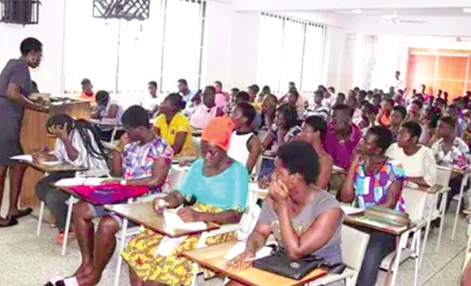
Every year, when schools close in Ghana, many parents face pressure to pay for “vacation classes.”
In some basic schools, attendance is presented as indirectly compulsory, since new topics will be taught, and parents are warned that pupils who skip them may fall behind.
This practice deserves national attention. School holidays should not become another period of academic pressure, especially for children from basic 6 to junior high school.
Ghana should replace compulsory academic vacation classes with a structured National Vacation Skills Rotation Programme, supervised by the Ghana Education Service (GES) and implemented with the Ghana TVET Service, the Commission for Technical and Vocational Education and Training, local authorities and accredited training providers.
Institutions such as the FirstBank Ghana already embrace this vision through their Junior Internship Programme, exposing children aged 10 to 14 to practical learning and workplace experience.
Such initiatives deserve national recognition and replication.
This is not an argument against academic support; children who genuinely need remedial lessons should receive them.
But compulsory holiday classes that merely extend classroom lectures, tests and homework create unnecessary stress and financial burden.
In 2016, the GES reportedly warned schools that it had not authorised compulsory vacation classes and that pupils should not be punished for refusing to attend, an issue that has also concerned teachers and parents.
Rather than letting schools run unregulated academic programmes over the holidays, the state should use this period to expose young people to practical skills.
Children, naturally curious
Children learn by asking questions, observing, experimenting and solving problems, and research links early curiosity to later cognitive and academic development.
A child who repairs an object, bakes bread, plants, designs a small robot or writes a basic programme is not wasting time; that child is building creativity, confidence, patience, coordination and problem-solving skills.
Ghana’s educational objectives already recognise the value of practical and vocational exposure at the basic level, yet many pupils never experience it meaningfully.
Vacation skills rotations could help deliver on that objective.
Under the proposed programme, every learner from Basic 6 to JHS 3 could complete at least three rotations before finishing basic education, not to force a career choice, but to let learners explore options before making later decisions.
Possible rotations could include sewing, fashion design, carpentry, hair styling, barbering, baking, cooking, food processing, automobile maintenance, welding, agriculture, robotics, electronics, coding, renewable energy, plumbing and entrepreneurship.
At the end of each rotation, learners should present what they made or learned to parents, teachers and community members, building communication and teamwork, while helping families appreciate vocational education.
A national vacation skills programme must enforce strict safety standards; children cannot simply be placed in workshops with dangerous tools, chemicals, machinery or electrical equipment.
Every approved centre should have trained facilitators, appropriate instructor-to-learner ratios, first-aid arrangements, emergency procedures and child-protection safeguards, with high-risk activities closely supervised or taught through demonstration and simulation.
The programme would also create demand for safety officers, risk assessors, workshop supervisors and child-protection professionals.
The GES and CTVET should set national standards for facilities, equipment, instructor qualifications, insurance and incident reporting, with private providers accredited and inspected before participating.
Stronger skills pipeline
Ghana has made progress in technical and vocational education, but participation remains far below the country’s needs.
A World Bank analysis found that in 2023, senior high schools enrolled about 1.16 million students, compared with about 123,836 learners in TVET institutions.
Though TVET enrolment is rising, many young people still encounter vocational education too late or view it as a second-choice pathway.
Early exposure can help change that perception and make practical skills central to education.
The programme should be free or heavily subsidised for children in public basic schools, using existing school workshops, TVET institutions, community centres and accredited private facilities, with industry, artisans, universities and civil society contributing equipment, instructors and mentorship.
Ghanaian children deserve holidays that restore their energy and stimulate their imagination.
It is time to move from compulsory vacation drills to structured vacation skills rotations, making practical creativity a normal part of every child’s education.
The writer is an adjunct lecturer,
University of Professional Studies, Accra (UPSA)
E-mail:
