
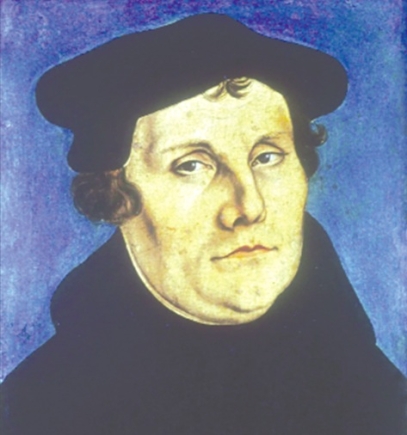
October 31,1517 marks a significant day in the history of the church globally and the Lutheran Church in particular.
It was on this day that Reverend Father Dr Martin Luther, a German Augustinian monk and professor of theology at the University of Wittenberg, challenged certain practices within the Western Church by nailing his 95 Theses on the church door in Wittenberg.
Luther’s action sparked a debate within the Roman Catholic Church under the leadership of Pope Leo X (1475–1521) and consequently led to the Protestant Movement and later Lutheranism.
Each year, Lutherans all over the world commemorate Reformation Day on October 31 to reflect on the historical significance of Martin Luther’s Reformation and its continuing implications for the Lutheran faith.
The Reformation was not merely a historical event in the 16th century in Germany; it was a call for the Church to examine its teachings, renew its spiritual life, correct abuses, and remain faithful to the Gospel of Jesus Christ.
More than five centuries later, Luther’s message continues to challenge the Church to pursue biblical truth, responsible leadership, Christian unity, and meaningful service to society.
Luther’s initial challenge was particularly against the sale of certificates of indulgences, which were associated with the remission of temporal punishment for sin. Luther became concerned that such practices obscured the biblical message of repentance and the free grace of God.
Luther, therefore, prepared the 95 Theses, written in Latin, to invite theological debate about the power and proper use of indulgences. Their rapid circulation through printing helped initiate a movement that transformed Christianity in Europe and beyond.
Luther’s principal concern was that the Church should faithfully proclaim the Word of God and direct sinners to Jesus Christ rather than allow questionable practices to obscure the Gospel.
His theological convictions became associated with justification by grace through faith, the authority of Scripture, and the centrality of Christ in salvation.
The Reformation also encouraged the translation of the Bible into languages ordinary people could understand and strengthened the importance of Christian teaching and congregational participation.
Major effect
One major effect of the Reformation was the renewed emphasis on salvation as God’s gift through Jesus Christ. Luther taught that people are justified before God by grace through faith, not by purchasing forgiveness or earning salvation through their own merits (Ephesians 2:8–9).
This teaching remains important in Ghana today to ensure that people are not misled into thinking that financial contributions, special offerings, or payments to religious leaders can purchase God’s forgiveness or guarantee divine favour.
The Church should teach members that giving to the Church is an expression of gratitude, faith, and generosity, not a payment for healing, prosperity, or salvation. The Church must proclaim the Gospel faithfully while encouraging responsible stewardship and generosity.
Also, another significant effect was the renewed emphasis on the authority of Scripture. Luther believed that the Church’s teaching and practices should be examined in the light of God’s Word.
For the Evangelical Lutheran Church of Ghana (ELCG), this means that sermons, church policies, leadership decisions, and disciplinary procedures should be consistent with Scripture and the Church’s Lutheran confessional commitments.
Importantly, Martin Luther’s Reformation on October 31, 1517 lies not simply in the emergence of Lutheran churches, but in the enduring call to place Christ at the centre of the church’s life and ministry.
The Reformation challenged abuses, renewed attention to Scripture, proclaimed salvation by grace, and encouraged wider access to Christian teaching.
To all Christians in general and the Lutherans in particular, the message is clear: the Church must remain faithful to the Gospel, exercise leadership with integrity, resolve conflicts through truth and reconciliation, educate its members, and serve society with compassion.
Reformation Day should therefore be more than an annual commemoration; it should be an opportunity for honest self-examination and practical renewal.
As Christians reflect on Luther’s legacy, may Reformation remain a living commitment to the truth of the Gospel and the transforming grace of Jesus Christ.
The writer is the Director, Young Adults Fellowship (YAF),
Evangelical Lutheran Church of Ghana.
E-mail:
