
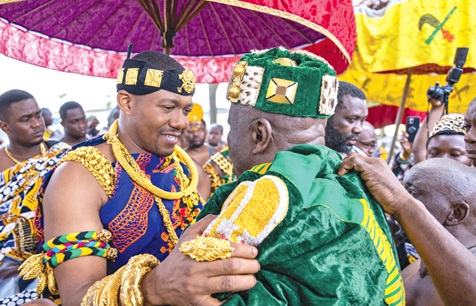
On September 25, this year, the people of Akropong in the Eastern Region gathered to celebrate a significant milestone in their cultural history, as Odwira, their annual festival of purification, remembrance and thanksgiving, marked 200 years of tradition.
For two centuries, the festival has connected generations of the Akuapem people to their ancestral heritage, bringing chiefs, queen mothers, families and visitors together to celebrate a shared history and identity.
Meaning “purification” in Akan, Odwira is a time for spiritual renewal, honouring ancestors and giving thanks for the harvest. It is also a period when Akuapem's rich cultural traditions take centre stage, with ceremonies that reflect the community's enduring connection to its past.
The festival's origin is traced to the Battle of Katamanso which was fought near Dodowa in 1826, when Akuapem warriors joined a coalition that defeated Asante forces.
According to tradition, rites were performed after the victory to cleanse the land.
During the reign of the 19th Okuapehene, Nana Addo Dankwa I (1811–1835), these rites developed into an annual observance.
In Akropong, the festival begins 40 days after the last Awukudae in the Akan calendar and lasts about two weeks.
Preparations start with a period of restraint during which drumming and loud noise are restricted, funerals are postponed and the eating of new yam is prohibited.
These customs prepare the community for the solemn and celebratory phases of the festival.
Royal family members clear paths leading to the ancestral mausoleum, symbolically welcoming the spirits of departed royals.
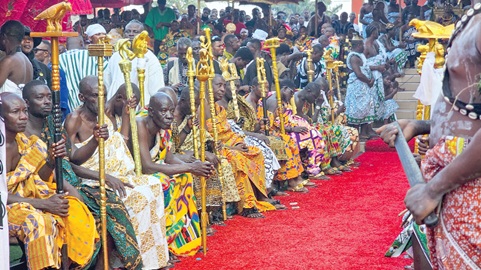
The period of mourning gives way to homage, thanksgiving and a grand durbar of chiefs, queen mothers and dignitaries.
One of the significant moments is the lifting of the ban on new yam.
The harvest is presented in a procession, while food is prepared in honour of the ancestors as an expression of gratitude and continuity.
The Omanhene and other stool occupants also perform rites to cleanse and renew their stools, reaffirming their spiritual and traditional responsibilities.
The atmosphere subsequently shifts to colour and pageantry.
Chiefs and queen mothers appear in regal kente, adorned with gold ornaments and traditional regalia.
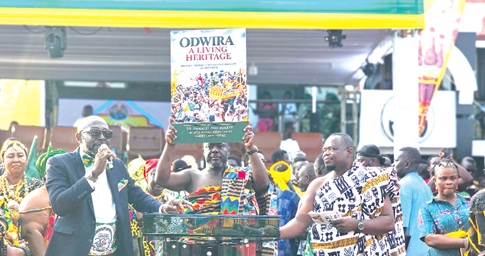
Drumming, dancing and praise singing accompany the celebrations, while families share meals and social gatherings bring residents and visitors together.
Although closely associated with Akropong, Amanokrom and Aburi, Odwira's influence extends beyond these traditional areas.
Its observance among some neighbouring Guan communities, as well as Akwamu and Ga communities in Jamestown, reflects historical connections, cultural exchange and intermarriage.
Today, Odwira remains an important homecoming for Akuapem people, home and abroad.
Beyond the pageantry, the bicentenary offers an opportunity to pass cultural knowledge to younger generations and reflect the values that have sustained the community for two centuries.
As the drums sound and the people gather, Odwira continues to bring the past into the present, renewing the bonds between ancestors, the living and generations yet to come.
