
A city’s attractiveness is shaped not only by its hotels, roads and conference facilities, but also by how people experience its public spaces and whether residents and visitors have places to relax, socialise and enjoy its culture.
Recent developments along Accra’s coastline and plans for a new convention centre at the Trade Fair site raise an important question: what kind of city are we building and how do these investments fit together?
Beyond clearing the La beachfront
The demolition of structures at the La Pleasure Beach and the Polo Beach Club in early October has generated strong reactions.
The exercise, supervised by the National Security following a request from the Labadi Beach Hotel, affected popular leisure businesses and operators whose livelihoods depended on the beachfront.
From a tourism perspective, the concern is not simply that structures have been demolished. It is what happens next.
The La Pleasure Beach has long been part of Accra’s leisure landscape, offering beach experiences beyond those available to hotel guests.
The Polo Beach Club and other establishments contributed to the area’s appeal through entertainment, food, music and social experiences by the sea.
With December in GH approaching, the timing is particularly significant.
The season attracts members of the diaspora, international visitors and Ghanaians returning home for holidays and entertainment.
Perhaps, more dialogue among authorities, landowners, operators and community representatives could have preceded the demolitions.
Where legally and practically possible, postponing the exercise until after December would have allowed businesses to prepare and the parties to discuss the future of the site without disrupting an established tourism attraction during a peak period.
That opportunity has passed. The urgent question is whether the clearance will lead to a better beachfront or simply leave another gap in Accra’s tourism landscape.
There is an opportunity to develop a cleaner, safer and more attractive beachfront, but this requires more than removing structures.
A properly planned destination should provide landscaped public spaces, walkways, lighting, sanitation, waste management, security and accessible recreational facilities. It should accommodate food, drink and entertainment businesses while protecting the coastline and surrounding environment.
The aim should not be to turn the coast into an exclusive hotel extension.
Accra needs beachfront spaces that welcome hotel guests, local families, young people and international tourists alike.
There must also be room for Ghanaian food, music, crafts and small businesses.
These are integral to the visitor experience and give a destination its character.
SSNIT, which owns the Labadi Beach Hotel and the La Palm Royal Beach Hotel, has a significant interest in the area's future.
The public deserves clarity about redevelopment plans, funding, timelines and opportunities for affected businesses and communities.
Marine drive and disconnected ambitions
The Marine Drive project, intended to transform part of Accra’s coastline into a major tourism, hospitality, commercial and leisure destination, cannot be ignored.
Its prolonged uncertainty reminds us that announcing ambitious developments and delivering them are two different things.
The La beachfront clearance and Marine Drive should be considered within a coordinated coastal development framework that balances private investment, public access, transport, recreation and environmental protection.
Accra does not lack ideas. It needs continuity, coordination and execution.
A Convention Centre that looks beyond conferences
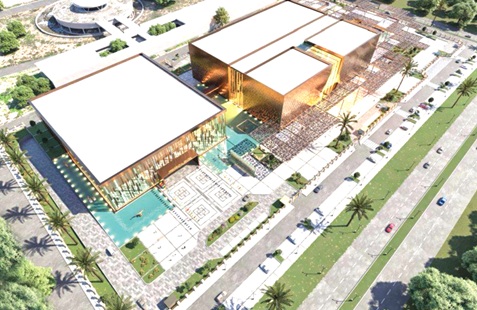
The Spokesperson to the President and Minister of Government Communications, Felix Kwakye Ofosu, recently announced on X that President John Dramani Mahama would cut the sod for a new SSNIT-funded Accra Convention Centre at the Trade Fair site.
The proposed 81,422-square-metre facility will include a 3,000-seat main conference hall, a Presidential Hall, four large auditoriums and other modern amenities.
Yet, in November 2024, former Vice-President Mahamudu Bawumia announced plans for a 20,000-capacity Ghana Trade Fair Convention Centre designed to accommodate conventions, exhibitions and major entertainment events.
The relationship between the two proposals requires clarification. Has the original concept changed, are these separate developments or is the new facility intended to complement a wider masterplan?
Ghana must ensure that its investment in conference infrastructure meets its long-term ambitions.
A 3,000-seat hall can serve corporate meetings and medium-to-large conferences.
However, if Accra wants to attract major conventions, exhibitions, concerts and cultural productions, it should consider incorporating a larger arena into the development.
A purpose-designed arena adjoining the convention centre could serve different markets, while sharing supporting infrastructure.
This is not about building bigger for its own sake, but about creating facilities capable of supporting a sustainable events economy.
One city, connected experiences
The greater opportunity lies in connecting these developments.
The Trade Fair site and La Beachfront could form part of a wider destination-planning strategy linking business tourism with leisure, hospitality, culture and entertainment.
Better transport connections, coordinated programming and visitor itineraries could encourage conference delegates to explore Accra beyond their meeting venues.
Imagine attending an international conference, enjoying a concert and spending the following day at a well-developed beachfront, experiencing Ghanaian cuisine and discovering local culture.
Such a proposition could encourage longer stays and greater visitor spending.
Achieving this requires coordination among government agencies, SSNIT, tourism authorities, private investors, event organisers and local communities.
Accra has the ingredients to become more attractive to residents and visitors.
The challenge is bringing them together in a coherent plan.
This is also an opportunity to establish the much-needed National Convention Bureau to coordinate destination marketing, attract international conferences and business events, and connect organisers with venues, hotels, transport providers and tourism experiences across Ghana.
Working alongside the proposed convention centre and other MICE facilities, the
Bureau could position Ghana as a competitive business events destination, ensuring that investments in conference infrastructure translate into visitor arrivals, longer stays, increased local spending and sustained economic benefits nationwide.
The true measure of urban redevelopment is not how much we demolish or how many projects we announce.
It is whether what emerges makes the city more beautiful, more liveable and more rewarding to experience.
