
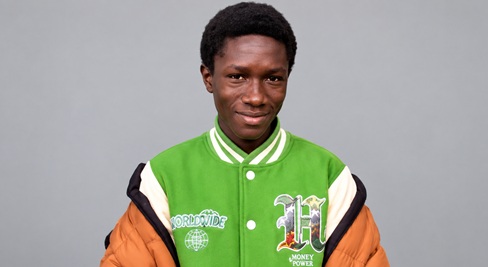
The tragic, vicious murder of a 15 year-old Ghanaian student, Javits Frimpong, in the USA, has understandably evoked several reactions and commentary among Ghanaians beyond the deep sympathies for his family and friends over this sad loss.
The issues include whether it is wise to relocate young children abroad, particularly in the west, where they often have challenges transitioning into their new environment, especially in school where they invariably face bullying due to their African accent, skin colour, authentically African names and more, or whether these children are better off remaining in Ghana until adulthood.
Reality of relocation
In my UK immigration work spanning over two decades, I have on many occasions dealt with UK parents seeking to relocate their child or children to the UK to live with them there.
Because under UK immigration law a child must be under 18 years of age to qualify to be sponsored to join his or her parent(s) in the UK, many parents do not have the luxury of waiting for the child to be much older before joining them there, otherwise they lose the opportunity to do so altogether.
For many parents who gain the opportunity to travel and settle abroad to make a living, the idea of leaving a young child behind can be distressing, because the parental bond weakens with prolonged absence.
Often there is parental anxiety that other family members in whose care the child is left may not necessarily be willing or able to provide the child with the direction the parent would have provided.
Even where one parent remains back home, some absent parents still worry, especially if the child, or one of them, is of the opposite gender to the parent back home.
Added to the reasonable legitimate view that certain opportunities and prospects that may not be available back home, it is understandable that many parents abroad would, at the earliest opportunity, seek to move their children to join them there.
Unsettling views
I must admit that I have been quite uncomfortable with some views expressed on various platforms following this tragic incident, which literally sought to blame Javits’ father for removing his son from Adisadel College over to the US in the first place, and particularly to New York City’s Bronx suburb, noted for violence.
I find this view unsettling because hindsight is always a wonderful thing, as they say.
I have no doubt in my mind that in his moments of deep grief, Mr Frimpong probably regrets bringing his son over to the US, and surmises that maybe if he had not done so, the boy would be alive.
His mother, back home, would also probably regret allowing her son to relocate.
Whilst it is understandable for the parents to blame themselves as part of their grieving process and must be allowed that latitude, I do not think it is helpful for others to reflect and project that view.
There is no doubt they acted in what they believed was in the best interests of the child, and that they would never willingly and intentionally expose him to danger.
Any suggestion that they were reckless is frankly insulting and outright insensitive.
Sometimes sympathetic silence and a quiet prayer are more sensible reactions to these situations, especially where one is not privy to specific facts that informed the decision.
Several truths, realities
In the conversation around this tragedy, it is important to establish several truths which may at times collide but are nonetheless legitimate.
It is true that the USA, Canada, Europe and other advanced countries do not constitute paradise, and that all these societies have dark underbellies of violence, drugs and racism, among others, endemic in certain parts.
Many Ghanaian parents out there worry about their teenage child coming to some physical harm or drifting into gangs, violent crime or drugs.
With many parents working double shifts to make ends meet, effective parental control or direction is lacking in many homes.
It is equally true that many Ghanaian children who have relocated to these countries have settled in and in many cases have flourished, are doing well and have gained several opportunities they would not have imagined otherwise had they remained in Ghana.
Again, it is also true that only this year, three Ghanaian adults in the USA have lost their lives to gun violence this year alone ‒ Dr Kofi Akamani, a 48-year old university lecturer, in September; Lai Solomon, a 33-year-old Ghanaian nurse in May and Akpene Tetteh, a 37-year-old PhD student in March.
In June, an 18 year-old Ghanaian electrical engineering student was killed in Riga, Latvia.
Going back into time, sometime in 2023 or 2024, a 43-year-old Ghanaian woman, Alberta Obinim, was stabbed to death in Manchester, UK, whilst a 31-year-old Ghanaian woman, Johanita Dogbey, was also stabbed in broad daylight in South London, UK.
Several examples of Ghanaian and African homicide incidents exist.
It is also true that in August 2026, Ivan Apprey Baidoo, a 20-year-old Level 200 law student at Central University here in Ghana, died after a motorcycle crash during a police pursuit on the Tema Motorway.
Again, in June last year, a 15-year-old first-year student at St. Rose’s Senior High School in Akwatia, Ghana, Beatrice Akua Gyamerah-Boateng, died in hospital, with her family accusing the school of negligence in failing to promptly seek medical attention when she fell ill in school.
Stories of several avoidable deaths in this country of young children, whether due to road accidents, inadequate medical care or others abound.
The underlying point I seek to drive from these truths is that it is problematic to argue with any certainty that if Javits’ parents had not relocated him to the US, he would be alive by now, or that leaving Ghana at a much older age would have necessarily insulated him.
Best interests of children
We can have legitimate conversations around cultural transition particularly for children relocating abroad and how parents can navigate around it, or the challenges of bringing up children abroad due to work and other demands on parents without the benefit of the extended family or domestic worker support that is generally available in this country, without piling on blame and guilt on Jatvis’ parents, as if they made a horrendous decision.
They did not.
The system out there failed them and their son. Let no social media stranger pretend to love the boy more than his parents do.
For many parents, wherever they are and their children are, the key is to make the best possible decisions they believe to be in their child’s interest, do their best for them and to pray to God to keep them safe.
May Javits’ parents be comforted in this difficult time, and may the boy’s soul rest in perfect peace. Amen.
Rodney Nkrumah-Boateng
E-mail:
