
Tourism usually gets a few paragraphs near the end of Ghana's budget statements.
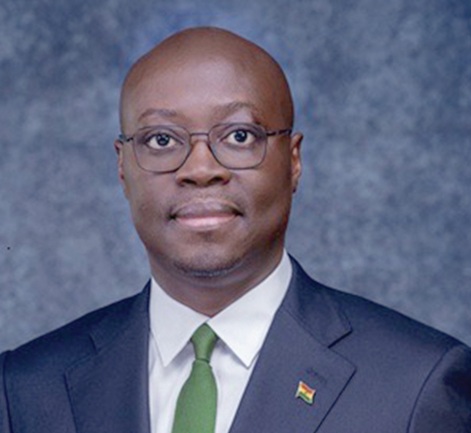
The 2027 budget statement, presented last Thursday by Minister of Finance, Dr Cassiel Ato Forson, gives it more room.
Tourism, culture and the creative arts are now one of eight pillars of "The New Economy", the government's four-year, US$10 billion programme to restructure the economy.
The pillar carries a US$1 billion price tag for 2027 to 2030.
The government has tied the programme to Ghana's 70th anniversary and a push to earn more from what the country produces.
The question for the industry is how much of the tourism pillar is money, and how much is intent.
A clear bet on meetings and events
The budget states an ambition to make Ghana "West Africa's destination of choice for international conferences and business tourism", and names the meetings, incentives, conferences and exhibitions (MICE) industry as a distinct engine of the visitor economy.
SSNIT will build and operate an ultra-modern international convention centre at the La Trade Fair Centre.
A professional convention bureau will be set up in 2027 to bid for African and global conferences, according to the Minister of Finance.
With tax incentives, SSNIT will also build five hotels by 2030: five-star properties in Accra and Kumasi, and affordable four-star hotels for the Cape Coast-Elmina corridor, the Volta Region and Northern Ghana.
Kumasi becomes a complementary events city, backed by a new National Theatre (this appeared in the 2026 budget, yet the ground has yet to be broken) built to host conferences and by the new Accra-Kumasi Expressway. A national events calendar, "competitive destination bidding" across regions and 10 new regional stadia complete the picture.
Anyone who has tried to bring a large congress to Accra knows the obstacles: too few rooms, no venue of international scale and no single body to lead a bid. On paper, this budget tackles all three.
Beyond December
The budget also confronts tourism's oldest problem: our dependence on December.
The Black Star Experience is to run all twelve months, built on heritage journeys, ancestry services, family reunions, education travel and the creative arts.
But this we’ve heard before.
Forts, castles and slave-trade sites will get conservation, stronger museums, multilingual interpretation and trained guides, and will be linked to roads, hotels, Ghanaian food and local enterprise.
Anyone who has struggled to find a decent lunch near Cape Coast Castle will welcome that.
A private-sector-led Ghana Medical Tourism Hub, with tax incentives and serviced land, adds a third engine that could keep West Africans who now travel abroad for treatment closer to home.
Stability helps too. Inflation is at 5.5 per cent, lending rates have fallen from about 22 per cent to under 16 per cent in a year, and there are no new taxes.
That makes events, tour packages and hotels far easier to price and finance.
Reading the fine print
Yet, as every tourism marketer knows, the brochure is not the destination.
The fine print raises questions.
Follow the money.
The Ministry of Tourism, Culture and Creative Arts receives GH¢186 million in 2027 - less than a quarter of the Sports Ministry's GH¢782 million.
Much of the US$1 billion appears to rest on SSNIT's balance sheet and tax incentives rather than Treasury spending.
The SSNIT question. A pension fund is not a venue operator or hotelier.
A convention centre lives or dies on professional management and sales, not architecture.
Workers' pensions will carry the risk, and private hotel investors will ask why the tax breaks are reserved for SSNIT.
Mixed signals on conferences. Elsewhere in the speech, the minister listed "workshops and conferences", with air tickets and per diems, as past waste.
Yet ministries and agencies are the backbone of domestic conference business for hotels across the country.
If that demand shrinks in 2027, many properties will feel it long before the first international congress arrives.
No scorecard.
The rice programme promises 125,000 jobs and oil palm 250,000.
Tourism gets no arrivals, receipts or jobs target.
What is not measured is rarely delivered.
Silence on access.
There is nothing on visas, air fares, airport charges or destination marketing.
For an organiser comparing Accra with Kigali or Cape Town, getting delegates here matters as much as the venue.
And for a budget built around Ghana @70, no tourism or diaspora programme is attached to the anniversary itself.
Where the industry should push
Still, the direction is right.
The task now is to turn intent into institutions.
The industry should press for:
A credible convention bureau - professionally led, run as a public-private partnership, with a bid-support fund, an ambassador programme and ICCA membership. Rwanda, South Africa, Kenya and Namibia offer working models.
A published convention centre plan - capacity, timeline, cost and, above all, who will operate it.
Clear rules for destination bidding, with real support for regions beyond Accra and Kumasi.
Annual targets for arrivals, receipts, jobs and international meetings won.
Better access - visas, air fares and airport charges alongside the bricks and mortar.
“Honest Milestones and Visible Results”
The direction is right. Tourism has a bigger place in the national economic conversation.
Now the industry must press for a credible, professionally led convention bureau, a published convention centre plan - including its timeline, financing and operator - transparent regional bidding, annual targets and improvements in access and connectivity.
The Finance Minister asked Ghanaians to judge the Government's New Economy proposal by “honest milestones and visible results”.
Tourism and MICE practitioners should take him at his word.
