
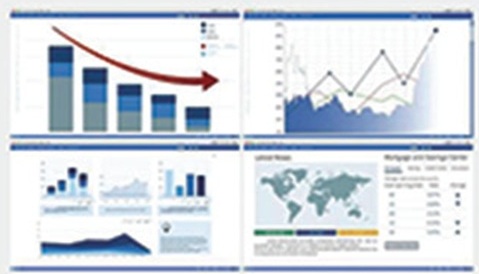
The accounting profession is undergoing significant transformation as organisations generate and store unprecedented volumes of financial and non-financial information through enterprise systems, digital payment platforms, e-commerce, cloud applications and other technologies.
Traditional accounting, which largely focused on recording transactions, preparing reports and checking samples, is increasingly complemented by data analytics.
Data analytics refers to the systematic process of collecting, cleaning, transforming and examining data to identify patterns, explain performance, detect anomalies and support decisions.
It includes descriptive analytics (what happened), diagnostic analytics (why it happened), predictive analytics (what may happen) and prescriptive analytics (what action should be taken).
For the modern accountant, analytics is not a replacement for accounting principles, professional judgement or ethical responsibility.
Rather, it is a means of applying those competencies to broader, more timely and more complex evidence.
Accountants who can interpret data and communicate its meaning are better positioned to serve as assurance providers, business advisers and guardians of organisational accountability.
The usefulness and relevance of data analytics to accounting can be seen in areas such as:
Financial reporting and accounting information
Analytics improves the accuracy, speed and usefulness of financial reporting.
Accountants can analyse large transaction populations, reconcile records across systems, identify duplicate or unusual entries and investigate unexpected movements in revenue, expenses, receivables and inventory.
Automated validation rules can flag missing fields, inconsistent dates and unusual journal entries before reports are finalised.
Trend and ratio analysis can also reveal relationships that may not be apparent from individual transactions.
These capabilities strengthen the reliability of information used by shareholders, lenders, regulators and management, although the accountant must still ensure that recognition, measurement, presentation and disclosure comply with the applicable reporting framework.
Auditing and assurance
In external and internal auditing, data analytics enables auditors to examine entire datasets rather than relying exclusively on small samples.
Tools can identify transactions posted outside normal hours, round-sum payments, duplicate invoices, unusual supplier bank details, unexpected credit notes and journal entries near period-end.
Visualisation and risk-scoring techniques help auditors direct attention to high-risk areas, while continuous monitoring can provide more timely alerts.
Gao, Huang and Wang (2020) report that audit-firm investment in employees’ data-analytics skills is associated with improved audit quality, with stronger effects for clients with complex operations, estimates and digital processes.
Fraud prevention, risk management and internal control
Fraud may be concealed within thousands of legitimate-looking transactions.
Analytical procedures can identify unusual transaction combinations, split purchases designed to avoid approval limits, repeated payments to the same account, suspicious payroll changes and unexpected patterns in expense claims.
Predictive models can help assess credit risk, customer default and possible cash-flow pressure.
In risk management, dashboards provide early warning indicators and allow management to monitor exposures by product, location, customer or business unit.
Analytics, therefore, supports stronger internal controls and more focused investigations; however, an alert is an indicator for examination, not proof of fraud or misconduct.
Management accounting and strategic decision-making
Empirical evidence from a survey of 140 US firms shows that the quality of big-data sources is associated with higher perceived decision quality.
However, a broad range of data sources and a data-driven culture improve decision quality only when management accountants possess well-developed analytical skills (Franke & Hiebl, 2023).
This reinforces the point that data alone does not create value: professional capability is needed to interpret it.
Taxation and regulatory compliance
Tax professionals can use analytics to reconcile accounting records with tax returns, identify inconsistencies between sales and value-added tax data, examine withholding-tax deductions, and test the completeness of tax declarations.
Tax authorities also use electronic invoicing, third-party information and risk-based systems to identify potential non-compliance.
For businesses in Ghana, the growing digitisation of tax administration and commercial transactions makes data quality, reliable records and the ability to analyse transaction information particularly important.
Accountants must ensure that analytical outputs are traceable, supported by source documents and consistent with the relevant tax legislation.
To remain relevant, accounting professionals should develop a combination of technical, accounting and interpersonal competencies.
These include advanced spreadsheet skills; proficiency in visualisation and business-intelligence tools such as Power BI or Tableau; familiarity with accounting and enterprise resource planning systems; and a working knowledge of databases, SQL and where appropriate, Python or R.
Equally important are statistical reasoning, data cleaning, interpretation, cybersecurity awareness, data governance and the ability to communicate findings clearly.
Mukherjee, Sharma and Liu (2025) identify seven complementary competencies for accountants in the big-data era: analytical techniques and statistical modelling; business knowledge; technology-risk control; accounting expertise; interpretation of analytical insights; assessment of data quality and integrity and communication.
Conclusion
Data analytics is a must for the modern accounting professional because it supports more comprehensive audits, improved fraud detection, better financial reporting, more reliable tax compliance, stronger internal controls and evidence-based management decisions.
Empirical studies provide encouraging evidence of positive links between analytics capability, audit quality, student learning and decision quality.
In Ghana and elsewhere, accountants who combine sound technical accounting knowledge with analytical ability, professional scepticism, ethical conduct and clear communication will be better equipped to meet the demands of a digital economy.
The future accountant is therefore not simply a keeper of records, but an informed interpreter of data and a trusted partner in decision-making.
Stephen Mensah Dzodzodzi (PhD, CA, Ch.EE, Ch.PE, CGMA) is a chartered petroleum economist, a tax and management consultant and CEO of Centre for Professional Studies, Ho.
Email:
Charles Ekornunye Ansah is a member of the Chartered Institute of Tax Law and Forensic Accountants – Ghana (CITLFAG) and an Employee of Ghana TVET Service. Email:
