
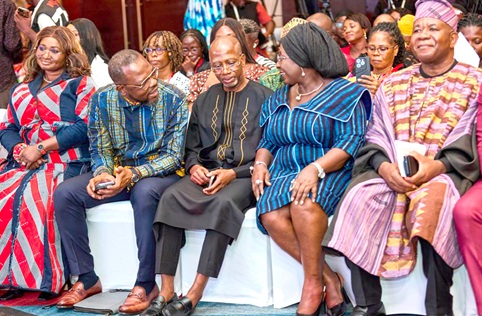
When Ghana’s fashion community gathered at the Mövenpick Ambassador Hotel in Accra on Wednesday for the maiden Black Star Fashion Summit, the theme was a clear statement of intent: “Put Ghana On”.
The summit, the first of two events making up the inaugural Black Star Fashion Week, brought together designers, artisans, educators, policymakers and investors.
Today, the action moves to the Royal Senchi in Akosombo for the Presidential Runway Show, where President John Dramani Mahama is expected to take to the runway.
A few weeks ago in this column, I asked whether Ghana could turn the runway into a tourism attraction. Wednesday’s summit offered some early answers.
Data before glamour
The most significant announcement came not from the runway but from the lectern. Rex Owusu Marfo, popularly known as Rex Omar, the Presidential Staffer coordinating the Black Star Experience, announced that the Secretariat will publish an annual Ghana fashion industry report from next year.
“We cannot adequately develop an industry we do not sufficiently understand,” he said, and added that the report would “support investment decisions, inform government policy, identify growth opportunities, strengthen businesses”.
This deserves applause.
Ghana has long discussed its fashion industry in terms of passion and potential rather than numbers.
How many people does it employ? What does it earn in exports?
How much do visitors spend on Ghanaian clothing, textiles and accessories?
What is the value of the fashion industry in Ghana?
Without credible answers, it is hard to attract investors, design policy or measure progress.
From a tourism perspective, the report should go further. It should capture fashion-related visitor spending, the number of international buyers and journalists attending Ghanaian fashion events, and the share of visitors who leave with locally made clothing.
That is how the tourism value of fashion can be demonstrated rather than assumed.
Rex Omar also reminded the gathering that many who built the industry had yet to receive the recognition they deserved.
“Their stories must be told, their contributions celebrated, and their legacies preserved for future generations,” he said.
Those stories are tourism assets too.
A gallery or heritage trail celebrating Ghana’s fashion pioneers, kente weavers and adinkra printers would give visitors another reason to stay longer.
Creative Economy
One of the more telling moments came from the speeches.
The Minister for Tourism, Culture and Creative Arts, Abla Dzifa Gomashie, opened the exhibition zone and inspected its artisanal jewellery displays.
She recalled selling crafts and jewellery at the Arts Centre in the 1980s to fund her education.
“I needed money to go back to school so I used to sell crafts and jewellery for money,” she told journalists.
For thousands of Ghanaians, craft and fashion are livelihoods, not hobbies.
The question is whether the vendors at the Arts Centre today, and the tailors, seamstresses and bead makers in towns across the country, can reach visitors with money to spend.
That requires better retail spaces, fair pricing, consistent quality and deliberate inclusion in tour itineraries.
The first panel discussion tackled the central question of what it would take to build a globally competitive Ghanaian fashion economy.
It featured Joyce Ababio of JACCD Design Institute Africa and Kofi Okyere Darko, Director of Diaspora Affairs at the Office of the President. KOD’s presence was a useful reminder that the diaspora remained the most natural market for Ghanaian fashion, both as buyers and as visitors.
Senchi: The Destination Is part of the show
Today’s runway show brings together established names and newer labels: Abrantie the Gentleman, Boyedoe, Kenneth Tetteh, Chocolate, Atto Tetteh, Quofi Akotuah, Nessa Atelier, BloombyEdzi and Adjeponmaa. They will be joined by an emerging designer from the 16-Region Designer Programme.
Taking the show out of Accra matters. Senchi sits in one of Ghana’s most attractive leisure corridors, with the Volta Lake, the Akosombo Dam and the Adomi Bridge close by.
Nearby, the Krobo bead-making tradition offers a ready-made link between fashion, craft and heritage.
A visitor drawn by the runway could easily spend a weekend cruising the lake, visiting a bead workshop and buying directly from artisans.
The challenge is converting it into visits, through transport from Accra, accommodation packages across the area, guided excursions and clear information for visitors who want to make a weekend of it.
Beyond one weekend
Fashion tourism is built through consistency: fixed dates, sustained international promotion and an industry visitors can engage with all year round.
Black Star Fashion Week should therefore become a permanent fixture on the international fashion calendar.
Coordinated with Glitz Africa Fashion Week, Rhythms on Da Runway and December in GH, it could make November and December a recognisable Ghanaian fashion season.
Rex Omar has described the Black Star Experience as “a 365-day way of life”.
Fashion is perhaps the clearest test of that ambition.
Visitors may come for one show, but they should find ateliers to visit, markets to explore and designers to buy from every week of the year.
“Put Ghana On” is a bold theme. The real question is what we want to put Ghana on.
The answer should be the itineraries of buyers, journalists, the diaspora and travellers who come to see, shop, learn and return.
If Black Star Fashion Week can achieve that, the summit at Mövenpick and the runway at Senchi would be remembered not merely as spectacle, but as the beginning of a fashion tourism economy.
