The tragic killing of 15-year-old Javits Frimpong in the Bronx, New York, should provoke more than sorrow and demands for justice.
It should compel Africans, on the continent and across the diaspora, to confront a deeper question: How well do we really know one another?
Javits was a Ghanaian boy who had moved to the United States approximately a year earlier to reunite with his father and pursue a better future.
His reported experiences of bullying and the circumstances surrounding his death deserve a thorough and impartial investigation.
His family deserves justice, and those responsible, when established through due process, must be held accountable.
But his tragedy also presents an opportunity for a wider conversation about our historical separation, cultural differences and the urgent need to rebuild our bonds of kinship.
Centuries of separation
The transatlantic slave trade forcibly removed millions of Africans from their ancestral homelands.
Families were separated, languages suppressed, identities altered and communities dispersed across the Americas and Caribbean.
Over four centuries, those who remained in Africa and those whose ancestors were displaced developed different historical experiences, institutions, languages and cultural identities.
African Americans, Afro-Caribbeans, Afro-Latinos and other communities of African descent developed distinctive identities under different social and political circumstances. Africa itself continued evolving through colonialism, independence struggles and the emergence of modern states.
We must, therefore, acknowledge a fundamental truth: shared blood does not automatically produce shared understanding.
We cannot reverse centuries of separation through occasional festivals, heritage tours or declarations of solidarity. Reconnection requires continuous education, dialogue and deliberate institutional cooperation.
Nkrumah’s vision to Mahama’s opportunity
Ghana occupies a special place in this conversation.
When Dr Kwame Nkrumah led Ghana to independence in 1957, he understood that Ghana’s freedom could not be separated from the liberation and advancement of Africa. His Pan-African vision extended beyond geographical borders, recognising the historical relationship between Africans on the continent and people of African descent throughout the world.
Nkrumah’s famous declaration, “Africa must unite”, was more than a political aspiration. It was a call for collective consciousness, solidarity and shared responsibility.
Today, President John Dramani Mahama has an opportunity to advance that legacy in a new historical context.
If Nkrumah’s generation fought to dismantle colonial divisions and establish African political solidarity, our generation must confront the cultural, educational and psychological divisions that centuries of separation have created.
Mahama’s opportunity is to make Ghana a leading convening point for a renewed Africa-diaspora relationship, placing historical education, youth exchanges, cultural diplomacy and institutional partnerships at the centre of Ghana’s international engagement.
The question is not whether we should celebrate Nkrumah’s legacy. It is whether we are prepared to translate its principles into practical programmes for today’s generation.
Kinship must be reciprocal
Africa must also examine how prepared we are to receive the diaspora.
Belonging must be more than naming ceremonies, festivals and heritage tourism.
We must understand the experiences of people whose ancestors were forcibly removed and who have developed distinct identities over generations.
Equally, diaspora communities must appreciate that contemporary Africa is not a continent frozen in ancestral memory. It is diverse, evolving and complex.
A Ghanaian, Jamaican, African American or Afro-Brazilian may have different cultural experiences, but those differences should become opportunities for mutual discovery rather than division.
We cannot demand that the diaspora understand Africa while refusing to understand the diaspora.
The bridge we must build
Governments should introduce stronger African and diaspora history programmes in schools, support ancestral research and establish structured youth exchanges between Africa, the Caribbean, Europe and the Americas.
Universities should develop joint research and African diaspora studies programmes. Museums should tell interconnected stories of African civilisation, slavery, resistance and cultural survival.
Traditional institutions must also play a central role. As custodians of oral history, customary knowledge and community identity, our traditional authorities can establish heritage education initiatives, cultural fellowships and meaningful engagements with diaspora communities.
Individuals must become students of our collective history, learn about other African cultures, preserve family histories and challenge stereotypes.
Javits’s story also reminds us that migration requires more than arranging accommodation and school placement.
African children entering unfamiliar societies need cultural orientation, emotional support, mentorship and a sense of belonging. Parents, schools and African community organisations abroad must work together to protect young people and address bullying.
No child should feel compelled to abandon their identity to find acceptance.
Building our common future
Imagine African and Caribbean schools partnering to teach shared history. Imagine universities in Ghana collaborating with institutions in Jamaica and the United States.
Imagine traditional authorities welcoming young people of African descent into structured cultural learning programmes.
These are achievable ambitions requiring leadership, investment and sustained cooperation.
President Mahama has an opportunity to champion this renewed agenda, drawing inspiration from Nkrumah while addressing the realities of a different century.
As a traditional leader and committed Pan-Africanist, I believe our future depends on understanding our collective past.
Nkrumah challenged Africa to unite politically.
Today, we must extend that vision through education, cultural understanding, environmental responsibility and meaningful human relationships.
Javits deserved a future. His family deserves justice.
His memory should also challenge us to build a world in which African children, wherever they find themselves, are protected, valued and given opportunities to thrive.
The bloodline may connect us, but knowledge, empathy and deliberate action must bring us closer.
We must move beyond remembering that we are connected.
It is time to understand what connects us, acknowledge what separated us and consciously build what should unite us.
Our heritage is shared.
Our histories are interconnected.
Our future must be consciously built together.
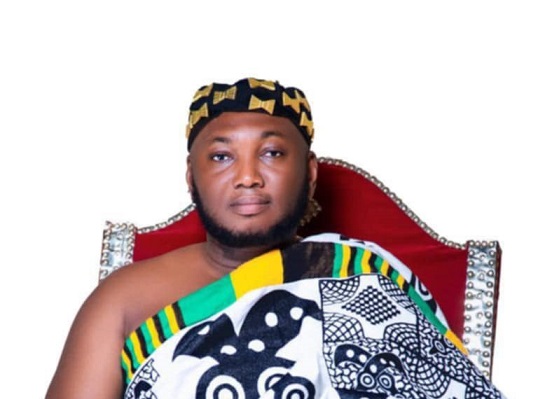
The writer is the Apagyahen of Asebu.