
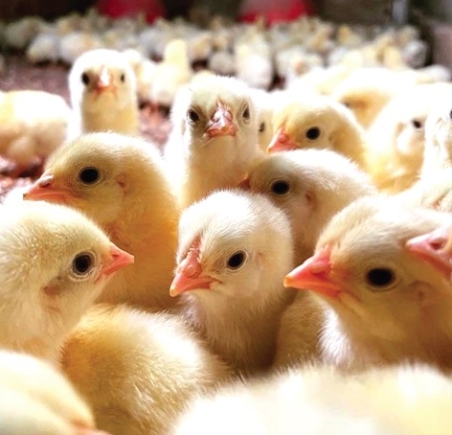
When President John Dramani Mahama launched the NkokoNkitinkiti Household and Backyard Poultry Production Initiative in Kumasi in November 2025, the vision was compelling.
Three million birds were distributed across the country's 276 constituencies, with beneficiaries receiving fifty chicks each, along with feed support and technical guidance.
The goal was to transform subsistence into self-sustaining livelihoods, curb the high cost of importing frozen chicken, and put poultry farming back at the heart of household income generation.
Almost a year on, the picture emerging from Parliament tells a different story.
The Minister for Food and Agriculture, Eric Opoku, has confirmed what many suspected: a number of beneficiaries slaughtered and ate the birds instead of rearing and selling them.
Some even sent videos showing themselves consuming the very stock that was meant to seed a business.
The Minority Leader has since described the programme as having failed to demonstrate that it can build sustainable poultry enterprises or meaningfully reduce Ghana's dependence on imported chicken.
It would be easy to read this as a story of mismanagement or bad faith on the part of beneficiaries.
I think that would be the wrong conclusion.
The real story is one of a policy that got the input right but skipped the most important ingredient: entrepreneurial preparation.
Missing ingredient
Handing someone fifty chicks and a bag of feed does not automatically turn them into a poultry entrepreneur.
It assumes a level of business orientation, patience, and risk tolerance that cannot be taken for granted, especially among vulnerable households for whom a live chicken looks far more like next week's meal than next quarter's income.
For a family under immediate financial pressure, the temptation to convert an asset into food the same week it arrives is not irrational.
It is what happens when a livelihood intervention is not accompanied by the mindset training needed to see it as one.
This is where Nkoko Nkitinkiti's design has fallen short.
The programme has, understandably, focused its energy on logistics: procuring birds, distributing them across constituencies, providing feed support, and now the commercialisation phase, including the poultry processing centre under construction in Bechem.
What appears to have been underweighted is the human capital side of the equation: screening beneficiaries for entrepreneurial readiness, and coaching them, before the birds ever arrive, on what it actually means to run a small livestock business.
Entrepreneurship is not innate
It is a set of skills and habits- record-keeping, cash flow discipline, market awareness, delayed gratification- that can be taught.
A short but structured training module before disbursement, covering basic business planning, the difference between an asset and a meal, and simple guidance on when and how to sell into the local market, could have changed the trajectory for many households.
Not every household is currently positioned to run a micro enterprise, and identifying those who are, or pairing weaker candidates with mentorship, would have strengthened the programme's odds considerably.
Fixable problem, not fatal flaw
None of this means Nkoko Nkitinkiti should be abandoned.
The underlying economic logic remains sound.
Ghana imports the overwhelming majority of the poultry it consumes, at a cost of hundreds of millions of dollars a year, while domestic production covers only a fraction of national demand.
A well-run household poultry scheme genuinely could chip away at that imbalance while building incomes at the grassroots.
The government's move toward anchors farmers, processing infrastructure, and a more commercial second phase suggests the lessons of phase one are being absorbed, at least on the production and market access side.
What is still missing is the deliberate, upfront investment in beneficiary readiness.
If government is serious about phase two succeeding where parts of phase one visibly struggled, entrepreneurial training and screening cannot remain an afterthought.
It should be built into the programme design from day one, with clear criteria for selecting beneficiaries, a short mandatory orientation before birds are handed over and follow-up support during the critical early weeks when the temptation to consume rather than rear is strongest.
Beyond chickens
There is also a broader lesson here for Ghana's wider livestock ambitions.
Reports suggest the government may look to extend similar household-based models to goats and other livestock in the future.
If that happens without addressing the entrepreneurial gap exposed by Nkoko Nkitinkiti, we should expect the same pattern to repeat itself, simply with a different animal.
Livestock empowerment programmes across Africa have shown, time and again, that the animal is the easy part.
Sourcing and distributing birds, goats, or any other stock is a logistical exercise government already knows how to execute.
Turning a recipient into a functioning small business owner is the harder, slower work and it determines whether a flagship policy becomes a lasting economic transformation or a well-intentioned but temporary boost to household diets.
Ghana does not need to choose between ambition and rigour.
Nkoko Nkitinkiti and whatever follows it, can still deliver on its promise.
But only if the birds are matched, every time, with the business skills needed to keep them alive long enough to become an enterprise.
The writer is a lecturer,
Accra Technical University
