
I am back from the Seychelles with far more than photographs and memories.
While Ghana securing the right to host the 70th UN Tourism Regional Commission for Africa (CAF) Meeting in 2027 was undoubtedly one of the defining moments of the trip, my ten days on the Indian Ocean archipelago (of 115 islands) revealed a destination that has mastered the art of turning culture, people and purpose into tourism assets.
Our visit coincided with two significant milestones – the country's Golden Jubilee celebrations, marking 50 years of independence and the 69th UN Tourism CAF Meeting.
It offered a rare opportunity to experience the Seychelles both as a proud nation celebrating its past and as a tourism destination confidently shaping its future.
Independence beyond ceremony
Seychelles celebrated its 50th Independence Anniversary with remarkable colour, precision and emotion.
The National Day Parade at Stade Linite brought together military displays, cultural performances, international dignitaries and one of the most spectacular synchronised drone and fireworks displays I have witnessed anywhere in the world.
Yet beneath the pageantry lay a deeper message.
Everywhere we went, the celebrations reflected the national theme – Our People, Our Identity, Our Destiny.
It was impossible not to notice how deliberately tourism, culture and national identity had been woven together.
The Local Food Fest at Roche Caiman in Mahe perfectly illustrated this philosophy.
Rather than celebrating independence through speeches alone, Seychelles chose to celebrate through its people, cuisine, music, crafts and traditions.
Thousands gathered over four days to sample authentic Creole dishes, watch live performances and support local entrepreneurs.
The Tourism and Culture Minister, Amanda Bernstein, perhaps summed it up best when she told me that tourism and hospitality have become part of who the Seychellois are.
It was not simply a political statement. It was visible in every smile, every conversation and every carefully organised event.
La Digue – Where life moves differently
One of the most memorable experiences was stepping away from the hustle and bustle of Mahé and the official programme to discover La Digue Island.
The journey itself – flying to Praslin before crossing by jetty to La Digue – reminded us that travel is often about the journey as much as the destination.
Our guide, Joanna Rose, introduced us not to tourist attractions first, but to people.
We met her family over breakfast, visited the historic Calou Guest House, spoke with 76-year-old baker Francis, who still bakes using coconut wine, and enjoyed an unforgettable home-cooked Creole lunch prepared by Joanna's partner, Raja, beneath an orange tree in their garden.
Only afterwards did we visit the famous attractions – the giant tortoises, the vanilla plantation, Takamaka rum tasting and finally Anse Source d'Argent, arguably the world's most photographed beach.
Ironically, it was the people, not the beach, who left the strongest impression. La Digue reminded me that authentic tourism is created not by luxury infrastructure alone but by genuine human connections. Something Seychelles has mastered since its discovery and especially during the 50 years of independence.
Africa's tourism future starts with people
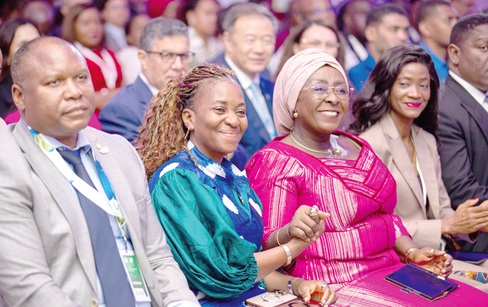
From celebration, attention shifted to policy as Seychelles welcomed African tourism ministers, policymakers and industry leaders for the 69th UN Tourism Commission for Africa.
The conference theme – Strengthening Human Capital to Boost Africa's Tourism Growth – could not have been more relevant. Across the discussions, one message emerged consistently: Africa's greatest tourism asset is not wildlife, beaches or heritage sites. It is its people.
The UN Tourism Secretary-General, Shaikha Al Nuwais, challenged African governments to invest in skills, digital readiness and youth employment rather than seeing tourism merely as hotels and infrastructure.
President Dr Patrick Herminie reinforced that tourism is the Seychelles' lifeline because it directly supports communities, while Minister Bernstein outlined her country's first Tourism Human Resource Development Strategy aimed at preparing Seychellois for leadership roles across the industry.
For many African countries facing youth unemployment, these conversations could not be more timely.
Good news for West Africa
The meeting also produced encouraging news closer to home.
The Minister of Tourism and Culture of Sierra Leone, Nabeela Farida Tunis, confirmed preparations to host the third UN Tourism Regional Forum on Gastronomy Tourism later this year.
Following successful editions in Zimbabwe and Tanzania, the event presents another opportunity for Africa to showcase its rich culinary heritage as a driver of tourism and rural development.
Even more significant for Ghana was the successful bid to host the landmark 70th UN Tourism CAF Meeting in 2027.
The timing could hardly be more symbolic. Ghana will celebrate 70 years of independence while welcoming tourism leaders from across Africa to the 70th session of the Commission.
The Minister of Tourism, Culture and Creative Arts, Abla Dzifa Gomashie, noted that it would be an opportunity to showcase the country’s heritage, culture, creative arts and hospitality while strengthening Ghana's position as one of Africa's leading destinations for cultural, heritage and diaspora tourism.
Hosting such a prestigious gathering also comes with responsibility.
Seychelles has set an exceptionally high benchmark for organisation, hospitality and destination storytelling.
Lessons worth bringing home
What struck me most throughout the visit was that the Seychelles never tries to be something it is not. It does not compete on size or visitor numbers. Instead, it competes on authenticity, sustainability and quality.
Every event, every experience and every conversation reinforced the same message – tourism succeeds when local people become its greatest ambassadors.
As Ghana prepares to host Africa's tourism leaders in 2027, there are valuable lessons to draw from Seychelles.
Celebrating culture, investing in people, protecting the environment and creating memorable visitor experiences are not separate objectives.
Together, they form the foundation of sustainable tourism.
Seychelles may be a small island nation with a population of just about 100,000, but after 10 unforgettable days, it reminded me that some of the biggest ideas in African tourism often come from the smallest places.
