
Recently, during one of the trips that neurosurgical academic activity takes me on, I found myself awake at an odd time, unable to sleep.
We were on the open Atlantic Ocean between the western-most tip of West Africa and the Eastern-most tip of South America.
There was a constant rhythmic rocking as the Boeing jet powered through layers of rough air and one could hear the seats sigh as the joints took the strain.
Maybe I could have slept through this if I was in business class, but I was not.
I was in the skewered chicken position near the back of the plane, with a baby bawling her displeasure a few seats away.
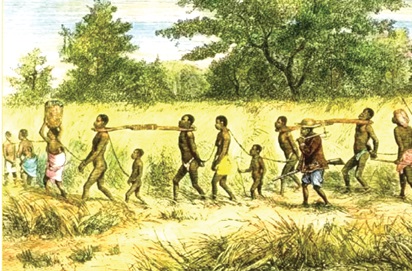
Suddenly I was reminded that this was a journey that my ancestors would have taken on a boat, from Elmina to Rio de Janeiro, starting for the first few weeks with the Gulf of Guinea, famous for its rough waves. I was sure the choppy Atlantic had a lot to do with all this rough air.
Reparation
Suddenly, I wondered whether I owed my forebears an apology for how I was making this trip.
At least, they had gone direct then. I had to go to the country where the slave ships came from in order to make this journey.
Because 400 and something years after those heinous journeys stopped, my country still cannot build any ships or planes.
In order to make a crossing that would have been seven hours direct, I had to fly to the UK, wait for half a day, and catch a 12-hour flight. And on a plane built by the same people I expect apologies and reparation from.
Recently there has been quite a bit of talk about reparations and apologies from main actors in the slave trade.
I have always had a bit of difficulty with expecting reparations when we have not sorted out our own accountability considering the fact that large communities hosted the slave castles and collected rent from the slavers.
Sugar Plantations
Local entrepreneurs powered an industry that included forging the shackles that fettered fellow human beings together as they rocked in the rough seas drenched in cold seawater, and even manufactured the many canoes that ferried them to the large ships waiting in the high seas.
But that should be another story for another day.
For now, I could only suppose that they would not be proud to know that centuries after they had been plucked from their families and plunged into sugar plantations in Brazil, I still depended on the vessels from the countries that powered the evil trade to make my own journey.
In the skewered-chicken position of economy class, rocked by turbulence every other half hour by the rough air above the Atlantic Ocean, there is not much to jubilate about.
So maybe my lamentation was powered more by my discomfort than anything else, but definitely these thoughts had merit.
After all, I was going for a conference that would end with a group photograph showing a sea of white neurosurgeons, punctuated only by the occasional, easily missable African face.
As a continent, we produce one per cent of the world’s research output.
It also happens that we have one per cent of the world’s neurosurgeons. And I am sure that the measly numbers continue with other specialties and skills.
Clinical research
Recently, the issue of clinical research has been headlining our front pages, but not in a positive sense.
The clinic and the laboratories, which should be collaborating to produce papers and reduce our publication deficit, are at loggerheads.
The issue is not as much a turf war between professional groups, as it is an industry so underfunded, underinvested and understaffed that most profitable laboratory testing is outsourced to India and South Africa.
The fervour of the war is more driven by intellectuals scraping the bottom of a barrel that emptied long ago.
COVID taught us nothing. It is the consequences of such decisions that have made me complete a seven-hour trip in two days.
Anyway, I need to make some financial decisions so I don’t use the skewered chicken position for a 12-hour trip ever again.
Lord God, business class please…
