
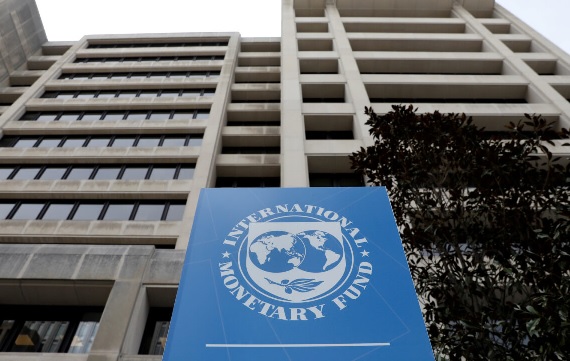
It does so by supporting economic policies that promote financial stability and monetary cooperation, which are essential to increase productivity, job creation, and economic well-being.
The IMF is governed by and accountable to its member countries.
The IMF has three critical missions: furthering international monetary cooperation, encouraging the expansion of trade and economic growth, and discouraging policies that would harm prosperity.
To fulfill these missions, IMF member countries work collaboratively with each other and with other international bodies.
The IMF was established in 1944 in the aftermath of the Great Depression of the 1930s.
44 founding member countries sought to build a framework for international economic cooperation.
Today, its membership embraces 190 countries, with staff drawn from 150 nations.
The IMF is governed by and accountable to those 190 countries that make up its near-global membership.
At the top of its organizational structure is the Board of Governors.
The day-to-day work of the IMF is overseen by its 24-member Executive Board, which represents the entire membership and supported by IMF staff.
The Managing Director is the head of the IMF staff and Chair of the Executive Board.
She is assisted by four Deputy Managing Directors.
The IMF's resources mainly come from the money that countries pay as their capital subscription (quotas) when they become members.
Each member of the IMF is assigned a quota, based broadly on its relative position in the world economy.
Countries can then borrow from this pool when they fall into financial difficulty.
The IMF provides loans including emergency loans to member countries experiencing actual or potential balance of payments problems.
The aim is to help them rebuild their international reserves, stabilize their currencies, continue paying for imports, and restore conditions for strong economic growth, while correcting underlying problems.
The IMF monitors the international monetary system and global economic developments to identify risks and recommend policies for growth and financial stability.
The Fund also undertakes a regular health check of the economic and financial policies of its 190 member countries.
In addition, the IMF identifies possible risks to the economic stability of its member countries and advises their governments on possible policy adjustments.
The IMF provides technical assistance and training to governments, including central banks, finance ministries, revenue administrations, and financial sector supervisory agencies.
These capacity development efforts are centered on the IMF’s core areas of expertise ranging from taxation through central bank operations to the reporting of macroeconomic data.
Such training also helps countries tackle cross-cutting issues, such as income inequality, gender equality, corruption, and climate change.