

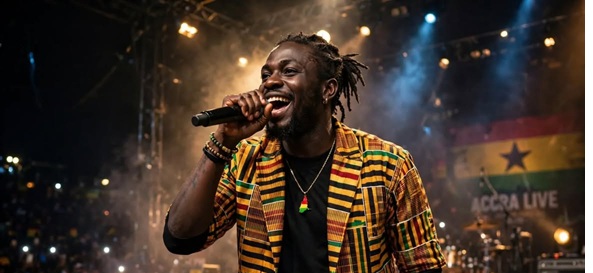
There is something increasingly curious about Ghana's music industry. At a time when artistes are complaining about poor remuneration, shrinking performance fees, inadequate industry support and the difficulty of making a living from music, many are voluntarily organising concerts, bringing fellow musicians on board, attracting thousands of fans and, in many cases, offering the entertainment for free.
Welcome to Ghana, where an artiste can spend thousands of cedis organising a concert, invite 30 fellow artistes to perform, draw a massive crowd, trend on social media, receive congratulatory messages from colleagues and still struggle to explain what the event has done for their bank account.
Somewhere along the line, concerts have become less about making money and more about proving a point. Everybody wants to headline. Everybody wants their name on a billboard. Everybody wants to see a crowd screaming their name. And apparently, everybody wants to become an event organiser.
But at what cost?
December is no longer just a season to cash out
December has historically been one of the busiest and most rewarding periods for Ghanaian musicians. The return of the diaspora, corporate events, festivals, nightlife activities, private parties and concerts create a market where artistes can secure multiple bookings and negotiate performance fees.
Valentine's Day and Easter also present opportunities for live entertainment.
Ordinarily, these are periods when artistes should be moving from stage to stage, collecting cheques, entertaining different audiences and maximising demand for their services.
Instead, some are increasingly creating their own events and competing for the same audiences, sponsors, media attention and entertainment budgets. The artiste becomes the performer, promoter, financier, marketing manager and, sometimes, the person praying that the sound system works.
The question is whether this growing culture of artiste-led concerts is creating new money or simply redistributing the little money already available in the industry.
Everybody is performing, but who is paying?
The most fascinating part of this phenomenon is the exchange of musical favours. Artiste A organises a concert and invites Artistes B, C, D, E and F. A few days later, Artiste B organises another concert and invites A, C, D, E and F. The cycle continues until everybody has performed for everybody.
It is a beautiful display of solidarity, except that solidarity alone does not pay bills.
When several artistes organise free concerts within the same peak season, they are essentially competing for the same pool of fans who could have paid to attend other events. They are also occupying dates that could have been used for commercially organised shows, where promoters would pay artistes to perform.
In effect, the industry risks turning its most lucrative season into an extended musical exchange programme. Everybody gets a performance slot, everybody gets a flyer, everybody gets content, but the financial returns remain questionable.
If your colleague's free concert takes potential patrons away from your paid show, and your free concert does the same to theirs, who exactly is winning?
Free for fans, expensive for the artiste
Let's be clear. Free concerts are not inherently senseless. They can be strategic. A brand-sponsored concert, album launch, fan appreciation event, community initiative or carefully planned market-entry campaign can deliver enormous value without charging admission.
But free should not mean financially reckless.
An artiste who spends heavily on stage production, sound, lighting, publicity, security, logistics and hospitality without sponsorship, measurable returns or a clear commercial objective may simply be funding an expensive popularity contest.
A crowd of 10,000 people is impressive. But if the artiste cannot explain the return on investment, that crowd may be nothing more than a social media statistic rather than a business achievement.
Even paid concerts are not automatically profitable. Ticket revenue must first contend with production expenses, marketing, venue charges, taxes, logistics and other obligations. Selling tickets is not the same as making money, and a packed venue is not a financial statement.
The industry needs to stop celebrating attendance figures without asking questions about the economics.
It's time to rethink the concert culture
Ghanaian artistes must learn to distinguish between a strategic concert and an ego-driven production. Before committing money to an event, there must be a business plan, realistic budget, sponsorship strategy, revenue model, audience assessment and clear objectives.
Artistes should also consider working with professional promoters instead of assuming every major show must carry their personal brand. Promoters exist to create commercial opportunities, take risks, negotiate bookings and build entertainment platforms. The industry cannot grow if everybody wants to be the employer and nobody wants to work within the value chain.
There should also be greater collaboration around commercially viable events, where artistes pool their audiences to attract sponsors, sell tickets and create profitable experiences rather than organising competing free shows that dilute demand.
Fans deserve entertainment. Artistes deserve appreciation. But artistes also deserve to make money.
Perhaps the biggest sign of maturity in Ghanaian music should no longer be how many people an artiste can gather for free. It should be how effectively that artiste can turn talent, audience loyalty and popularity into sustainable income.
Because when the lights go off, the crowd goes home and the artiste is left counting debts, the concert may have been a success for the fans, a triumph for social media and a disaster for the business.
And if this is becoming the norm, multiple free concerts are not just senseless. They may be quietly costing Ghanaian artistes the very money they complain the industry does not have.
