

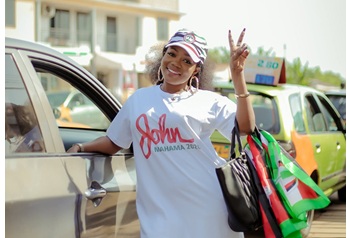
In Ghana, there are few things more predictable than an election year. Politicians suddenly become everybody's best friend, roads that have been forgotten for years receive fresh attention, promises begin to flow like water from a broken pipe, and musicians who have spent months avoiding political conversations suddenly find themselves performing on campaign platforms.
One minute, an artiste is preaching love, unity and good vibes. The next, they are on stage, microphone in hand, passionately campaigning for a political party. Sometimes, the enthusiasm is so convincing that you begin to wonder whether the artiste has discovered a new calling or is simply waiting for the payment to reflect.
Welcome to the fascinating, sometimes uncomfortable relationship between Ghanaian musicians and politicians.
But beneath the campaign songs, celebrity endorsements and political performances lies an important question: Are musicians using their influence to shape national conversations, or are politicians using musicians to give their political ambitions a more attractive soundtrack?
When the Microphone Becomes a Political Weapon
Musicians are among the most influential voices in society. Their songs travel further than many political speeches, their opinions can influence public conversations, and their popularity gives them access to audience’s politicians would spend millions trying to reach.
A catchy campaign song can become more memorable than an entire manifesto. Ask any Ghanaian who remembers the lyrics of a political campaign song but struggles to recall three promises from the party's last election manifesto.
This is precisely why political parties court musicians.
An artiste brings popularity, emotional connection and cultural relevance. Politicians, on the other hand, bring visibility, access, financial opportunities and sometimes the kind of government contracts or appointments that can make an artiste's career look considerably more comfortable.
It is a relationship that can be mutually beneficial. The trouble begins when the public can no longer distinguish between genuine political conviction and a professionally negotiated endorsement.
Is It Love for the Party or Love for the Cheque?
Let's not pretend that money does not influence the entertainment business. Musicians are entrepreneurs. They have bills to pay, teams to maintain, videos to shoot and careers to finance.
There is nothing inherently wrong with being paid to perform at a political event. A musician is a professional entertainer, and campaign organisers are clients.
The complication arises when a paid performance is presented as an endorsement, or when an artiste's political loyalty appears to change with the party in power.
Today, an artiste is passionately defending one political administration. Tomorrow, following a change of government, the same artiste may discover an equally passionate love for the opposition.
Ghanaian social media, of course, never forgets. Old videos resurface, interviews are retrieved, and yesterday's political evangelists suddenly find themselves answering questions they would rather avoid.
Perhaps musicians should be allowed to change their political opinions. After all, even politicians change positions with impressive flexibility. But the public deserves honesty about whether an artiste is expressing a personal conviction or fulfilling a commercial arrangement.
The Danger of Celebrity Politics
The influence of musicians can be powerful, particularly among young people. This creates an important responsibility.
When a popular artiste endorses a political candidate, some fans may interpret that endorsement as a recommendation based on knowledge, competence or experience.
But being able to fill the Accra Sports Stadium does not automatically qualify someone to evaluate economic policy. Neither does producing a hit song make an artiste an authority on public finance.
That does not mean musicians should stay out of politics. Far from it.
They have every right to discuss unemployment, education, corruption, road safety, taxation, healthcare and other national issues. In fact, their platforms could help make difficult public conversations more accessible.
The concern is when celebrity influence is used to replace critical thinking rather than encourage it.
Ghana needs musicians who can challenge governments, question policies and demand accountability, not simply those who can make political slogans sound good over an infectious beat.
Where Should the Line Be Drawn?
There should be a clear distinction between political participation and political exploitation.
Musicians should be free to support political parties, campaign for candidates, compose political songs and participate in national debates. Freedom of expression does not end because someone makes a living entertaining people.
However, political endorsements should come with honesty and responsibility. Artistes should understand what they are endorsing, be prepared to defend their positions and avoid spreading misinformation simply because it benefits their preferred political camp.
Politicians, equally, must stop treating musicians as decorative accessories on campaign platforms.
Invite them into conversations about creative industry policy. Listen to their concerns about royalties, copyright protection, financing, infrastructure and employment. If a politician genuinely values the creative arts, that relationship should extend beyond election seasons.
The industry needs policies, not just campaign appearances.
Beyond the Election Season
Perhaps the greatest tragedy of this relationship is that musicians often become politically important only when elections approach.
During campaign periods, they are celebrated, photographed, praised and generously accommodated. After elections, many return to fighting the same battles over royalties, industry financing and government support.
It is a rather curious arrangement: the musician helps sell the political dream, but the political establishment does not always help build the musician's dream.
This must change.
Ghana's creative industry deserves a permanent seat at the national development table, not a temporary appearance on a campaign stage.
The Final Rally
Musicians are citizens before they are entertainers. They have the right to political opinions, and politicians have every right to seek their support.
But the relationship must be built on transparency, mutual respect and accountability.
An artiste should not be condemned simply for supporting a political party, just as a politician should not be criticised merely for appreciating the influence of a popular musician.
The real issue is whether the relationship serves the public interest or simply the interests of two parties looking for something from each other.
Ghana does not need musicians who sing whatever politicians pay them to sing, nor politicians who remember the entertainment industry only when they need a crowd.
We need artistes courageous enough to speak truth to power, and politicians humble enough to listen when the music is no longer flattering.
After all, campaign songs may win attention, but they cannot fix the economy. And when the election is over, Ghanaians will still need jobs, good roads, affordable living and a functioning creative industry.
The music may stop after December 7 every four years. The consequences of political decisions, unfortunately, do not.
