

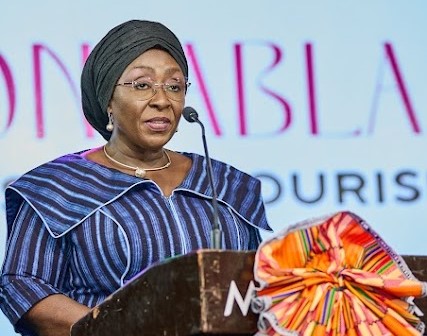
The Minister of Tourism, Culture and Creative Arts, Abla Dzifa Gomashie, has called for greater investment in Ghana's fashion industry, describing it as a strategic pillar of the country's creative economy with the potential to generate employment, attract investment and boost tourism.
She said the industry must be developed beyond the glamour of fashion shows and runways to encompass the entire value chain, including textile production, garment manufacturing, tailoring, marketing, retail and international distribution.
Speaking at the 2026 Black Star Fashion Summit at the Mövenpick Ambassador Hotel in Accra on Wednesday, November 4, she said Ghana's rich cultural heritage, indigenous textiles and growing pool of creative talent provided a strong foundation for building a globally competitive fashion industry. (Read also: Maiden Black Star Fashion Summit opens in Accra)
The summit, held under the theme, “Put Ghana On”, forms part of the maiden Black Star Fashion Week, organised under the Black Star Experience initiative.
Mrs Gomashie said fashion was more than what people wore, describing it as a powerful expression of identity, heritage and national aspirations.
She cited Kente, Fugu, Adinkra symbols, traditional weaving, beadwork and embroidery as cultural resources that could inspire innovation and create economic opportunities for local designers and artisans.
“Fashion must be recognised as a strategic pillar of Ghana's creative economy. It has the potential to generate employment for our youth, stimulate entrepreneurship, attract investment, increase exports and strengthen our international cultural influence,” she stated.
She said the government recognised the interconnectedness of fashion, culture and tourism, and called for deliberate efforts to integrate fashion experiences into the country's tourism offerings.
According to her, fashion weeks, textile exhibitions, cultural festivals, heritage tours and creative markets should become important features of Ghana's national tourism calendar.
She explained that international visitors could contribute to local livelihoods by purchasing locally made garments, commissioning Ghanaian designers and visiting traditional weaving and bead-making communities.
“Our ambition must be to make Ghana a destination where people come not only to see our attractions but also to experience our creativity, engage with our culture and invest in our creative industries,” she said.
Mrs Gomashie also acknowledged the contributions of pioneering and contemporary Ghanaian designers, including the late Kofi Ansah, Christie Brown, Ozwald Boateng, Duaba Serwa, Pistis Ghana, House of Paon and Abrantie the Gentleman.
She urged designers, manufacturers, investors, financial institutions, educational institutions and development partners to collaborate to build an industry that was commercially successful, culturally authentic and globally competitive.
Panel discussions
At a panel discussion on the future of the industry, fashion educator and designer Joyce Ababio highlighted the need to strengthen Ghana's manufacturing capacity if local fashion businesses were to compete internationally.
She said although Ghana had an established fashion industry with talented designers, there was a significant skills gap in garment production.
“We train quite a number of fashion designers, and they are doing amazing work. But the problem we have right now is that we do not have enough people who can actually work in the manufacturing industry,” she said.
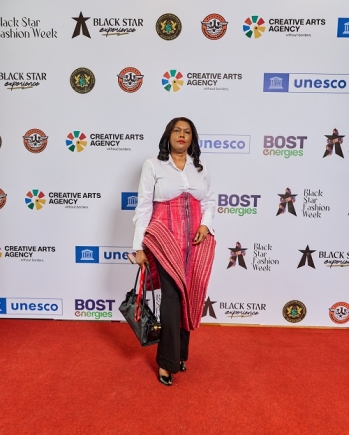
She argued that training should extend beyond sketching and developing fashion concepts to include specialised skills such as pattern-making, quality control, production management and operating production lines.
According to her, developing these competencies would help build the capacity required to move from small-scale fashion businesses to large-scale manufacturing and international competitiveness.
Also contributing to the discussion, Kofi Okyere Darko, popularly known as KOD, called for a more deliberate approach to developing the local industry before pursuing international expansion.
He observed that the fashion sector was already providing employment for many people, with an estimated 80 per cent of practitioners working in Ghana.
However, he said the industry needed to move beyond an environment where individuals acquired basic fashion training and immediately established their own brands without the necessary business and professional experience.
He stressed the importance of specialisation, suggesting that people with particular strengths, such as sketching, could offer their expertise to established fashion houses rather than feeling compelled to start independent labels.
He also highlighted the need for fashion entrepreneurs to acquire business skills, including financial literacy, to ensure the sustainability of their ventures.
The summit also featured discussions involving industry practitioners, including Faith April, and examined issues relating to financing, market access, textile innovation, sustainability, technology and intellectual property.

Hilary Andoh, founder and CEO of HSA PR and Fashion Nexus Ghana, spoke at the maiden Black Star Fashion Week Summit
Another key feature was the 16-Region Designer Programme, which seeks to spotlight emerging designers whose creations draw inspiration from the cultural identities, heritage and craftsmanship of their respective regions.
The initiative is expected to provide a platform for showcasing the diversity of Ghanaian fashion while creating opportunities for designers beyond the established industry centres.
With the growing international interest in African fashion, the discussions highlighted the need for Ghana to strengthen its production capacity, develop specialised skills and establish the structures required to turn its creative potential into a sustainable economic sector.
